


Gallotannins
Plant polyphenols from the hydrolyzable tannin family: they create astringency, can bind proteins and minerals, and behave differently in whole foods than in concentrated extracts.
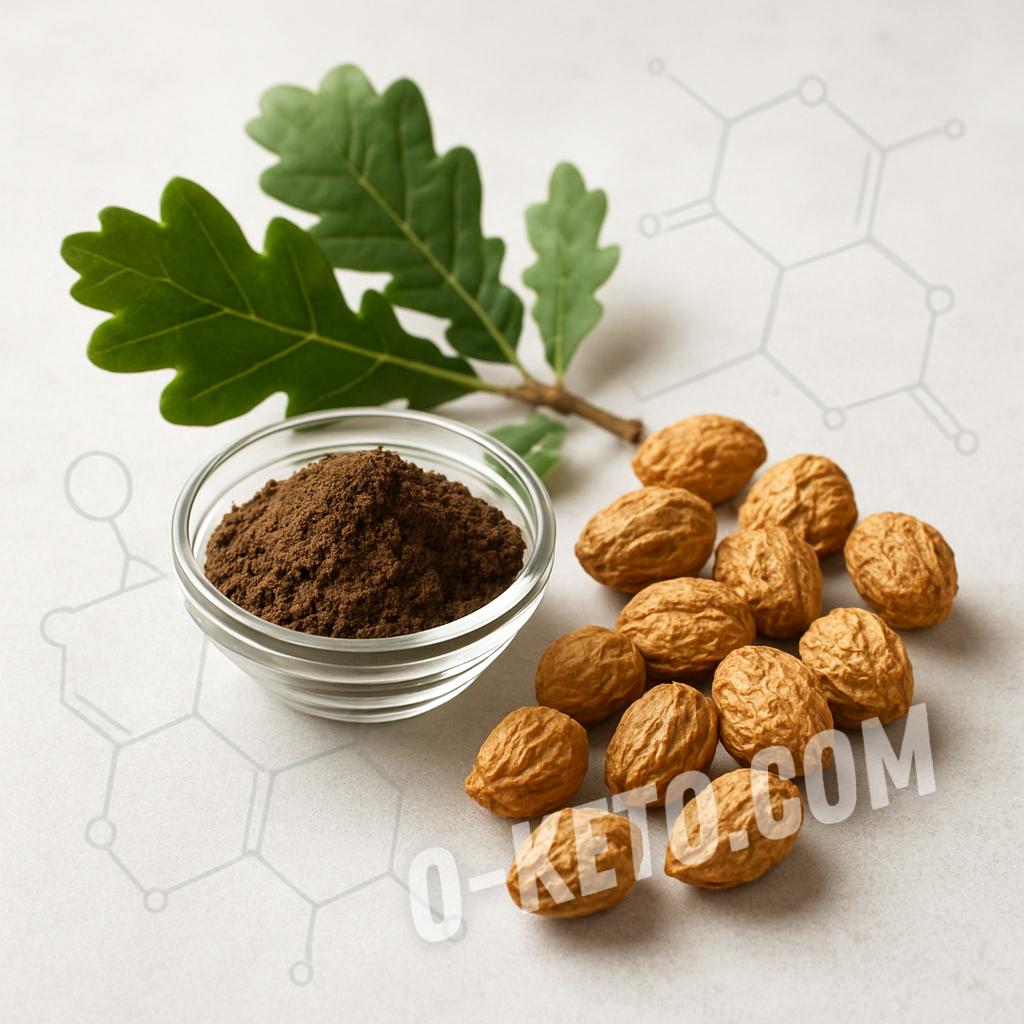
Gallotannins are plant polyphenols from the class of hydrolyzable tannins. Their molecules contain gallic acid residues attached to a central molecule, often glucose. In plants they help protect against microbes, insects, and oxidative stress, while in foods they create the characteristic tart, astringent sensation in the mouth. Gallotannins occur in tea, pomegranate, berries, grapes, some nuts, oak-derived products, herbs, and spices. They are not one vitamin or one nutrient but a family of compounds with different structures and different bioavailability.
How they feel and act
Astringency appears because tannins bind to salivary proteins. Saliva feels less slippery, and the mouth becomes dry. The same chemical principle explains some technological properties: tannins can bind proteins, influence beverage flavor, participate in wine clarification, and change the texture of plant foods. In the body they interact with dietary proteins, iron and other minerals, the microbiota, and enzymes. Some gallotannins are broken down into gallic acid and other metabolites, which are then processed by the intestine and liver.
The antioxidant activity of gallotannins is clear in chemical tests, but in humans their effect is not simply direct free-radical extinguishing. Polyphenols more often work through signaling pathways, microbiota, detoxification enzymes, vascular responses, and inflammatory mediators. This makes them interesting, but it does not turn them into a cure for every disease. A tannin-rich food can be a useful part of the diet, yet its effect depends on dose, tolerance, the whole meal, and gastrointestinal status.
Benefits and limits
Within whole foods, gallotannins can support polyphenol variety, sugar-free flavor, and interest in plant foods. Tea, berries, pomegranate, spices, and herbs provide not only tannins but many other compounds. For low-carbohydrate eating, this is convenient: tart drinks and spices help build flavor without syrups and sweet sauces. However, if a person drinks strong tea all day instead of eating, potential benefit can turn into gastric irritation, caffeine-related insomnia, and reduced iron absorption.
The main limitation of tannins is their ability to bind minerals, especially non-heme iron. With iron-deficiency anemia, strong tea, coffee, and tannin-rich drinks are better separated from iron supplements and iron-containing meals. This does not mean tea is forbidden forever. Timing, concentration, and overall iron status matter. If ferritin is low and a person washes down meat or iron tablets with strong tea, correction of deficiency may be slower.
Gut tolerance and individuality
Astringent polyphenols can irritate a sensitive stomach, increase nausea, or worsen discomfort in gastritis and reflux, especially when taken on an empty stomach. Other people tolerate them well and may find that bitter-tart flavors reduce cravings for sweetness. The reaction depends on concentration, beverage temperature, accompanying food, mucosal condition, and microbiota. Gallotannins should therefore not be labeled only as useful or harmful. The same strong tea may be fine after a meal for a healthy person and unpleasant fasting for someone with an irritated stomach.
Concentrated tannin and polyphenol extracts require more caution than foods. A capsule can provide a dose that is difficult to reach through an ordinary diet, and liver tolerance, gut tolerance, and medication interactions may be different. Chronic gastrointestinal disease, liver or kidney disease, anemia, pregnancy, lactation, anticoagulants, and other important medications are reasons to discuss high-dose polyphenol supplements with a clinician.
Practical use
In everyday cooking, gallotannins are valuable mainly as part of flavor. Astringent tea, sugar-free pomegranate sauce, spices, berries, and herbal infusions can add depth to low-carbohydrate dishes. They work well when balanced with fat, acidity, and protein so that the flavor does not become harsh. Tea or pomegranate astringency, for example, often opens up beside lemon, olive oil, fish, meat, or cheese. If iron deficiency is a tendency, these foods and drinks are better placed between iron-rich meals. This preserves flavor and polyphenols without interfering with nutrient restoration.
If you have any questions about the term "Gallotannins", you can ask them to AI. Please note, a low-cost OpenAI model is used. It may answer questions about disease treatment with errors!


 1 / 4
1 / 4

 1 / 4
1 / 4 1 / 4
1 / 4
 1 / 4
1 / 4

 1 / 4
1 / 4