


Gallic acid
A phenolic acid from tea, berries, pomegranate, nuts, and tannins; it matters as part of the food polyphenol background, while high-dose extracts are not the same as ordinary food.
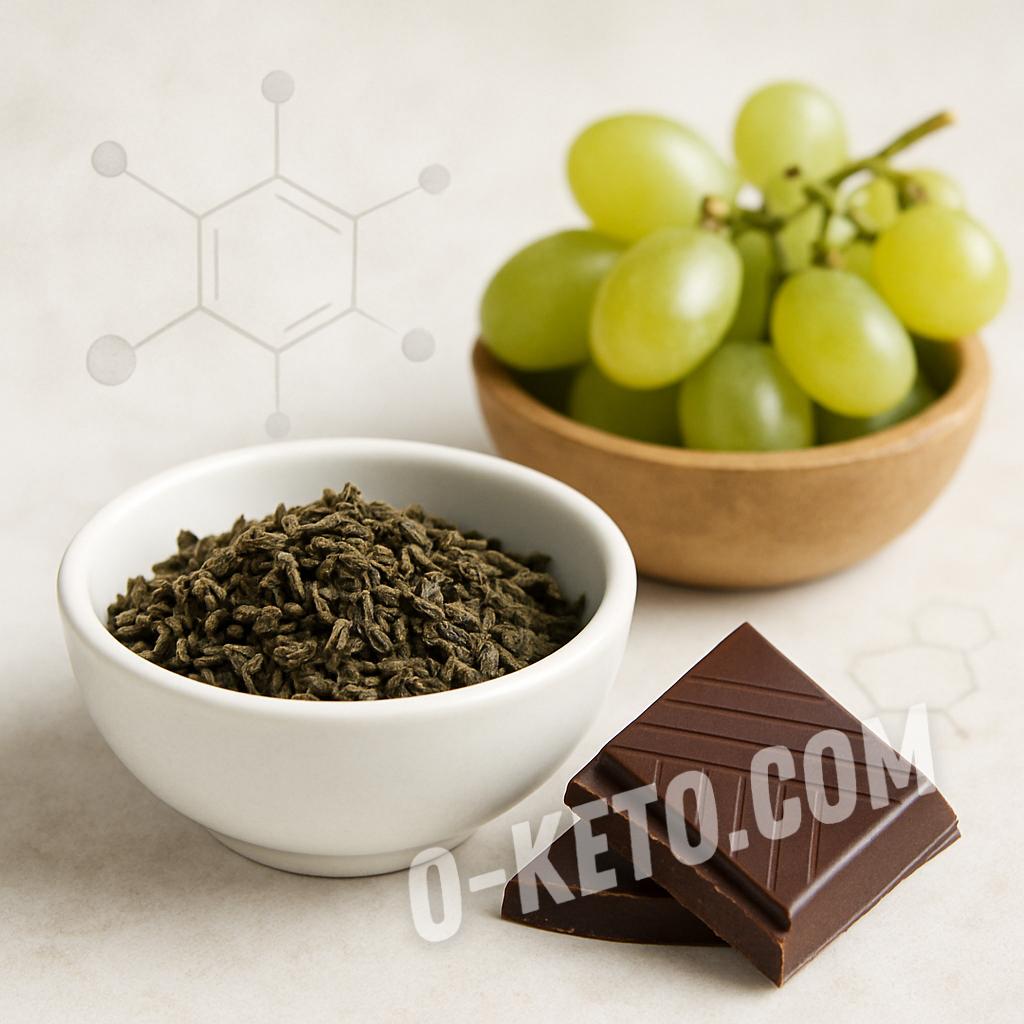
Gallic acid is a phenolic acid found in tea, berries, pomegranate, grapes, nuts, some herbs, and plant tannins. It can occur in free form or as part of larger molecules such as gallotannins and ellagitannins. During digestion and microbial metabolism, some of these compounds can be transformed into simpler phenolic acids and metabolites. Gallic acid is therefore best understood as part of the polyphenol network of food rather than a separate universal antioxidant.
Food sources
In practice, gallic acid is associated with foods that have astringency and tannic taste. These include black and green tea, pomegranate, some berries, walnuts, hazelnuts, grape skins, cocoa, spices, and plant extracts. In such foods it appears together with catechins, anthocyanins, ellagic acid, fiber, minerals, and organic acids. The real dietary effect comes from this combination, not from one molecule in isolation.
For low-carbohydrate eating, gallic acid sources are often convenient. Unsweetened tea, cocoa without sugar, nuts, spices, and moderate portions of berries can fit into LCHF and keto. Pomegranate and grapes require more caution because of sugar, but small amounts as a flavor accent may sometimes be possible. Polyphenols should not become a justification for sweet juice: whole food, portion size, and glycemic response matter.
Antioxidant action without myths
Gallic acid can neutralize free radicals in laboratory conditions and participate in regulation of oxidative stress. In the body, however, antioxidant defense is more complex: enzymes, glutathione, minerals, vitamins, mitochondria, inflammatory signals, and liver function are all involved. Polyphenols often act less like direct radical sponges and more like gentle signaling molecules that influence adaptive systems. It is therefore wrong to assume that more gallic acid is always better.
Interest in gallic acid is also connected with inflammatory pathways, microbiota, lipid metabolism, and vascular protection. Cell and animal studies provide many mechanisms, but they are not the same as proven treatment in humans. Tea, berries, and nuts can be part of a healthy diet, but they do not replace treatment for diabetes, hypertension, liver disease, cancer, or inflammatory disorders.
Microbiota and tolerance
Tannins and phenolic acids interact actively with the gut. Some people tolerate tea, berries, and pomegranate well and use them to make the diet richer. In others, excess astringent extracts may increase nausea, stomach irritation, constipation, or discomfort. Tolerance depends on dose, product acidity, mucosal health, bile flow, microbiota, and medications. Concentrated extracts require particular caution because their polyphenol dose is far higher than ordinary food intake.
Tea as a source of gallic acid has another nuance. Tannins can reduce absorption of non-heme iron when strong tea is consumed with iron-rich meals or iron supplements. For a healthy person this is usually not a problem, but with iron deficiency, anemia, pregnancy, or heavy menstruation, drinking strong tea with meals may slow restoration of iron stores. In that case tea is better kept away from iron intake.
There is also a positive practical side: astringent foods can help flavor feel complete without sugar. Unsweetened tea, cocoa, berries, and spices may replace sweet drinks and desserts when tolerated well. This benefit should not be exaggerated into treatment claims. Gallic acid does not burn fat or clean blood vessels, but foods containing it can help keep the diet richer in taste and less dependent on sweetness.
Supplements and practical meaning
Supplements with gallic acid or tannin-rich extracts are sometimes marketed for antioxidant protection, blood vessels, or inflammation. For most people, it is more sensible to obtain these compounds from food: unsweetened tea, berries, cocoa, nuts, herbs, and spices provide moderate doses in a natural matrix. High-dose extracts may irritate the stomach, interact with medications, and create false reassurance.
In practice, gallic acid is useful as a marker of a polyphenol-rich diet. If a person eats enough protein and includes Omega-3 fats, vegetables, greens, nuts, unsweetened tea, and tolerated berries, they receive not one molecule but a whole system of food signals. If the diet is built from sugar, alcohol, ultra-processed foods, and poor sleep, a gallic acid capsule will not repair the foundation. The important thing is not a heroic dose but a regular, tolerable, low-sugar diet.
With gastritis, peptic ulcer disease, marked reflux, constipation, or sensitivity to strong tea, the amount of astringent foods should be chosen carefully. Sometimes it is enough to brew tea weaker, avoid drinking it on an empty stomach, replace extracts with whole foods, or rotate polyphenol sources. A good diet should not constantly irritate the stomach just to look impressive on an antioxidant chart. Tolerance matters more than the theoretical benefit of one acid.
If you have any questions about the term "Gallic acid", you can ask them to AI. Please note, a low-cost OpenAI model is used. It may answer questions about disease treatment with errors!


 1 / 4
1 / 4 1 / 4
1 / 4
 1 / 4
1 / 4
 1 / 4
1 / 4

 1 / 4
1 / 4