


Glycogenesis
The process of synthesizing glycogen from glucose in liver and muscle; important for energy storage, training, recovery, and understanding carbohydrate adaptation.


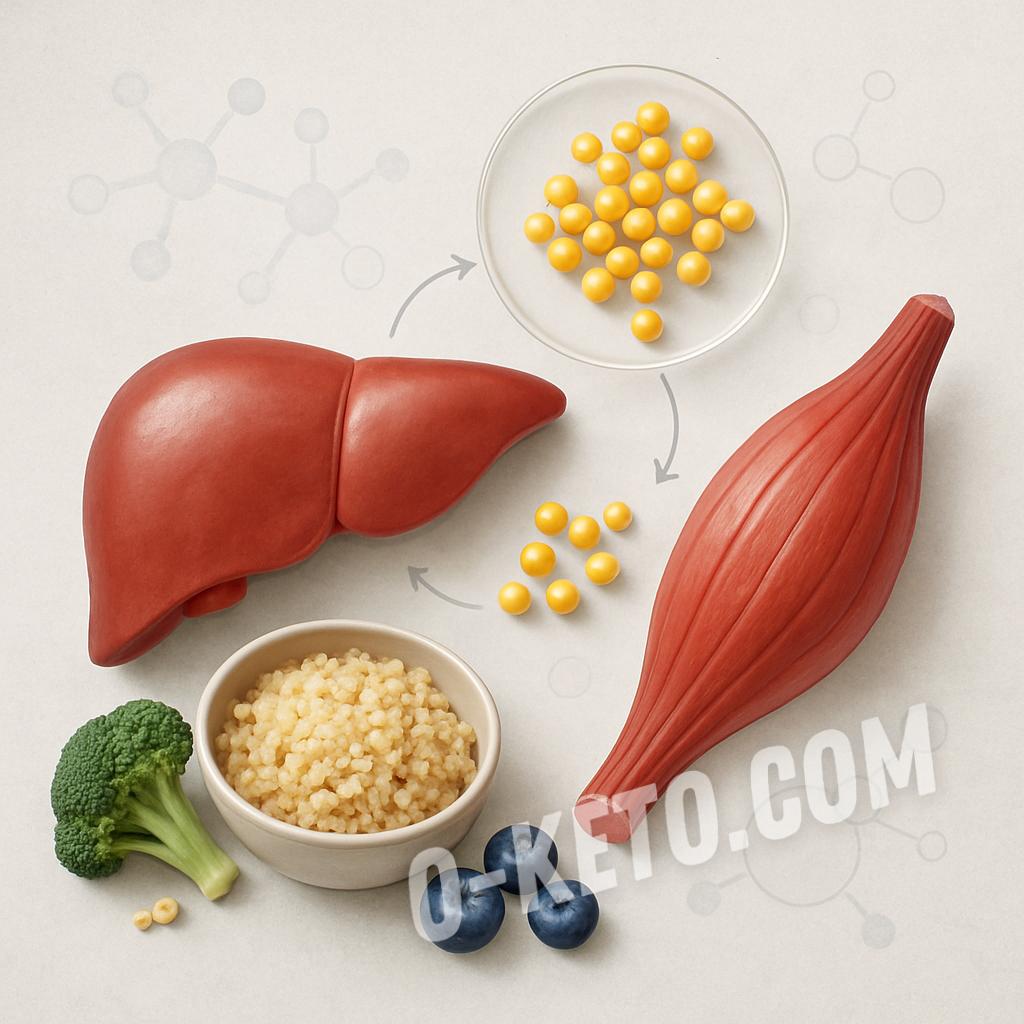
Glycogenesis is the process of synthesizing glycogen from glucose. Glycogen is the human storage form of carbohydrate, a branched structure made of glucose units. The main stores are in the liver and skeletal muscles. Liver glycogen helps maintain blood glucose between meals and overnight, while muscle glycogen is used mainly by the muscles themselves during work. Glycogenesis is therefore connected not only with carbohydrate intake but also with training, sleep, stress, insulin, low-carbohydrate adaptation, and recovery.
How glycogen synthesis starts
After a meal, especially one containing carbohydrate, glucose enters the blood, insulin rises, and cells receive a signal to store part of the energy. In liver and muscle, glucose becomes glucose-6-phosphate, passes through several steps, and is added to a growing glycogen chain. A key enzyme is glycogen synthase. The more active it is, the easier the cell replenishes its store. Insulin and glucose availability stimulate the process, while depletion after exercise makes muscle especially receptive to replenishment.
Glycogenesis is different from glycogenolysis. Glycogenesis builds glycogen, while glycogenolysis breaks it down into available glucose or intermediate forms. These processes do not run randomly at the same point. The body shifts between them according to food, workload, hormones, and energy demand. Adrenaline and glucagon generally support mobilization of stores, while insulin supports storage.
Liver and muscle
Liver glycogen serves the whole body because the liver can release glucose into the blood. When a person sleeps or goes a long time without food, the liver gradually uses glycogen and gluconeogenesis to supply fuel for the brain, red blood cells, and other tissues. Muscle glycogen is local. Muscle stores it for its own work and does not directly release glucose into the blood. After training, specific muscles may therefore be more depleted even when blood glucose is normal.
Glycogen capacity is limited. When stores are full, excess energy is more easily directed into other pathways, including fat synthesis, especially with chronic calorie surplus. Glycogen itself is not an enemy. It is a normal energy buffer. Problems arise not from storing glucose as such but from constant energy excess, insulin resistance, low activity, and an overloaded metabolic background.
Keto and glycogen
On keto and LCHF, glycogen stores usually become lower because carbohydrate intake is lower and water leaves along with glycogen. One gram of glycogen is stored with several grams of water, so rapid weight loss at the start of low-carbohydrate eating often reflects water as well as fat. This is normal, but it can come with sodium loss, weakness, and headache if electrolytes are ignored.
Low carbohydrate intake does not mean glycogen disappears completely. The liver can produce glucose through gluconeogenesis, and muscles can replenish part of their stores from lactate, glycerol, and amino-acid-related pathways. In adapted athletes, muscle glycogen may recover better than expected from carbohydrate intake alone. Explosive work, sprints, and high-volume strength training may still require an individual nutrition strategy.
Training and recovery
After intense exercise, muscles take up glucose more readily because contractions themselves increase glucose transport into the cell. This helps replenish glycogen even at lower insulin levels. Walking or training after meals can therefore smooth glucose response. For athletes, the question is not whether glycogen is needed at all, but what level of stores is needed for their type of workload.
If someone on strict keto constantly loses strength, recovers poorly, sleeps worse, and cannot complete training, the cause may not be willpower. Energy, electrolytes, protein, sleep, or a carbohydrate strategy around training may be insufficient. One approach may work for walking and moderate strength training, while competition, sprinting, and high-volume training require another.
Practical meaning
Glycogenesis helps explain why weight can rise quickly after a carbohydrate-containing meal without fat gain. Some glucose was stored as glycogen, and water was stored with it. The reverse happens at the start of low-carbohydrate eating: weight falls quickly, but this is not pure fat loss. Progress is better judged by trend, waist, strength, well-being, and glucose rather than panic over one water shift. Glycogen is a normal energy storage system to manage according to the goal, not something to fear.
If you have any questions about the term "Glycogenesis", you can ask them to AI. Please note, a low-cost OpenAI model is used. It may answer questions about disease treatment with errors!


 1 / 4
1 / 4 1 / 4
1 / 4


 1 / 4
1 / 4 1 / 4
1 / 4