


Growth hormone
Somatotropin regulates tissue growth, recovery, lipolysis, glucose metabolism and the IGF-1 system, but it should not be treated as a simple youth hormone. Levels are shaped by sleep, nutrition, training, age, pituitary disease, insulin resistance and medications.
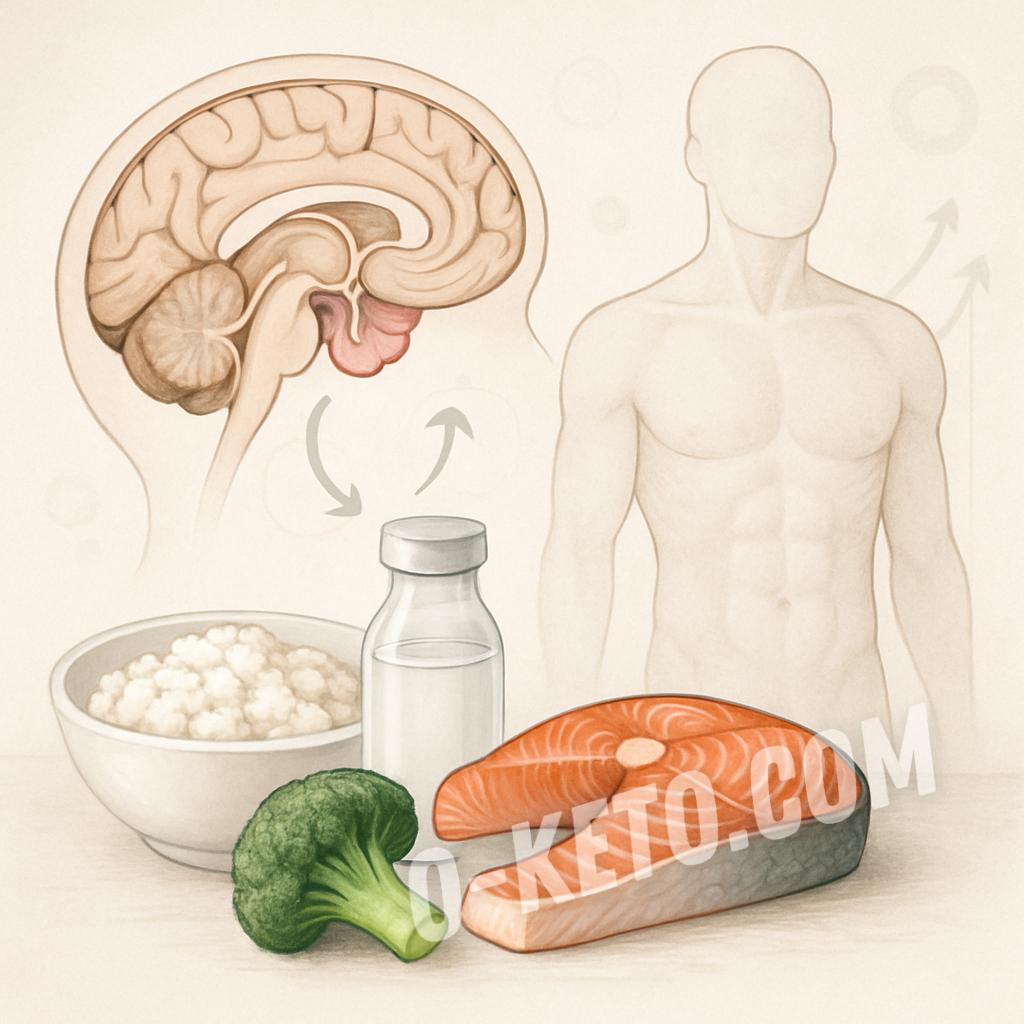
Growth hormone, or somatotropin, is produced by the pituitary gland and participates in tissue growth, recovery, protein metabolism, fat metabolism and glucose regulation. In children it is necessary for normal linear growth. In adults it helps maintain body composition, bone density, connective tissue recovery, muscle tissue and energy metabolism. It is not a simple “youth hormone” where higher is always better. Its effects depend on age, sleep, nutrition, insulin sensitivity, liver function, IGF-1 and the wider hormonal environment.
Growth hormone is secreted in pulses rather than as a steady level. A large part of secretion occurs at night, especially during deep sleep. This is why a random blood test for growth hormone is often not very informative: the sample may be taken between pulses and show a low value that does not represent the daily activity of the system. In practice, clinicians more often look at IGF-1, symptoms and special stimulation or suppression tests when deficiency or excess is suspected.
How it works through IGF-1
Many effects of growth hormone are mediated through insulin-like growth factor 1, which is produced largely in the liver. IGF-1 is involved in tissue growth and repair, but its level depends on more than growth hormone alone. Protein intake, energy availability, liver function, inflammation, thyroid status, age and chronic disease all influence it. A low IGF-1 value therefore does not always mean pituitary failure, and a high value does not automatically mean benefit.
Growth hormone also increases lipolysis, the mobilization of fatty acids from fat tissue. At the same time, it can temporarily reduce insulin sensitivity and raise glucose, especially when levels are excessive. This helps explain why acromegaly or misuse of growth hormone can be associated with insulin resistance, edema, joint pain, higher blood pressure and changes in facial features, hands or feet. Its metabolic effect is not just fat burning.
Sleep, training and nutrition
Deep sleep is one of the main natural factors behind normal secretion. Chronic sleep deprivation, late alcohol, repeated night waking and stress can impair recovery even when the diet looks good. Strength training and intense intervals can also increase growth hormone pulses, but adaptation depends on regular training, recovery, sufficient protein and avoiding an excessive calorie deficit.
Nutrition has a more complex effect. Longer breaks without food can raise growth hormone, but this does not mean automatic tissue building. Without amino acids and energy, tissues are not built efficiently. Protein is needed for IGF-1, muscle, enzymes and repair. On keto and LCHF, cutting protein too low out of fear of glucose can impair recovery. The fat-mobilizing effect of growth hormone does not compensate for poor sleep, inadequate protein or lack of resistance training.
When disorders are suspected
In children, deficiency may present with slow growth, delayed bone age and a characteristic growth pattern. In adults, possible signs include reduced muscle mass, increased fat mass, fatigue, lower quality of life and reduced bone density, but these are nonspecific. They can also be caused by hypothyroidism, depression, low protein intake, anemia, chronic inflammation or sleep deprivation. A diagnosis cannot be made from one symptom.
Excess growth hormone in adults is linked with acromegaly, a condition that can change the hands, feet, facial features, joints, blood pressure, glucose and internal organs. This is a serious endocrine disorder, not a cosmetic variation. When it is suspected, IGF-1 and suppression testing are usually assessed under the care of an endocrinologist. Using growth hormone on one’s own for anti-aging, fat loss or sport is risky because the harms can outweigh the expected benefits.
Practical meaning
Normal regulation is supported by regular deep sleep, tolerable resistance training, adequate protein, appropriate energy intake, treatment of sleep apnea, reduced chronic stress and better insulin sensitivity. In low-carbohydrate nutrition, this means a sustainable routine rather than extreme fasting. Recovery, minerals, complete amino acids and healthy thyroid function matter more than chasing one hormone.
Medical evaluation is needed when there is severe fatigue, sudden body composition change, growth delay in a child, signs of acromegaly, unexplained edema, headaches, vision changes or persistent glucose problems. Growth hormone cannot be safely “boosted” by one supplement or one protocol. The system responds to lifestyle, but real endocrine disorders require diagnosis rather than self-experimentation.
If you have any questions about the term "Growth hormone", you can ask them to AI. Please note, a low-cost OpenAI model is used. It may answer questions about disease treatment with errors!


 1 / 4
1 / 4


 1 / 4
1 / 4 1 / 4
1 / 4 1 / 4
1 / 4 1 / 4
1 / 4