


Ischemic heart disease
Coronary heart disease is a condition in which the heart muscle receives too little blood and oxygen because of coronary-artery disease, so what matters is not only chest pain but also exercise tolerance, breathlessness, risk factors and the wider vascular background.




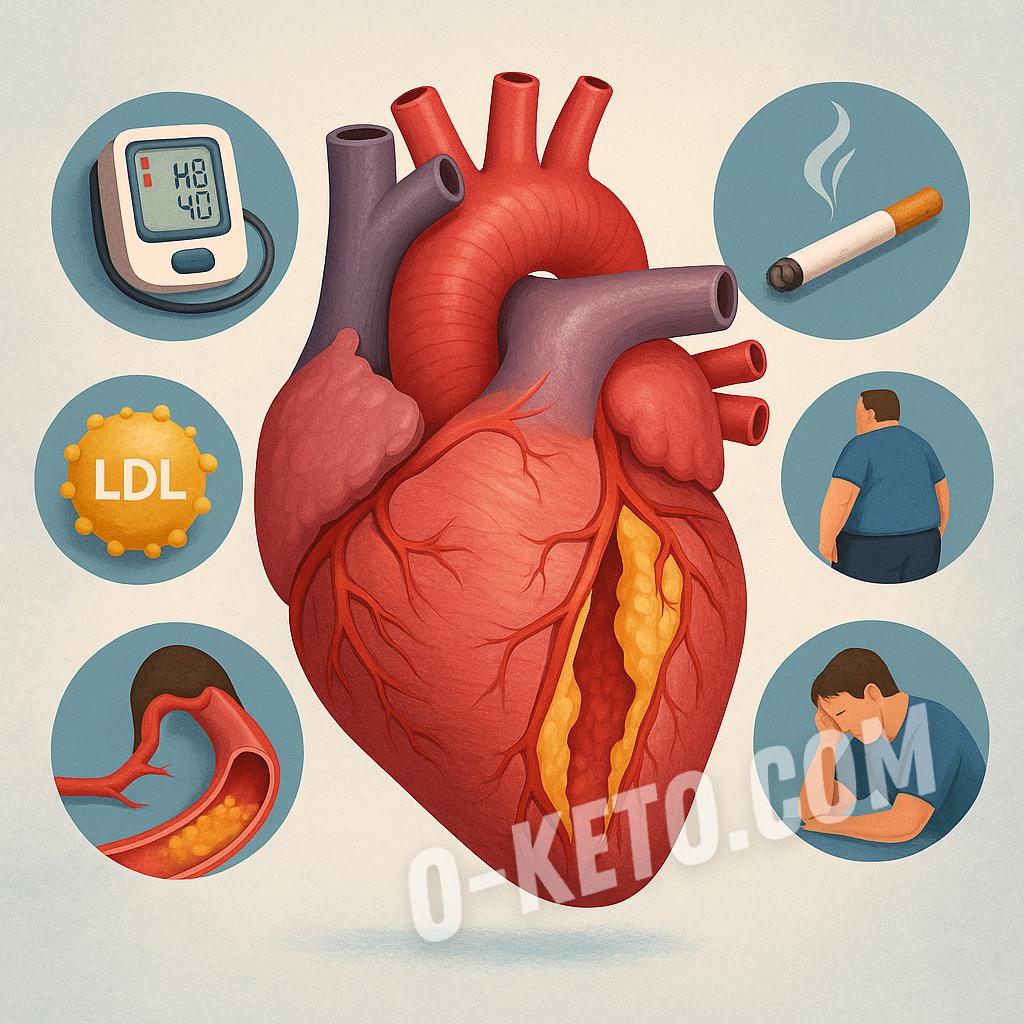
Coronary heart disease is a condition in which the heart muscle receives too little blood and oxygen, most often because the coronary arteries have been narrowed by atherosclerotic disease. The practical meaning of the diagnosis is that it is not simply about “the heart hurting,” but about a chronic or acute supply-demand mismatch in the myocardium that may show up as angina, reduced exercise tolerance, breathlessness and, in the worst case, myocardial infarction. That is why coronary disease is one of the central themes of preventive cardiology. It usually does not appear overnight, but its consequences may become abrupt if the process is ignored for too long.
Why ischemia develops
The usual mechanism is atherosclerosis: plaques form in vessel walls, the arterial lumen narrows and blood flow can no longer meet the needs of the heart, especially during exertion. Risk rises with smoking, hypertension, diabetes, insulin resistance, obesity, chronic inflammation, high ApoB, lipid disorders, inactivity and family predisposition. In practice it is important to realize that coronary disease is rarely random. It is often the end result of long accumulation of vascular risk factors, many of which work quietly for years before symptoms become obvious.
A common mistake is to assume that if there is no dramatic chest pain, there cannot yet be serious coronary risk.
How the disease may present
The classic picture is pressure or burning behind the sternum during exercise, fast walking, climbing stairs, emotional stress or cold exposure. But the manifestations may also be less textbook-like: breathlessness, fatigue, heaviness in the chest, discomfort in the neck, jaw or shoulder, the sensation of not getting enough air, or a sudden drop in endurance. In some people, especially those with diabetes, symptoms are muted. This is why declining exercise tolerance may sometimes be a more important warning sign than striking pain.
The more atypical the symptoms, the greater the risk that the coronary nature of the problem will be recognized late.
Why coronary disease matters beyond angina alone
Coronary heart disease is not only about a pain episode during effort. It points to a vascular background that may also affect the brain, kidneys and peripheral arteries. In addition, it is linked to the risk of myocardial infarction, arrhythmia, heart failure and sudden complications. The practical value of early recognition is that it allows action before a first major event occurs. Once a person understands their risk factors and reduced exercise tolerance, there is a chance to change the trajectory rather than wait for the crisis.
The earlier the broader vascular context becomes clear, the more room there is to prevent complications.
Nutrition, lipids and lifestyle
Nutrition does not replace cardiologic evaluation, but it strongly influences triglycerides, ApoB-containing particles, glycemic control, body weight and inflammation. For some people the critical step is stopping smoking; for others it is lowering blood pressure, improving glucose regulation, reducing visceral obesity and starting regular physical activity in a safe way. The practical point is not one magical “heart diet,” but systemic management of coronary risk. Coronary disease benefits from the cumulative effect of adverse factors, so prevention also has to work cumulatively and consistently.
The better a person understands their lipids, pressure, glucose and physical conditioning, the less abstract the diagnosis remains.
Why early prevention matters so much here
Coronary risk rarely appears out of nowhere, and that is exactly why there is room for intervention long before infarction. Once a person already sees worsening exercise tolerance, adverse lipids or the combination of hypertension with visceral obesity, that is a window for action rather than a reason to wait for louder symptoms. In practical terms prevention begins before the first catastrophe, not after it.
When closer review is needed
Closer review is needed with chest discomfort, pressure or burning, lower exercise tolerance, breathlessness, clustering of cardiometabolic risk factors, high ApoB, family history of premature vascular events and after any suspicious episodes linked to exertion. The most sensible way to think about coronary heart disease is as a manifestation of coronary atherosclerosis and broader vascular risk that requires precise evaluation and structured control of progression factors, not denial and not panic.
If you have any questions about the term "Ischemic heart disease", you can ask them to AI. Please note, a low-cost OpenAI model is used. It may answer questions about disease treatment with errors!


 1 / 4
1 / 4


 1 / 4
1 / 4 1 / 4
1 / 4 1 / 4
1 / 4