


Lipid profile
A lipid panel is a profile of fat metabolism rather than one cholesterol number, so it should be interpreted through the overall pattern: total cholesterol, LDL, HDL, triglycerides and the wider metabolic context.


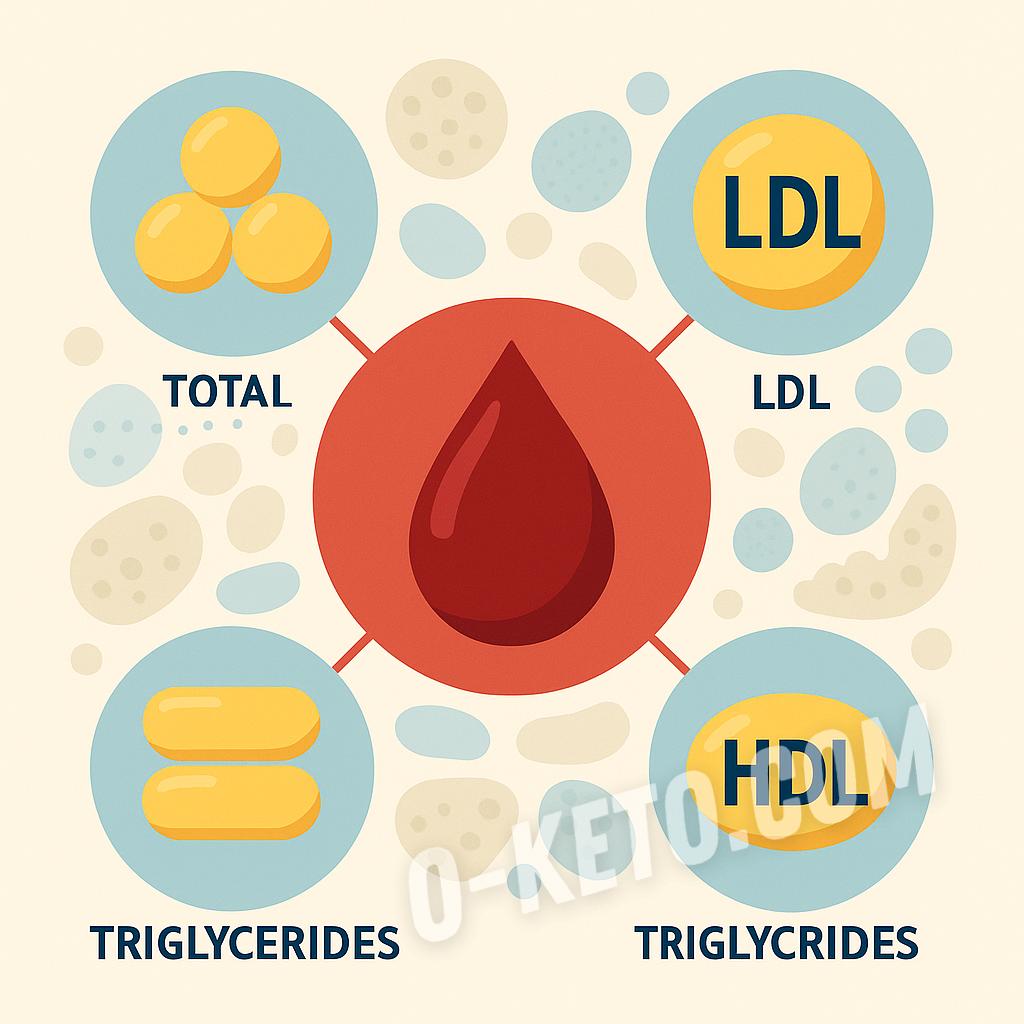
A lipid panel does not show “just cholesterol,” but an entire profile of fat metabolism. It usually includes total cholesterol, LDL, HDL, triglycerides and sometimes additional values such as non-HDL or calculated ratios. That is why it cannot be interpreted honestly from one line or one alarming number alone. Its value lies in showing a pattern that can be matched with metabolic background, diet, body weight, insulin resistance, liver and thyroid function, and the broader cardiovascular-risk picture.
What the test shows
A lipid panel helps evaluate how fats and lipoproteins are currently being transported in the blood. But it is not a photograph of “good and bad fats” separated from the rest of metabolism. For example, high triglycerides often point toward carbohydrate-handling problems and insulin resistance, low HDL commonly travels with metabolic dysfunction, and elevated LDL cannot be interpreted identically in every person without considering triglycerides, inflammation, family history and overall risk. This layered nature is what makes the panel useful and what makes oversimplified interpretation risky.
The same total cholesterol can carry different meaning depending on what the neighboring fractions are doing.
Why one number is not enough
A common mistake is to notice only total cholesterol or only LDL and make a final judgment about risk. In practice the combination of HDL, triglycerides, non-HDL, body composition, blood pressure, glucose control, family history and inflammatory context often tells much more than one highlighted value. Diet changes, weight loss, ketosis, hypothyroidism, alcohol, medication and acute illness can all shift the profile noticeably. For that reason a quick “good or bad” verdict without context easily becomes either false reassurance or unnecessary panic.
The lipid panel is most valuable when people look at pattern and trend rather than reacting to the single frightening word “cholesterol.”
What influences the result
Fasting duration, recent meals, alcohol, infection, weight loss, diet composition, physical activity, medication use, liver function, kidney function and thyroid status all influence lipid results. In the first months of low-carbohydrate or ketogenic eating, transitional shifts can occur as well, especially during active fat loss. In some people LDL changes noticeably, while triglycerides and HDL improve. That is why the panel is best judged alongside weight dynamics, dietary pattern, glucose metabolism and total cardiovascular profile rather than as an isolated report.
Lipid numbers live inside metabolism; they do not exist separately from it.
How to read it with other markers
It is often useful to interpret a lipid panel alongside glucose, insulin, HbA1c, waist circumference, blood pressure, liver enzymes, TSH, uric acid and family history of early cardiovascular events. High triglycerides with low HDL tell one story. A rise in total cholesterol or LDL during weight loss with improved glucose control may represent a different context that should not be read by template. In some cases ApoB, non-HDL or lipoprotein(a) add risk precision, but even the basic panel already says a lot if it is interpreted intelligently.
The greatest value of the test lies not in the phrase “good” or “bad,” but in understanding the metabolic pattern it reveals.
When closer review is needed
A closer review is needed with suspected familial hypercholesterolemia, sharp diet-related shifts, coexistence of insulin resistance, hypothyroidism, liver disease, hypertension or any attempt to interpret the panel through one single marker only. The most sensible way to think about a lipid panel is as a metabolic profile in which each row makes sense only together with the neighboring data and the wider clinical context.
Common mistakes when reading a lipid panel
A common mistake is to focus on one favorite line and ignore the rest of the profile. Another is to interpret the panel without body weight, glucose control, blood pressure and overall metabolic direction. That is how the same person may either panic unnecessarily or miss genuine risk by reacting to one number instead of the pattern.
If you have any questions about the term "Lipid profile", you can ask them to AI. Please note, a low-cost OpenAI model is used. It may answer questions about disease treatment with errors!


 1 / 4
1 / 4 1 / 4
1 / 4 1 / 4
1 / 4


 1 / 4
1 / 4

 1 / 4
1 / 4