


Disordered eating behavior
An eating disorder is not weak discipline but a disordered relationship with food, body and control in which obsessive thoughts, bingeing, restriction, shame, anxiety and physical consequences can reshape daily life and health.
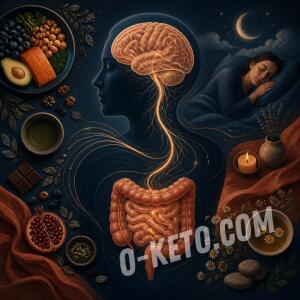




An eating disorder is not simply “poor willpower” and not the same as ordinary dissatisfaction with appearance. It is a condition in which the relationship with food, body weight, control and body image becomes painful, obsessive and disruptive enough to affect life in a major way. In different people it may look like severe restriction, repeated bingeing, rigid food rules, fear of certain foods, constant calorie control, guilt after eating or a feeling that thoughts about food occupy far too much mental space. The practical significance is that not only nutrition suffers: mood, sleep, hormones, social life and general health are affected as well.
Why it is not just a discipline problem
Eating disorders usually arise at the intersection of psychological vulnerability, anxiety, perfectionism, trauma history, pressure from body ideals, chronic body dissatisfaction and attempts to control weight too rigidly. In some people strict dieting becomes the trigger, while in others emotional stress, comments about the body, sports culture or a chronic sense of insecurity play a larger role. That is why it is harmful to interpret the condition as laziness or bad character. Once food becomes a tool of punishment, control or emotional regulation, the problem has already moved far beyond the idea of “just be stronger.”
The more shame and self-punishment build up, the more stable the disorder cycle can become.
How it may look in real life
In one person the front line is rigid restriction, fear of weight gain and the sense that food has to be “earned.” In another it is repeated loss-of-control eating followed by guilt, compensation, fasting or a promise to restart perfectly on Monday. A third person may not binge dramatically, yet may live in constant obsession with ingredients, calories and food purity so that eating is no longer a normal part of life. What matters is not only which symptom is present, but how strongly food and body concerns begin to control the day, mood and decisions.
That is why the sentence “I’m just eating clean” is not always harmless if it is driven by fear and loss of flexibility.
What the DEBQ questionnaire shows
The DEBQ questionnaire describes three habitual eating styles: restrained, emotional, and external eating. It shows how a person typically responds to attempts to lose weight, stress, boredom, anxiety, the sight or smell of food, or the presence of other people eating. This can provide a useful map of recurring situations, but it is not by itself a diagnosis of anorexia nervosa, bulimia nervosa, or binge-eating disorder.
Three separate scales are available on the site: restrained eating, emotional eating, and external eating. Use the answers as a reason to examine specific episodes: what happened before eating, whether physical hunger was present, whether control was lost, and what followed afterward.
Scores should not be treated as universal borders between “normal” behavior and a disorder. Different DEBQ versions may differ in item count, translation, scoring, and reference samples. A high score describes the prominence of one eating style, but does not prove an illness. A low score does not rule out a clinical problem when there are recurrent loss-of-control episodes, compensatory behaviors, intense fear around food, or clear harm to health.
Assessment depends not only on a questionnaire, but also on symptom duration and frequency, loss of control, compensatory behavior, physical condition, and the effect on everyday life. A DEBQ result is therefore best discussed with a clinician who understands eating disorders rather than used to justify another rigid diet or self-treatment.
Why it is dangerous physically
The consequences depend on the form of the disorder, but often include weight instability, protein and micronutrient deficiency, menstrual disruption, GI problems, poor sleep, anxiety, depression, fatigue, lower libido and growing social isolation. Even at an outwardly “normal” weight, the body may be living in a state of deficit, stress and unstable fueling. For that reason the problem cannot be judged by appearance alone. Some of the most serious metabolic and psychiatric consequences may exist in a body that looks unremarkable from the outside.
This is one reason eating disorders should never be romanticized as “good self-control.”
Diet styles, keto and rigid rules
Any dietary style, including low-carb or ketogenic eating, can be used either as a calm practical tool or as a way to intensify fear, restriction and self-punishment. The choice of diet by itself does not prove an eating disorder, but if food is becoming less flexible, more panic-driven and more guilt-loaded, that is an important warning sign. Extra caution is needed in people with a history of bingeing, extreme dieting or obsessive control. What looks like “healthy eating” from the outside may sometimes be a socially approved form of an old disorder pattern.
The useful question is not whether the label of the diet sounds clean, but whether eating remains sustainable, humane and compatible with ordinary life.
When more focused help is needed
More focused help is needed if thoughts about food or weight dominate the day, binge episodes recur, compensatory behaviors appear, specific foods are feared intensely, menstrual cycles disappear, weight swings become sharp, fainting happens, social isolation grows or there is a sense of complete loss of control. In that situation it is better not to wait for it to “pass on its own,” but to treat it as a real disorder rather than a personal failure. The most sensible approach is to see an eating disorder as a combined problem of mind, body and behavior in which help is needed not to tighten control further, but to restore safety, flexibility and a more normal relationship with food.
Sources
- The Dutch Eating Behavior Questionnaire (DEBQ) for assessment of restrained, emotional, and external eating behavior;
- The proof of the pudding: is the DEBQ-external eating scale a valid measure of external eating?;
- Eating Disorders: What You Need to Know — National Institute of Mental Health.
If you have any questions about the term "Disordered eating behavior", you can ask them to AI. Please note, a low-cost OpenAI model is used. It may answer questions about disease treatment with errors!


 1 / 4
1 / 4

 1 / 4
1 / 4 1 / 4
1 / 4 1 / 4
1 / 4


 1 / 4
1 / 4
