


Spine
The spine is the foundation of the human skeleton, a supportive and protective structure that connects all parts of the body into a unified system. It consists of 33–34 vertebrae, connected by intervertebral discs and ligaments, which gives it strength and flexibility at the same time.
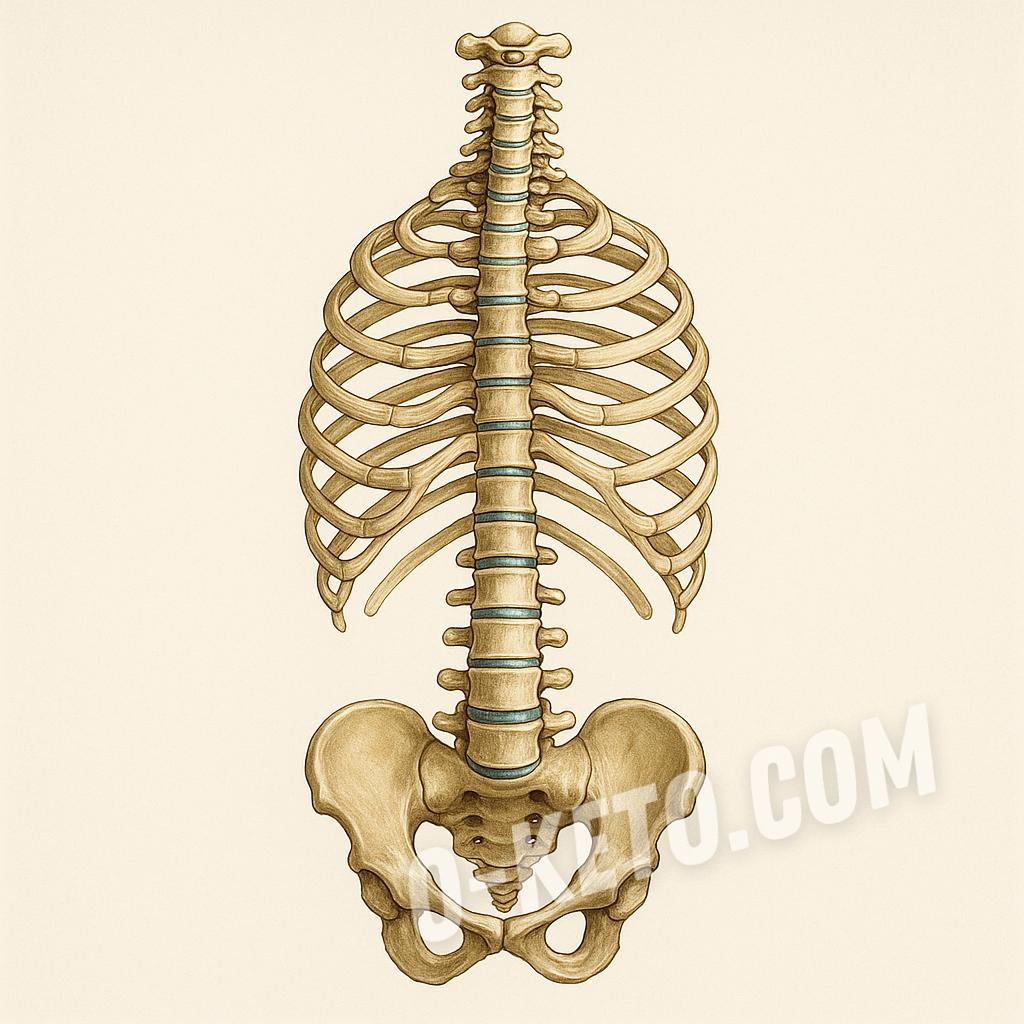
The spine is the foundation of the human skeleton, a supportive and protective structure that connects all parts of the body into a unified system. It consists of 33–34 vertebrae, connected by intervertebral discs and ligaments, which gives it strength and flexibility at the same time.
The spinal column protects the spinal cord, participates in load distribution, ensures balance and mobility, and supports the head and internal organs. Its condition directly affects posture, the functioning of the nervous system, and the overall well-being of a person.
Structure of the Spine
Each vertebra consists of a body, an arch, and processes to which muscles and ligaments attach. Intervertebral discs act as shock absorbers, preventing friction and reducing load during movement.
The spine has natural curves: cervical and lumbar lordosis, thoracic and sacral kyphosis — they allow for even load distribution and soften impacts while walking.
Sections of the spine:
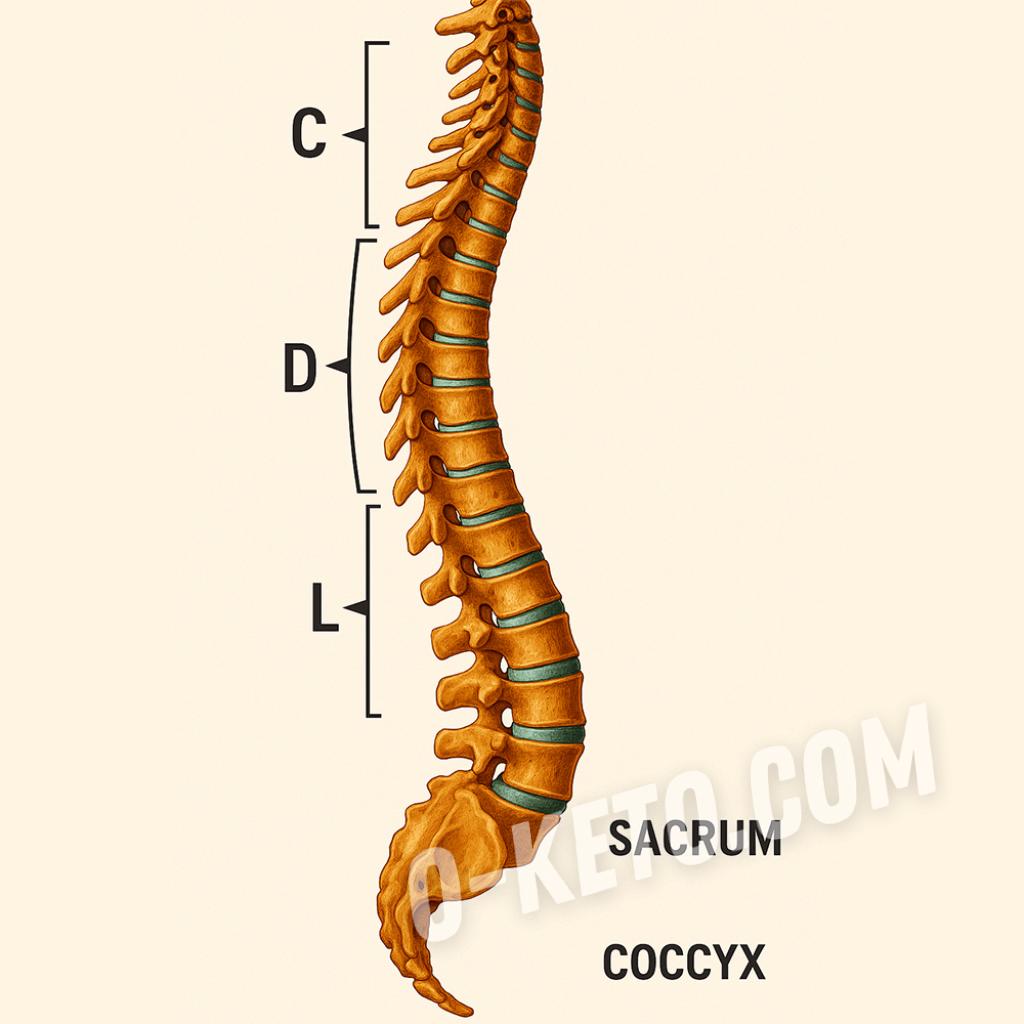
- cervical region — consists of 7 vertebrae (C1–C7); responsible for the mobility and support of the head;
- thoracic region — includes 12 vertebrae (D1–D12); connected to the ribs, forming the rib cage;
- lumbar region — consists of 5 powerful vertebrae (L1–L5); bears the main load of the body;
- sacral region — formed by 5 fused vertebrae, forming the sacrum, connecting the spine to the pelvis;
- coccygeal region — 3–5 fused vertebrae, the remnant of the tail section, performing a stabilizing function.
Diseases at different levels of the spine can be related to various organs of the human body:
| Vertebra Number | Organs and Body Parts Associated with the Vertebra | Symptoms and Pathologies Arising from Vertebral Displacement |
|---|---|---|
| C1 | Pituitary gland, inner ear, brain, sympathetic nervous system | Headaches, nervousness, high blood pressure, migraines, sleep problems |
| C2 | Eyes, optic and auditory nerves, temporal bones | Eye diseases, allergies, hearing loss, fainting |
| C3 | Cheeks, outer ear, facial nerve, teeth | Neuralgia, neuritis, acne |
| C4 | Nose, lips, mouth, Eustachian tube | Hearing impairment, enlarged adenoids |
| C5 | Vocal cords | Sore throat, tonsillitis, laryngitis |
| C6 | Neck muscles, forearms | Pain in the neck, shoulders, and back of the head |
| C7 | Thyroid gland, shoulder joint, elbow joint | Hypothyroidism, impaired mobility in the shoulders and elbow |
| D1 | Arms, wrists and palms, esophagus and trachea | Asthma, cough, pain in the arms and palms |
| D2 | Heart | Arrhythmia, pain behind the sternum, ischemic disease |
| D3 | Bronchi, lungs, pleura, chest and nipples | Bronchitis, asthma, pleurisy, pneumonia |
| D4 | Gallbladder, bile duct | Gallstones, jaundice, impaired fat absorption |
| D5 | Liver, solar plexus | Liver dysfunction, jaundice, impaired blood clotting |
| D6 | Stomach | Gastritis, ulcers, digestive disorders |
| D7 | Pancreas, duodenum | Diabetes, ulcers, digestive and stool disorders |
| D8 | Spleen, diaphragm | Hiccups, breathing difficulties |
| D9 | Adrenal gland | Weakness of the immune system |
| D10 | Kidneys | Kidney diseases, weakness |
| D11 | Urination disorders, chronic kidney diseases | |
| D12 | Small and large intestines, inguinal rings, fallopian tubes | Digestive disorders, diseases of the female reproductive organs, infertility |
| L1 | Abdominal cavity, upper thigh | Hernias, constipation, colitis, diarrhea |
| L2 | Appendix | Appendicitis, intestinal colic |
| L3 | Reproductive organs, bladder, knee | Bladder disorders, impotence, knee pain |
| L4 | Prostate gland, shins, feet | Pain in the shins, feet, sciatica, lumbago, urination disorders |
| L5 | Shins, feet, toes | Swelling, pain in the ankles, flat feet |
| Sacrum | Thigh bones, buttocks | Pain in the sacrum |
| Coccyx | Rectum, anus | Hemorrhoids, dysfunction of pelvic organs |
Functions of the Spine
- protection of the spinal cord and nerve roots from damage;
- support of the head and torso;
- ensuring movement, flexibility, and shock absorption during walking and bending;
- participation in the formation of posture and body balance;
- ensuring the normal functioning of internal organs by maintaining the correct position of the thoracic and abdominal cavities.
Spinal Diseases
Spinal disorders can arise under the influence of many factors — a sedentary lifestyle, nutrient deficiencies (calcium, magnesium, vitamins D and K₂), poor posture, injuries, inflammation, and degenerative processes.
The most common pathologies include:
- osteochondrosis — degenerative changes in intervertebral discs, accompanied by pain and limited mobility;
- herniated disc — rupture of the fibrous ring with displacement of the disc nucleus and compression of nerve roots;
- scoliosis — lateral curvature of the spine, often forming in childhood;
- kyphosis and lordosis — excessive curves of the spine that disrupt posture and the functioning of internal organs;
- spondylolisthesis — displacement of vertebrae relative to each other, causing chronic pain and muscle tension.
How to Strengthen the Spine
A comprehensive approach is important for spinal health: nutrition, movement, rest, and proper posture. Key preventive measures include:
- regular physical activity: swimming, Pilates, yoga, exercises to strengthen the core muscles;
- balanced nutrition with adequate protein, vitamins D, C, K₂, magnesium, and collagen;
- observing ergonomics at the workplace: straight back, lumbar support, monitor at eye level;
- avoiding prolonged sitting without breaks, changing positions every 30–40 minutes;
- controlling body weight to reduce load on the lower back;
- quality sleep on an orthopedic mattress and pillow.
Conclusion
The spine is not just the support of the body, but the main “core” of health. Its condition affects posture, the nervous system, internal organs, and quality of life.
Taking care of the spine is a prevention of not only back pain but also many chronic diseases. Regular physical activity, proper nutrition, and attention to posture will help keep it healthy for many years.

If you have any questions about the term "Spine", you can ask them to AI. Please note, a low-cost OpenAI model is used. It may answer questions about disease treatment with errors!


 1 / 4
1 / 4 1 / 4
1 / 4


 1 / 4
1 / 4
 1 / 4
1 / 4