


Riboflavin
Vitamin B2 is required for FAD and FMN, coenzymes involved in energy metabolism, mitochondrial function, antioxidant defense, skin, mucous membranes, and activation of other B vitamins. Deficiency may cause mouth cracks, sore tongue, fatigue, and light sensitivity, but symptoms are nonspecific.
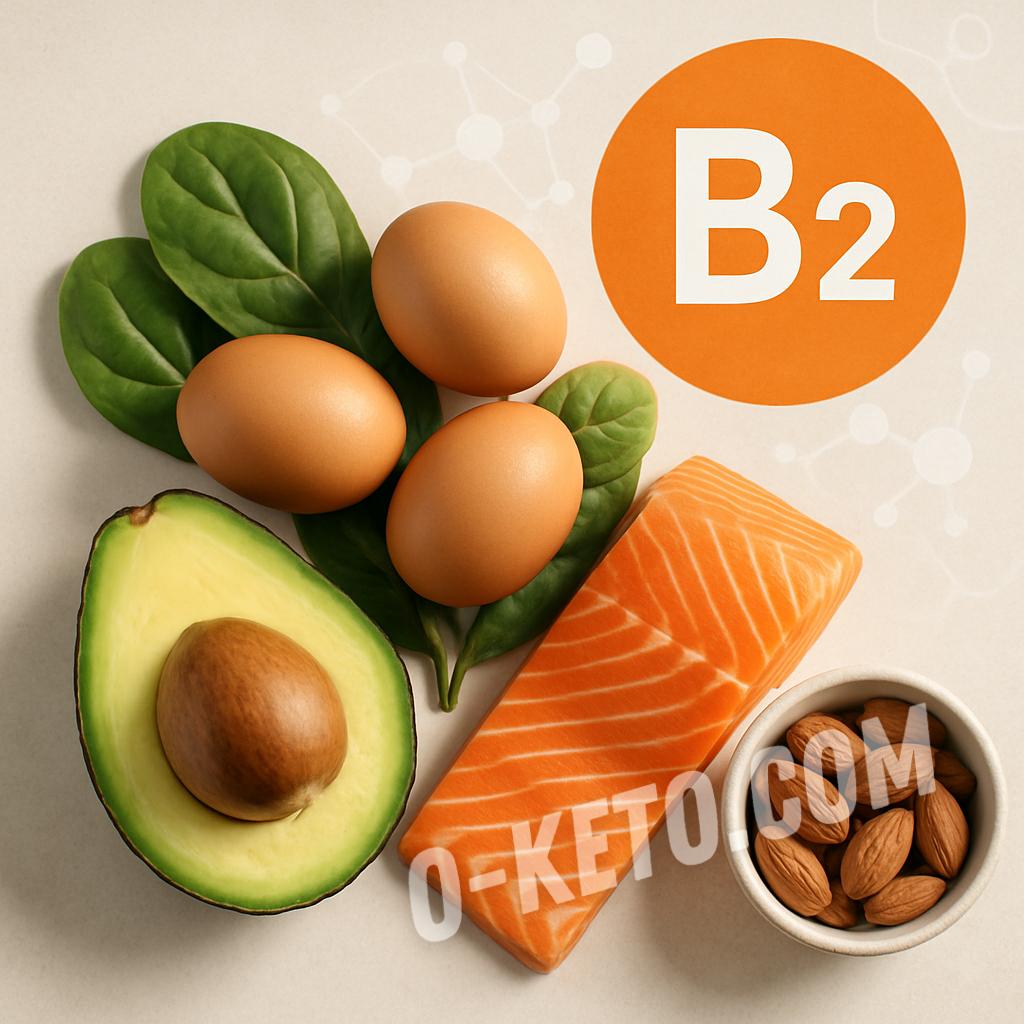
Riboflavin is vitamin B2, a water-soluble vitamin used to form the coenzymes FMN and FAD. These coenzymes participate in redox reactions, mitochondrial function, fat, carbohydrate, and amino acid metabolism, glutathione protection, and activation of other B vitamins. Riboflavin should therefore not be reduced to a skin vitamin or an anti-fatigue vitamin. It is built into the basic energy machinery of the cell.
Vitamin B2 comes from eggs, liver, meat, fish, dairy products, almonds, mushrooms, spinach, and several other foods. A low-carbohydrate diet can provide it without grains or sugar if the diet is not made only from purified fats. Eggs, organ meats, fish, meat, cheese, unsweetened yogurt, and mushrooms fit keto and LCHF well while also providing protein, minerals, and other B vitamins.
Why B2 matters
FMN and FAD help enzymes move electrons. That sounds technical, but it is closely connected with how cells obtain energy from food. Riboflavin participates in the mitochondrial respiratory chain, beta-oxidation of fatty acids, amino acid metabolism, and conversion of pyridoxine into active pyridoxal-5-phosphate. It is also needed for glutathione reductase, an enzyme that helps maintain reduced glutathione.
Because of this role, B2 deficiency can affect tissues with rapid renewal and high metabolic activity: mucous membranes, skin, eyes, the nervous system, and blood. Riboflavin rarely acts alone, however. If the diet is poor in B2, it is often also poor in protein, iron, B12, folate, niacin, zinc, or magnesium. Symptoms should therefore be read as a reason to assess the whole diet and absorption, not as proof of one isolated vitamin problem.
Deficiency signs
Classic signs of low riboflavin include cracks at the corners of the mouth, inflamed lips, a red sore tongue, irritated mucous membranes, dry skin, seborrheic changes, light sensitivity, fatigue, and sometimes anemia. Some people may notice more headaches or burning eyes. These signs are not specific. Similar symptoms can occur with iron deficiency, B12 deficiency, folate deficiency, zinc deficiency, protein deficiency, candidiasis, dermatitis, dry air, and digestive disease.
Risk is higher with alcohol use, monotonous diets, chronic diarrhea, malabsorption, intestinal disease, pregnancy, breastfeeding, heavy physical load, older age, and long-term use of some medications. If a person eats few animal foods and also restricts nuts, mushrooms, and greens, B2 intake may quietly fall. When deficiency is suspected, the real food base matters as much as the supplement choice.
Migraine and mitochondria
Riboflavin is often discussed in migraine because high doses of B2 have been studied for preventive support in some patients. The proposed rationale is linked to mitochondrial energy metabolism in the nervous system. It is not a painkiller and not a quick way to stop an attack. When B2 is used in migraine prevention, the effect is judged by attack frequency and intensity over weeks or months, not by same-day sensation.
Migraine should not be reduced to one vitamin. Sleep, meal regularity, stress, magnesium, menstrual cycle, alcohol, histamine-rich foods, dehydration, excess caffeine, medications, and neurological causes may be more important. Riboflavin can be a useful part of a plan, but it does not replace diagnosis or treatment when attacks are severe, new, unusual, or accompanied by neurological symptoms.
Supplements and safety
Riboflavin is usually well tolerated. Bright yellow urine after supplementation is expected and is not a sign of harm. This does not mean every regimen is necessary. If someone takes several B-complex products, energy formulas, and multivitamins, total doses and neighboring ingredients should be checked. Problems are often caused not by B2, but by high B6, niacin, or stacking many products.
A practical approach is to build a protein-rich, whole-food diet first and use supplements for a clear purpose. In low-carbohydrate nutrition, riboflavin is relevant because of its role in fat metabolism and mitochondria, but a well-built diet usually covers basic needs. Supplementation makes sense with restricted intake, signs of deficiency, migraine prevention under a plan, or impaired absorption.
If you have any questions about the term "Riboflavin", you can ask them to AI. Please note, a low-cost OpenAI model is used. It may answer questions about disease treatment with errors!


 1 / 4
1 / 4 1 / 4
1 / 4

 1 / 4
1 / 4


 1 / 4
1 / 4