


Seborrhea
Seborrhea is a disorder of sebaceous-gland activity and skin-barrier balance in which oiliness, flaking, inflammation, skin microbiome, hormones, stress and daily care all matter more than one random cream or shampoo.




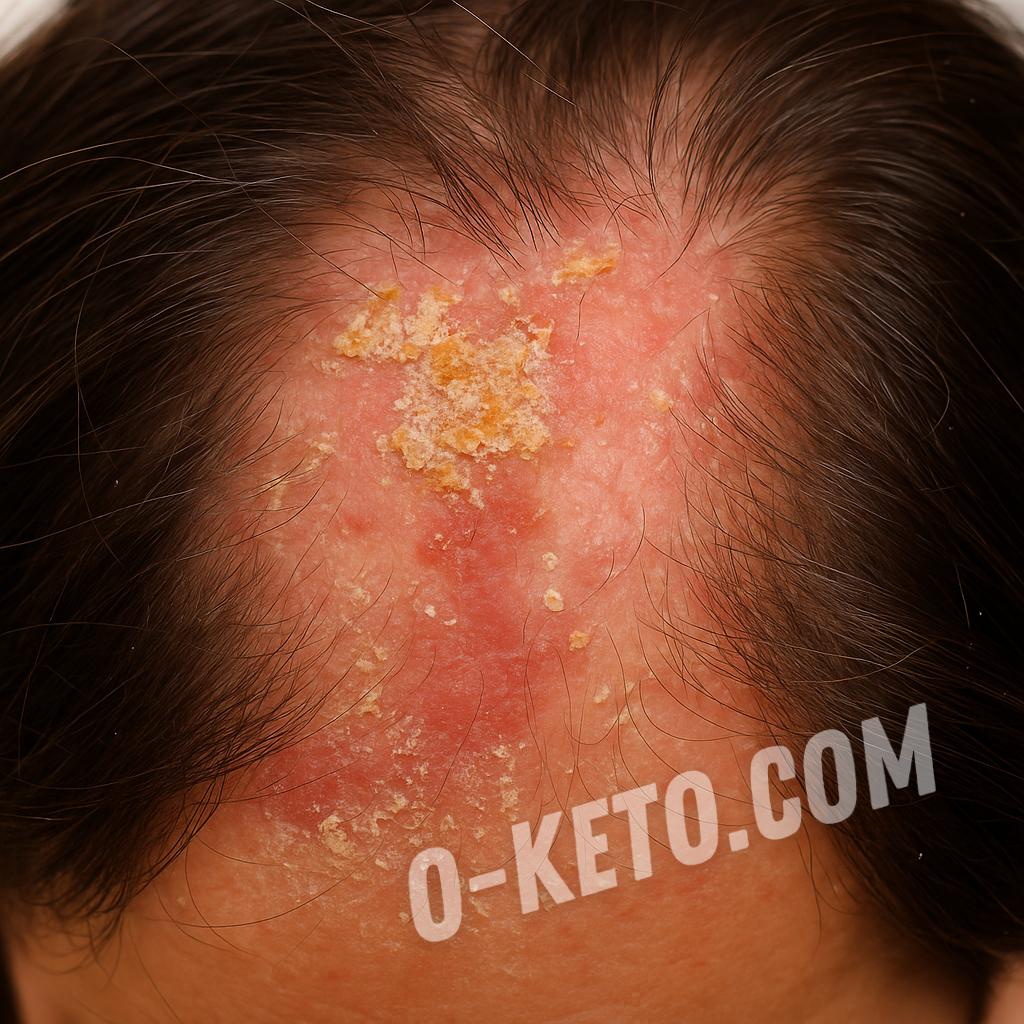
Seborrhea is a condition in which sebaceous-gland activity and skin-barrier behavior become unstable. People often notice oiliness, flaking, itching, redness, faster buildup on the scalp or patches around the nose, eyebrows, ears and chest. In everyday language seborrhea is often reduced either to “oily skin” or to “just dandruff,” but the real picture is broader. Skin oil composition, barrier integrity, microbiome, inflammation and care products all shape how it looks and feels. That is why similar flaking in two people can come from different mechanisms and may need different handling.
Why seborrhea develops
Seborrhea is usually driven by a combination of factors rather than a single cause. Important contributors include sebaceous-gland activity, hormonal background, the skin’s reaction to its own sebum, inflammatory response to Malassezia yeasts, chronic stress, poor sleep and a weakened barrier. In some people the problem becomes obvious during adolescence or hormonal shifts, while in others it worsens during winter, with harsh products or under persistent stress. The key question is therefore rarely “what nutrient am I missing,” but rather “why has the skin moved into an unstable inflammatory-oily mode.”
A common mistake is to search for one miracle product or one lab value that supposedly explains everything. Seborrhea usually sits at the intersection of excess oil, irritation and local inflammation.
How it can present
On the scalp, seborrhea often shows up as greasy dandruff, itching, discomfort and a feeling that the hair loses freshness too quickly. On the face it may appear as redness and flaking around the nose, in skin folds, on the eyebrows or at the hairline. Some areas can look dry even while the person complains of strong oiliness. That is not a contradiction; it often means the barrier is damaged and the skin is reacting with both sensitivity and inflammation. If care is too aggressive, a vicious cycle may start: strong degreasing worsens the barrier, and the skin becomes even more reactive afterward.
For that reason seborrhea should be judged not only by the amount of oil, but also by redness, itching, type of scaling and response to products.
What often makes it worse
Common aggravators are harsh shampoos or cleansers, irregular scalp washing, very occlusive cosmetics, stress, sleep deprivation, heat, sweating and constant touching or scratching of irritated areas. Some people also have a broader inflammatory background, insulin resistance or poor tolerance of certain cosmetic ingredients. Diet is rarely the sole cause, but major glucose swings, heavy ultraprocessed food patterns and systemic inflammation can worsen skin behavior in sensitive individuals.
This does not mean seborrhea can be “cured by diet alone,” but it also does not mean that metabolic background is irrelevant.
Daily care and practical routine
In practice, the most useful approach is to stabilize the routine gently: regular cleansing without harsh stripping, avoiding heavy product overload, watching the response to shampoos and antifungal ingredients, and not changing everything every few days. The scalp and the face may require different strategies because they do not tolerate products in the same way. Many people benefit from alternating a mild maintenance routine with more targeted anti-inflammatory or antifungal elements, but the overall goal stays the same: calm the inflammatory cycle without damaging the barrier even more.
That is why consistency is usually more useful than constantly searching for the strongest possible product.
When closer evaluation is needed
Closer evaluation is needed if lesions become very bright, wet, painful, spread beyond typical zones, respond poorly to basic care or raise doubt between seborrhea, psoriasis, atopic dermatitis, fungal infection and contact reaction. In those cases it is better not to stay attached to the word “dandruff,” but to clarify the real nature of the process. The most sensible view is to treat seborrhea as a disorder of skin regulation and low-grade inflammation in which barrier function, oiliness, microbiome, stress and thoughtful care matter more than a quick attempt to scrub away flakes at any cost.
If you have any questions about the term "Seborrhea", you can ask them to AI. Please note, a low-cost OpenAI model is used. It may answer questions about disease treatment with errors!


 1 / 4
1 / 4

 1 / 4
1 / 4 1 / 4
1 / 4 1 / 4
1 / 4 1 / 4
1 / 4

