


Polycystic ovary syndrome
Polycystic ovary syndrome is not only irregular periods and cysts on ultrasound, but a hormonal and metabolic condition in which ovulation, androgens, insulin resistance, body weight, skin and long-term reproductive risk all matter.



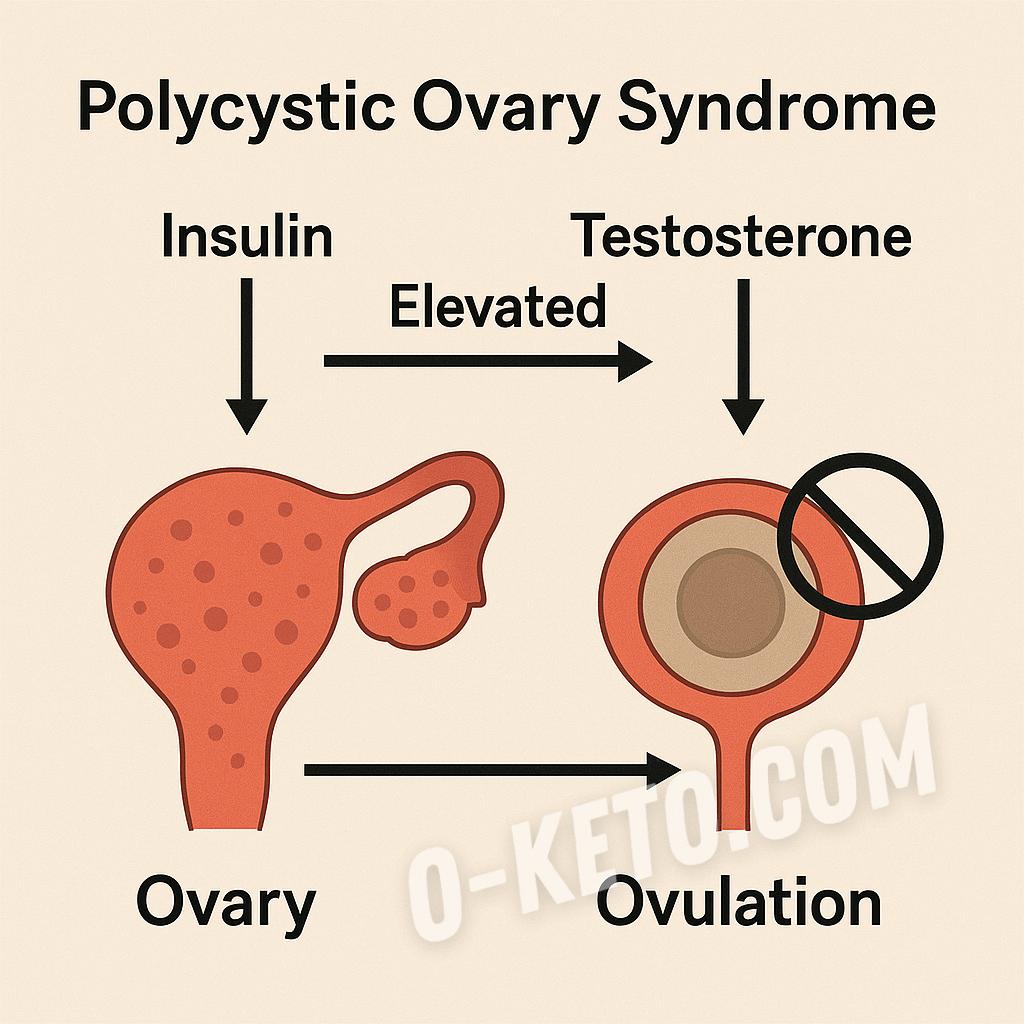
Polycystic ovary syndrome, or PCOS, is a hormonal and metabolic condition that affects not only cycle timing and ovulation, but also carbohydrate handling, insulin sensitivity, androgen levels, skin, hair and long-term reproductive risk. Many people know it mainly through the phrase “polycystic ovaries on ultrasound,” yet the scan is only one part of the story. In practice PCOS may show up through irregular cycles, acne, weight gain, difficulty conceiving, hair changes and significant insulin resistance. It is not one single problem, but a cluster of linked mechanisms.
Why PCOS is not just “cysts on the ovaries”
The name is misleading because the main issue in PCOS is not cysts themselves, but disturbed ovulation, hormonal regulation and metabolic background. In some women ultrasound shows multiple follicles, but the key features are irregular ovulation, elevated androgens and insulin resistance. In others the ultrasound picture is not the most striking part, yet the clinical pattern is still highly suggestive. This is why PCOS cannot be diagnosed or ruled out by ultrasound alone without looking at cycle history, symptoms and laboratory data.
A common mistake is to assume that if the scan does not “show cysts,” the whole problem must be absent.
How it may present
Typical features include irregular or infrequent periods, absent ovulation, acne, oily skin, increased facial or body hair, scalp hair thinning, weight gain, difficulty losing weight and fertility problems. But the balance of symptoms varies greatly. In one woman skin and cycle dominate, in another the metabolic side and insulin resistance stand out more, and in a third fertility concerns bring the syndrome to attention. It is therefore more useful to see PCOS as a spectrum than as one fixed mandatory combination.
This variability is one reason why the path to diagnosis often takes longer than people expect.
The role of insulin and body weight
In many women insulin resistance plays a major role by amplifying androgen excess, interfering with ovulation and supporting weight gain. It is important, however, to remember that PCOS also occurs in women without marked obesity. Even at a relatively normal body weight the metabolic background may be far from ideal. This is why glucose, insulin, HbA1c, waist circumference and the wider metabolic profile are often very informative. If PCOS is seen only as a “gynecologic issue,” an important part of the picture is easily missed.
PCOS sits at the intersection of endocrinology, gynecology and metabolic health rather than inside one narrow box.
Diet, low-carb and practical value
Diet receives attention in PCOS for good reason. When insulin resistance is strong, reducing glucose swings and creating a steadier carbohydrate pattern may improve comfort and metabolic markers. Low-carbohydrate or similar approaches can be useful if they help appetite, weight and glucose stability. Yet diet alone does not replace evaluation of the menstrual cycle, androgen status and reproductive goals. Its practical value lies in supporting the metabolic layer of PCOS rather than promising to “fix everything” by food alone.
The more clearly a woman understands which layer of the syndrome is dominant for her, the fewer chaotic expectations she places on diet by itself.
When closer review is needed
Closer review is needed with irregular cycles, androgen-related symptoms, trouble conceiving, suspected insulin resistance, significant weight gain or any attempt to explain the syndrome only through “cysts.” The most sensible way to think about PCOS is as a hormonal-metabolic condition in which ovulation, androgens, insulin, long-term risk and the woman’s real-life goals all need to be understood together.
Common mistakes around PCOS
A common mistake is to search for one universal explanation and one universal fix. In some women the leading problem is the cycle, in others the skin, and in others insulin resistance and weight, so the practical priorities differ. The clearer it becomes which layer of PCOS is dominant in a given woman, the less chaos there is in expectations from treatment, diet and follow-up.
If you have any questions about the term "Polycystic ovary syndrome", you can ask them to AI. Please note, a low-cost OpenAI model is used. It may answer questions about disease treatment with errors!


