


Dry eye syndrome
Dry eye syndrome is a disorder of tear-film stability in which burning, grittiness and fluctuating vision depend not only on “too few tears,” but also on tear quality, meibomian glands, screen load and ocular-surface inflammation.


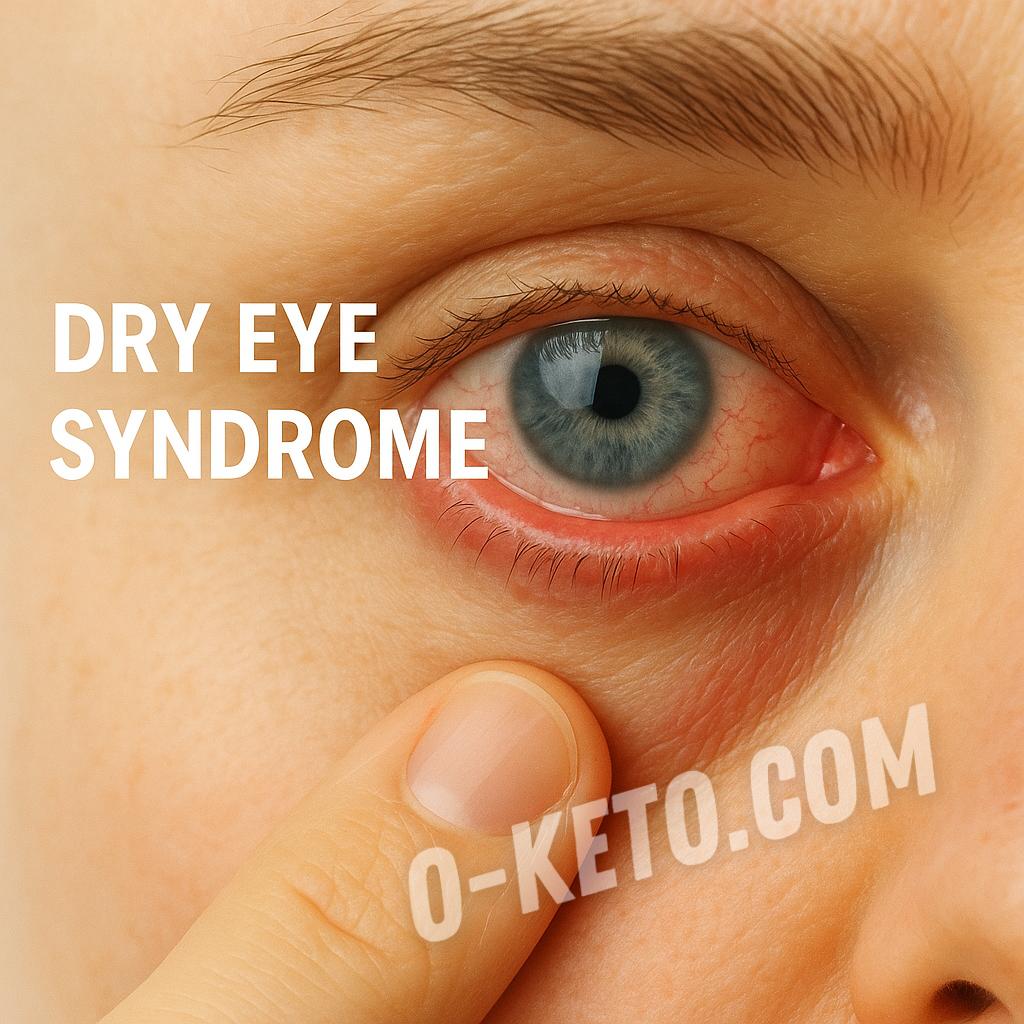
Dry eye syndrome is not simply a matter of “not enough tears.” It is a disorder of tear-film stability and ocular-surface protection. A person may feel burning, grittiness, stinging, tired eyes and fluctuating clarity of vision, especially later in the day or during heavy screen use. The practical difficulty is that symptoms may be intense even when the eye does not look dramatically abnormal from the outside, while in other cases chronic irritation becomes so familiar that it is underestimated. Dry eye therefore involves tear quality, evaporation, inflammation and visual habits, not only the subjective sensation of dryness.
Why dryness develops
There are several mechanisms. In some people the eye produces too little of the watery tear component, while in others the central problem is excessive evaporation because the meibomian glands are not functioning well. Age, hormonal shifts, autoimmune disease, contact lenses, dry air, long screen time, certain medications and previous eye procedures may all contribute. This is why two people with the same complaint of dryness may still need a different management strategy.
If the whole issue is reduced to “use some drops,” an important role of eyelids, meibomian glands and chronic ocular-surface inflammation can easily be missed.
How it feels in real life
Dry eye often becomes worse toward evening, in air-conditioned rooms, in wind, during reading and especially during prolonged screen work when blinking frequency falls. Paradoxically, some people complain not only of dryness but of watering eyes: the surface is irritated and tear quality is so poor that reflex tearing starts without real comfort. Light sensitivity, stickiness, redness and unstable focus may all become part of the picture.
These symptoms are exhausting because they interfere with work, reading, driving and the general endurance of the eyes throughout the day.
What matters beyond the symptoms alone
It is important to understand whether the main issue is reduced aqueous tears, excessive evaporation, eyelid-margin inflammation, meibomian dysfunction, allergy or a related systemic disease. Sometimes the key solution lies in work habits, air humidity and lid hygiene, while in other cases the cause is more distinctly ophthalmic or autoimmune. For that reason dry eye should not be reduced to a universal bottle of drops for everyone.
When symptoms are persistent, it is useful to assess not only what the person feels, but also tear-film quality, ocular surface integrity and eyelid condition.
Screen load, nutrition and environment
Heavy screen exposure reduces blinking frequency and often increases tear evaporation. Dry indoor air, contact lens overuse and poor rest routines add another layer of strain. Diet does not instantly cure dry eye, but hydration status, fat quality in the diet and general inflammatory background can influence symptom tolerance. That does not justify promises of “healing the eyes with diet,” yet it also does not justify ignoring the metabolic context completely.
In practical terms, the most useful approach is not one trendy hack, but a combination of visual routine, lid care, appropriate eye-surface support and careful attention to the underlying cause.
When closer assessment is needed
Closer assessment is needed with pain, noticeable loss of vision, marked redness, pronounced light sensitivity, trauma, suspected infection, autoimmune background or failure of ordinary measures. In those settings dry eye may be only one part of a more complex ocular-surface problem. The most sensible way to view dry eye syndrome is as a disorder of tear-film protection in which cause, evaporation, inflammation and visual loading matter more than the word “dryness” by itself.
Common mistakes with dry eye
A common mistake is to assume that dry eye always means simple lack of tears and can be solved by any lubricating drops. In practice many people are driven more by tear evaporation, eyelid-margin inflammation or meibomian gland dysfunction, so the idea of “just use drops” often fails. Another mistake is to underestimate the role of screens, reduced blinking, air conditioning and contact lenses while keeping the same daily pattern unchanged. The result is temporary relief without correcting the reason for constant irritation. A more useful view is to treat dry eye as a problem of tear film, eyelids and visual routine in which drops may help, but hygiene, environment, blinking habits and ophthalmic context matter as well.
If you have any questions about the term "Dry eye syndrome", you can ask them to AI. Please note, a low-cost OpenAI model is used. It may answer questions about disease treatment with errors!


 1 / 4
1 / 4 1 / 4
1 / 4
 1 / 4
1 / 4


