


Visceral obesity
Visceral obesity is fat accumulation around internal organs that is closely linked to insulin resistance, inflammation, fatty liver and cardiovascular risk, so waist size, glucose, lipids and lifestyle matter more than weight alone.




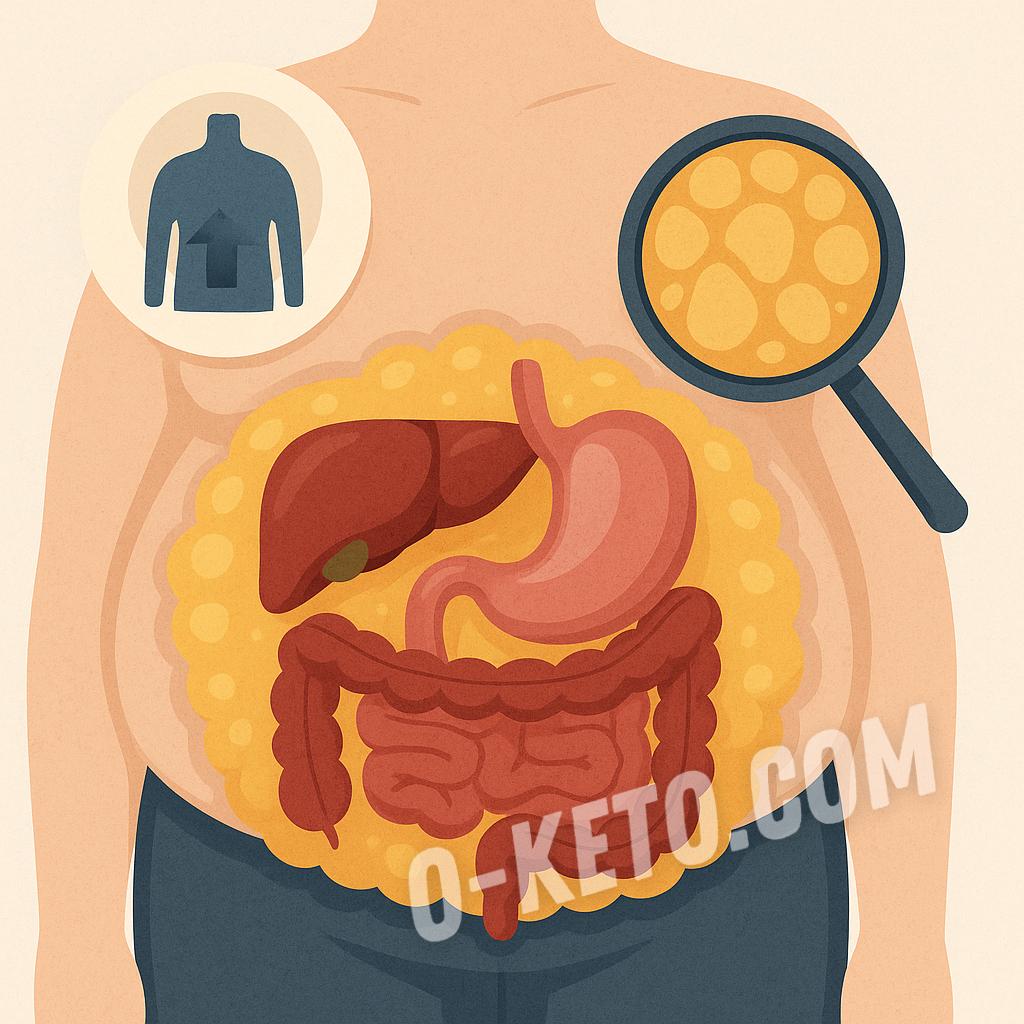
Visceral obesity refers to fat accumulation mainly in the abdominal cavity and around internal organs. Clinically it matters more than body weight alone because it is strongly linked to insulin resistance, chronic inflammation, fatty liver disease, lipid abnormalities and higher cardiovascular risk. That is why a person with marked visceral fat may carry a much worse metabolic background even when total body weight does not yet look extreme.
Why body mass index is not enough
Body mass index gives only a rough relationship between weight and height. It says nothing about where fat is stored. Visceral fat is metabolically active and more strongly associated with insulin resistance than subcutaneous fat. This is why waist circumference, waist-to-height ratio, liver markers, glucose, insulin, triglycerides and HDL often tell more than the scale alone.
Two people with the same weight can therefore have very different cardiometabolic risk depending on where fat is distributed.
What visceral obesity is most often linked to
Common contributors include overeating, excess rapidly absorbed carbohydrates and calories, inactivity, chronic stress, poor sleep, alcohol, insulin resistance and hormonal background. In some people abdominal fat accumulates especially easily in the setting of constant fatigue, chaotic schedule and late overeating. Genetics still matter, but this pattern shows how strongly behavior and environment influence fat distribution.
For that reason visceral obesity is rarely just an aesthetic issue; it is usually part of a broader metabolic story.
What risks it carries
Excess visceral fat is linked to higher risk of type 2 diabetes, hypertension, dyslipidemia, sleep apnea, fatty liver, gout and cardiovascular events. It may also affect energy, exercise tolerance and inflammatory tone. Addressing visceral obesity is therefore not only about “looking leaner,” but about reducing long-term risk to blood vessels, liver and glucose metabolism.
Very often this fat pattern explains the combination of high triglycerides, rising glucose and post-meal fatigue better than total weight alone.
What matters in management
In practical terms it is useful to assess not only body weight, but eating pattern, sleep quality, activity, alcohol, stress, medication background, liver markers and signs of insulin resistance. Reduction of visceral fat usually comes not from heroic short bursts, but from a sustained energy deficit, less ultra-processed food, enough protein, better sleep and regular movement. A lower-carbohydrate approach can genuinely help some people control appetite and glucose, but the decisive factor is not the label of the diet; it is the ability to maintain it safely over time.
That is why strategy should be realistic and durable rather than built on brief extreme phases.
When closer evaluation is needed
More careful assessment is especially important when abdominal obesity is already accompanied by elevated glucose, blood pressure, liver enzymes, obvious sleep apnea, rising uric acid or signs of fatty liver disease. At that point the issue is not only body composition, but metabolic damage that is already beginning to show up in tests and symptoms.
The most useful way to think about visceral obesity is as both a marker and a driver of metabolic risk that should be judged by waist size, laboratory findings and lifestyle, not by body weight alone.
Why sustainable habits matter more than a brief push
Visceral fat does not usually build up in one week and rarely disappears because of one heroic diet phase. The most dependable progress comes from repeatable habits: sleep, movement, less overeating, stress control and more predictable eating. That kind of stability is what most often changes both waistline and laboratory markers.
As visceral fat begins to fall, even moderately, people often notice changes not only in waist size, but also in appetite control, post-meal energy and the general sense of metabolic heaviness.
If you have any questions about the term "Visceral obesity", you can ask them to AI. Please note, a low-cost OpenAI model is used. It may answer questions about disease treatment with errors!


 1 / 4
1 / 4 1 / 4
1 / 4

 1 / 4
1 / 4 1 / 4
1 / 4

 1 / 4
1 / 4 1 / 4
1 / 4