
A fresh burn is easy to mishandle in the first few minutes. Someone touches a hot pan, spills boiling water, gets hit by steam, hot oil, flame, or a cleaning chemical, and then the advice starts flying: put ice on it, cover it with butter, use toothpaste, tear the clothing off, or smear on whatever cream is nearby. Good first aid for burns is much simpler and far more useful than those household myths. In the beginning, the real goal is to stop ongoing tissue damage as quickly as possible and avoid turning a smaller injury into a deeper one.
The danger is not only the pain. Heat, chemicals, and electricity can keep damaging skin and deeper tissue even after the person has already moved away from the source. The longer the tissues stay overheated or exposed, the greater the chance of deeper injury, swelling, fluid loss, infection, and general deterioration. That is why burn first aid works best when it is calm, quick, and very specific.
When a burn already looks dangerous
Not every burn needs an ambulance, but some burns should never be dismissed as minor. Burns are more concerning when they are large, deep, white, gray, blackened, or charred, or when they involve the face, neck, hands, feet, genitals, or major joints. Even a relatively small injury in those areas can affect breathing, movement, healing, or long-term function.
The warning signs are not only on the skin. If the person becomes pale, cold, weak, confused, dizzy, or short of breath, the situation needs medical attention quickly. Burns after a fire in an enclosed space are also important because smoke inhalation can injure the airway even when the skin findings look modest. Chemical burns and electrical burns deserve special caution because the damage may reach deeper than it first appears.
What to do in the first minutes
First, stop the source of injury. Move the hand away from the hot surface, rinse off the boiling liquid, get the person away from steam or flame, or start removing the chemical from the skin. If there are rings, bracelets, watches, tight sleeves, or anything else that may later squeeze a swollen area, remove those items early. After swelling begins, that may become painful or impossible.
Clothing that is loose and not stuck to the burn can be removed gently. But if fabric has melted or adhered to the skin, do not pull it away. Ripping it off can tear damaged skin and enlarge the wound. This is also not the time to reach first for oils, alcohol, antiseptics, or creams. The most useful next step is cooling.
How to cool a burn properly
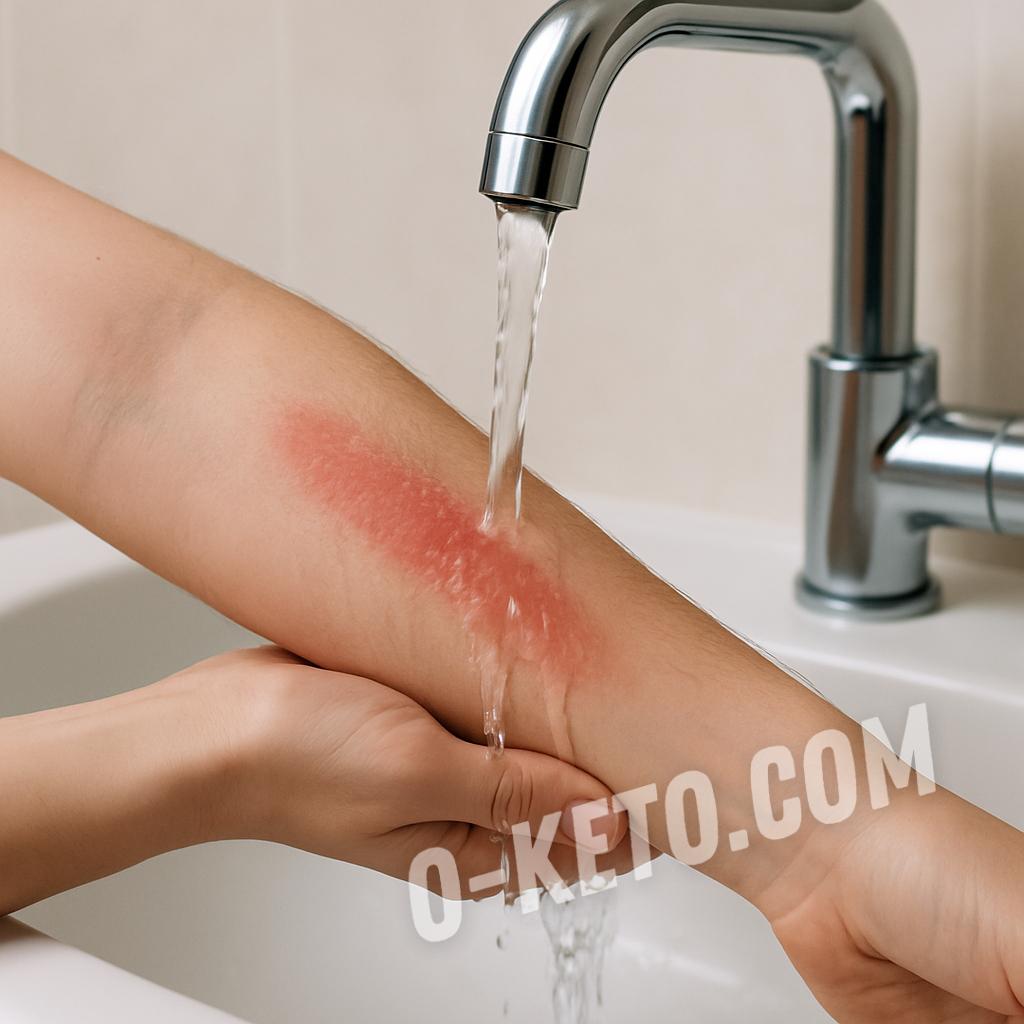
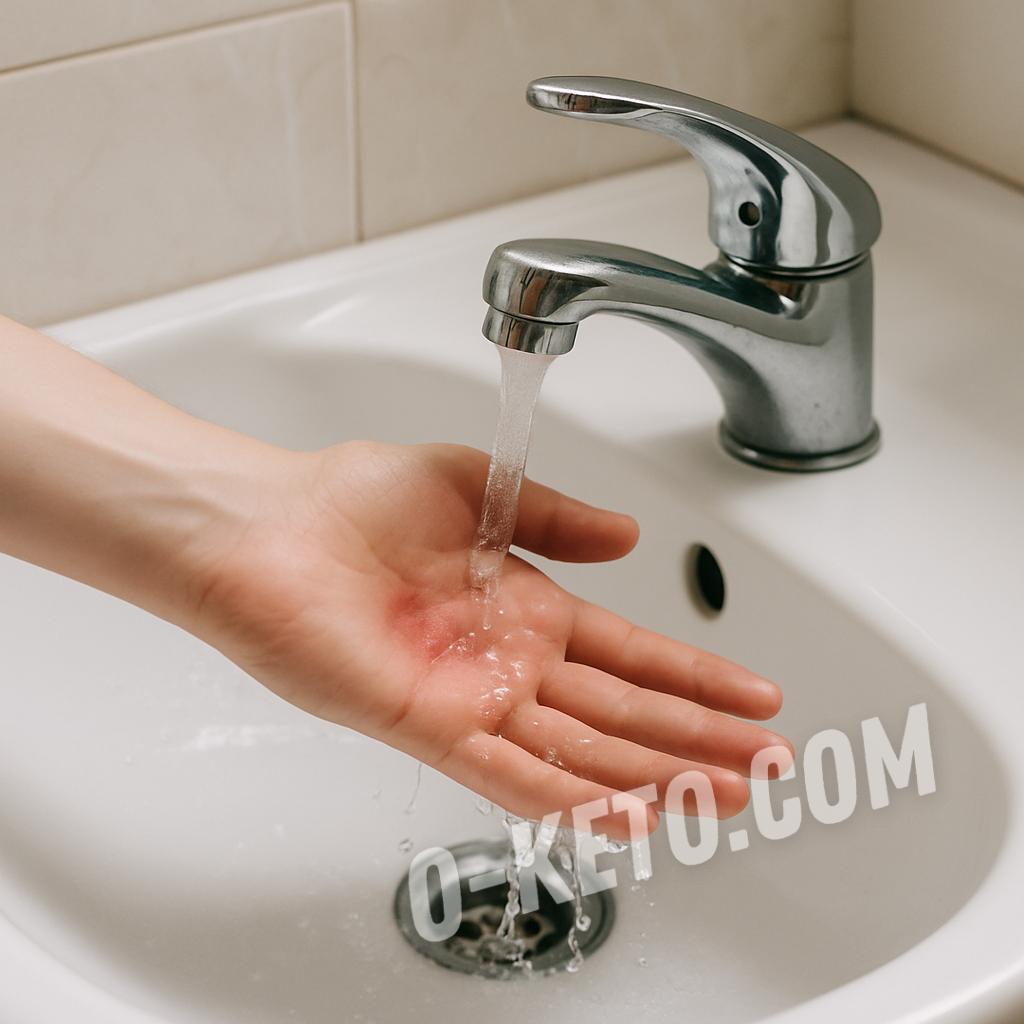
The best routine first-aid treatment for a fresh thermal burn is cool running water for about 20 minutes. The water should be cool, not ice-cold. That helps remove excess heat from the tissues, limits ongoing injury, and often eases pain without adding cold injury on top of the burn.
If the burn is small and easy to place under a tap, that is often the simplest method. If the sink is awkward, a shower or another steady flow of clean cool water can work as well. The key is not a few symbolic seconds of rinsing, but sustained cooling that actually helps carry heat away. That is why a short splash is much less useful than a proper cooling period.
At the same time, do not let the whole person become cold. That matters especially in children, older adults, and larger burns. While the injured area is being cooled, keep the rest of the body warm if possible with dry clothing or a blanket. It is entirely possible to cool the burn correctly but still make the person miserable and weak by letting them become chilled overall.
What not to do
The classic burn mistakes are remarkably repetitive. People apply ice, frozen packs, or extremely cold water, hoping to “freeze the pain away.” That is not helpful because intense cold can damage tissue further. Butter, oil, greasy ointments, toothpaste, alcohol, iodine, and powders are also poor choices. They can trap heat, irritate the skin, interfere with later assessment, and make proper care messier rather than better.
Blisters should not be popped at home. A blister is not useless debris. It is part of the skin’s natural protection over injured tissue. Opening it unnecessarily raises the risk of infection and exposes a very sensitive surface underneath. Another common mistake is debating which cream might be best instead of simply starting cooling right away. In the first minutes, proper cooling matters far more than home remedies.
How to cover the burn after cooling
Once the area has been cooled, it can be protected loosely with a clean non-fluffy dressing, a clean cloth, or cling film placed gently over the burn. Cling film is often practical because it does not stick to the burn surface the way dry cotton or fuzzy material might. But it should not be wrapped tightly around a limb, especially if swelling is expected. The purpose is protection, not compression.
If pain continues after cooling, many people feel better simply from rest, protection of the area, and ordinary pain relief if appropriate for them. Covering the wound in thick creams before an uncertain burn has been assessed does not improve first aid. For larger or doubtful burns, a clean cooled surface is much easier for clinicians to evaluate than skin coated in household products.
What to do with chemical or electrical burns
Chemical burns deserve special attention. If a liquid chemical is on the skin, it should be flushed away with plenty of clean water as soon as possible and for a sustained period. Contaminated clothing should be removed carefully so the chemical is not spread over other skin. If the chemical is a dry powder, it should be brushed away first if possible, and then the area should be rinsed. Do not rub the skin, and do not try to “neutralize” one chemical with another at home.
Electrical burns also need more caution than the skin alone may suggest. A tiny mark on the surface does not guarantee a minor injury. The first priority is safety: the power source must be switched off before anyone touches the person. After that, breathing, consciousness, and overall condition need attention, and medical evaluation is usually appropriate even if the visible burn looks small.
When urgent medical care is needed
Urgent medical help is needed when a burn is large, deep, in a high-risk location, or associated with worrying general symptoms. This is especially true for burns larger than the person’s hand, for facial burns, burns involving the eyes, neck, hands, feet, genitals, or major joints, and for white, gray, black, or charred areas. Chemical burns and electrical burns should also be treated as situations where medical help is required.
Immediate care is also needed if there are signs of airway injury or smoke inhalation, such as hoarseness, persistent coughing after a fire, soot around the mouth or nose, trouble breathing, or a sense that air is not moving well. If the person becomes weak, sleepy, cold, confused, or generally worse, this is not a situation for relaxed home observation. The point is not to panic over every red patch, but not to miss the dangerous burns that only look “ordinary” at first glance.
Blisters and later care
If blisters appear, they are usually left alone until a clinician decides otherwise, especially when they are small and intact. The moist surface under a blister is delicate and easy to injure. If a blister breaks on its own, keep the area clean, avoid friction, and protect it gently with a clean dressing.
Further care depends on burn depth and size. A small superficial burn may heal well at home if it has been cooled properly, kept clean, and watched for infection. Warning signs include increasing redness around the area, worsening pain, pus, bad smell, fever, or the sense that the burn is becoming more inflamed rather than calmer. If the picture worsens or the burn looks more serious over time than it did initially, medical review is sensible.
Takeaway
The most useful early burn first aid is to stop the source, remove tight nearby items, and cool the area with cool running water for about 20 minutes. After that, protect the skin loosely with a clean dressing or cling film. That simple approach is usually far better than ice, butter, toothpaste, random creams, or other improvised treatments.
The most dangerous mistakes are pulling off stuck clothing, overcooling the skin with ice, popping blisters, rubbing a chemical burn, and underestimating large or deep injuries. Urgent medical care is needed for large, deep, white or charred burns, burns in high-risk body areas, chemical or electrical burns, breathing problems, and any signs of shock or major general deterioration.
Sources
- 2024 American Heart Association and American Red Cross Guidelines for First Aid
- First Aid Guidelines — Resuscitation Council UK 2025
- First Aid Cooling of Thermal Burns — American Heart Association and American Red Cross
- First Aid for Thermal Burns After Cooling — American Heart Association and American Red Cross
- First Aid for Chemical Exposure to the Eye — American Heart Association and American Red Cross