
When people talk about ivan tea, they usually mean fermented fireweed leaves. But the plant has other parts that can also be used for drinks: flowers, seed pods, and tender stems. In practice, they behave differently, give different depth of flavor, and need slightly different preparation. That is why for home use it helps to understand not only “how to make ivan tea in general,” but which part of the plant is better suited to the kind of drink you actually want.
This matters especially for people who do not want to repeat just one recipe forever, but want to build their own home range of herbal drinks. Some parts of fireweed give a more delicate infusion, others a more recognizable and tea-like body, and others are interesting precisely because they are unusual. Once the parts are separated by function, it becomes easier to decide what to collect, how to process it, and what to expect in the cup.
Leaves: the classic foundation of homemade ivan tea
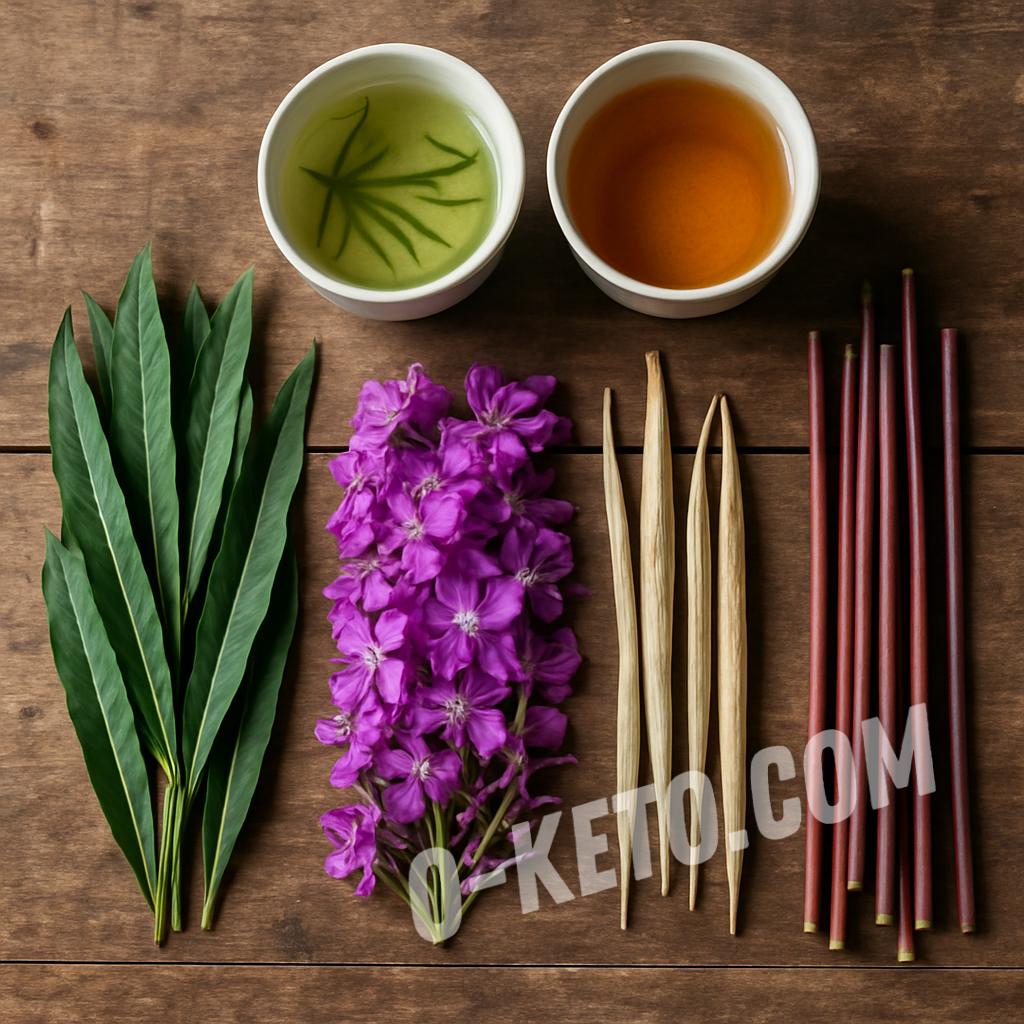
Leaves are the main and most predictable part of fireweed for home drinks. They are the best base for classic fermented ivan tea because they respond well to wilting, rolling, fermentation, and drying. With proper handling, the leaf can move away from a raw grassy smell toward a softer, warmer, fruit-floral or bread-like profile.
For most home preparations, leaves remain the best starting point. They give more control over flavor and are more forgiving of technological mistakes than the more unusual parts of the plant. If someone is only beginning to work with fireweed, it makes the most sense to learn the leaf first, because it is easier to feel how aroma changes with different levels of fermentation and different degrees of mechanical handling.
Leaf tea also gives the most recognizable result that people usually expect from the phrase “ivan tea.” It can be lighter or richer, but it still remains the central form of homemade preparation. The other parts of fireweed are best seen either as additions or as separate, more niche drink options.
Flowers: the most delicate option
Fireweed flowers suit people who want a gentler, softer, and lighter drink. Unlike leaves, they usually do not need deep fermentation. Flowers are more often wilted and dried gently, with the goal of preserving their tender floral character. This kind of drink is not trying to become dense or strongly tea-like in the usual sense. Its value is in delicacy and a lighter aromatic profile.
In practical home use, flowers are useful when you want a calm herbal infusion without a rough profile. They work well for summer or evening tea drinking, for softer household blends, and for people who do not want an intense fermented taste. Flower-based fireweed tea usually feels easier and lighter than the classic leaf version.
At the same time, flowers require care precisely because they are so delicate. It is easier to overdry them, destroy their aroma with rough heat, or lose them in a blend with stronger components. That is why they often work best either on their own or in soft blends where they do not need to compete with heavier fermented material.
Seed pods: a rarer and more experimental choice
Fireweed seed pods are less familiar, but they are interesting material. They can be used for a separate drink if you want a less ordinary homemade option. In the source material, the pods are passed through a grinder, then fermented and dried. This is no longer just “dried grass,” but actively processed material that can develop its own flavor and aroma profile.
From a home-practice point of view, seed pods are best treated as material for people who have already learned the leaf and want to go further. They are not the most obvious starting point, because their behavior is less familiar and they need a little more attention. But that is also their value: they expand the range of drinks you can make from one plant without requiring a completely different logic of processing.
Usually this kind of tea feels more niche and rare. It is interesting not because it should replace everyday leaf tea, but because it shows that fireweed can offer several drink forms depending on which part of the plant is chosen.
Stems and tender stalks: a lighter drink with its own character
Fireweed stems may sound like secondary material, but in practice they can produce a very interesting result. The source describes an attempt to process the softer parts of the stems first through a grinder and then more gently by breaking structure without excessive roughness and allowing a mild fermentation to begin. The resulting stem drink turned out lighter and finer than the mixture made from leaves, flowers, and pods.
That is exactly what makes stems interesting. They suit people who are not looking for the deepest or heaviest ivan tea, but for something calmer, finer, and less massive in flavor. In that sense, stems can be treated as their own category of home drink rather than just waste left over from leaf processing. The most useful parts are the softer stems, not the hard woody fragments.
In practical terms, this means stems should not automatically be thrown away if you already work with fireweed. They can make an independent drink, but you have to understand that it will taste different: less broad and less traditionally “tea-like,” yet lighter and more delicate. This is a good option for people who enjoy multiple shades of the same plant.
When it makes sense to mix plant parts
Mixing leaves, flowers, and pods can make sense if you want a more complex homemade flavor profile. This approach becomes interesting when you already understand how each component behaves on its own and want to build your own blends. But one simple rule helps here: the more different parts of the plant are in one batch, the harder it becomes to understand which one actually created the depth, delicacy, roughness, or aroma.
That is why for early experiments it is better to get to know the parts of fireweed separately. First the classic leaf, then the flowers, then the more experimental pods and stems. After that, blending becomes an intentional decision instead of an accident. Otherwise, it is easy to create not complexity, but confusion.
What to choose for a home kitchen
If you want the most understandable classic path, choose leaves. If you want the gentlest and most delicate option, choose flowers. If you are interested in rarer and more experimental home preparations, seed pods are worth attention. If you want a lighter drink with its own character, tender stems are a good choice. This is a practical framework because it connects the raw material not to romantic stories, but to the real result you expect in the cup.
It is also worth considering your experience and how much control you want. Leaf tea is the most stable and understandable. Flowers are simpler in idea, but more delicate in handling. Pods and stems are more interesting for people who are already ready for niche variations and do not expect them to behave exactly like classic ivan tea. The more honest those expectations are, the more enjoyable home practice becomes.
Main point
Not only leaves, but also flowers, seed pods, and tender stems of fireweed can be used for drinks, but each part behaves differently. Leaves are the main and most predictable base for classic homemade ivan tea. Flowers give a more delicate infusion, pods suit rarer and more experimental preparations, and stems can produce a thin independent drink with its own character. The better you understand the nature of each part, the easier it becomes to build your own home range of herbal drinks without random expectations or disappointment.