


Why shouldn't night creams be used during the day?
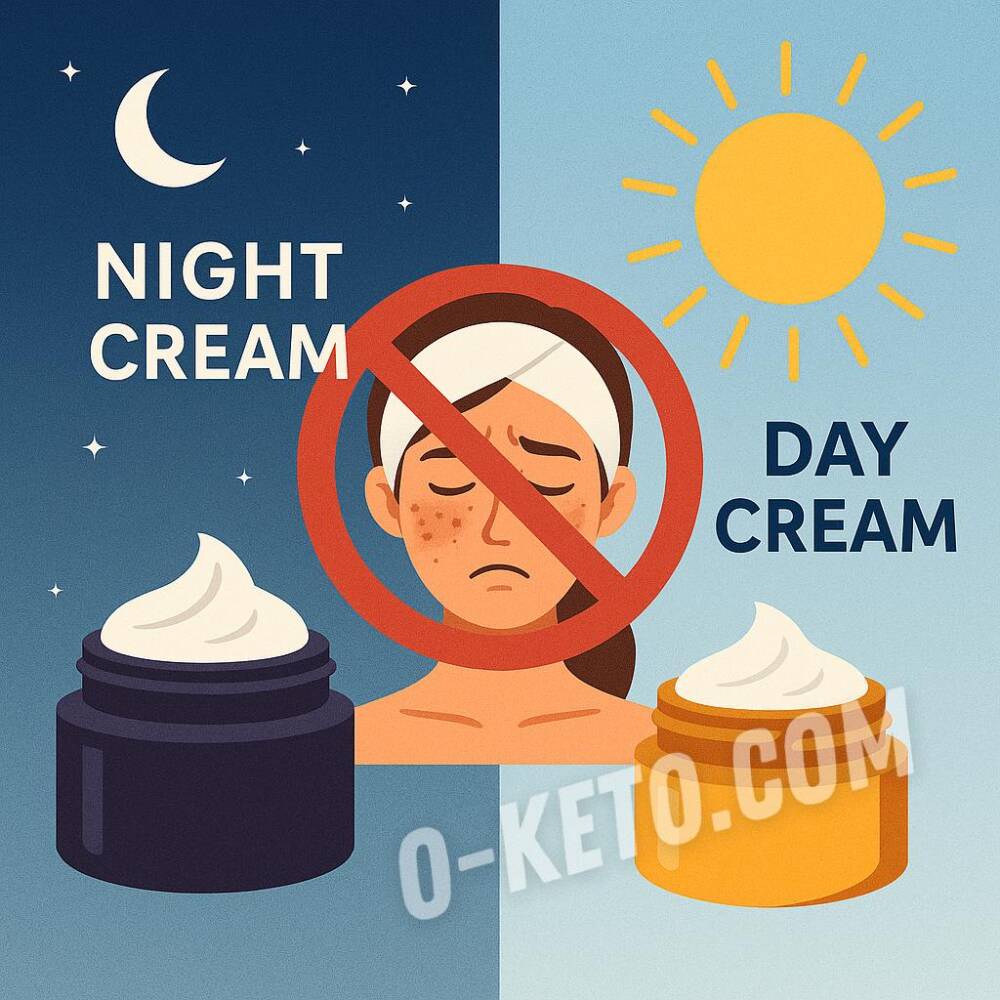
Night cream should not be used during the day, because most night creams contain photosensitizing substances. If you apply such a cream and go out in the sun, it will lead to the formation of pigmented spots or photodermatitis.
The label «night cream» — is not just a marketing ploy, but an important guideline for the timing of the product's application. The basis of such a cream often includes active components that enhance the metabolic and restorative processes of the skin at night, but at the same time make it more sensitive to light.
The mechanism is as follows: at night, the skin is actively renewed, with processes of DNA repair, collagen synthesis, and lipid production occurring in the cells.
To enhance these processes, night creams often include retinoids (vitamin A and its derivatives), acids (AHA, BHA), citrus essential oils, azelaic acid, and herbal extracts with photosensitizing effects. These substances increase the susceptibility of epidermal cells to ultraviolet light.
If such a cream is applied during the day, upon contact with sunlight, the activated photosensitizers react with ultraviolet light and cause the formation of free radicals.
This leads to:
- damage to the cell membranes and DNA of keratinocytes;
- an inflammatory reaction of the skin, which may manifest as redness, burning, itching;
- hyperpigmentation, when the skin responds with increased melanin production to protect itself;
- and with prolonged exposure — to photoaging and increased sensitivity.
Therefore, day creams always have a different formula — with antioxidants, moisturizers, and UV filters (SPF), while night creams — contain active restorative substances without sun protection.
Thus, the rule is simple:
- night creams — only in the evening, after sunset, when the skin is resting and not exposed to sunlight;
- day creams — only in the morning, with a mandatory protection factor, especially if acids, retinoids, or enzyme peels were used the day before.