


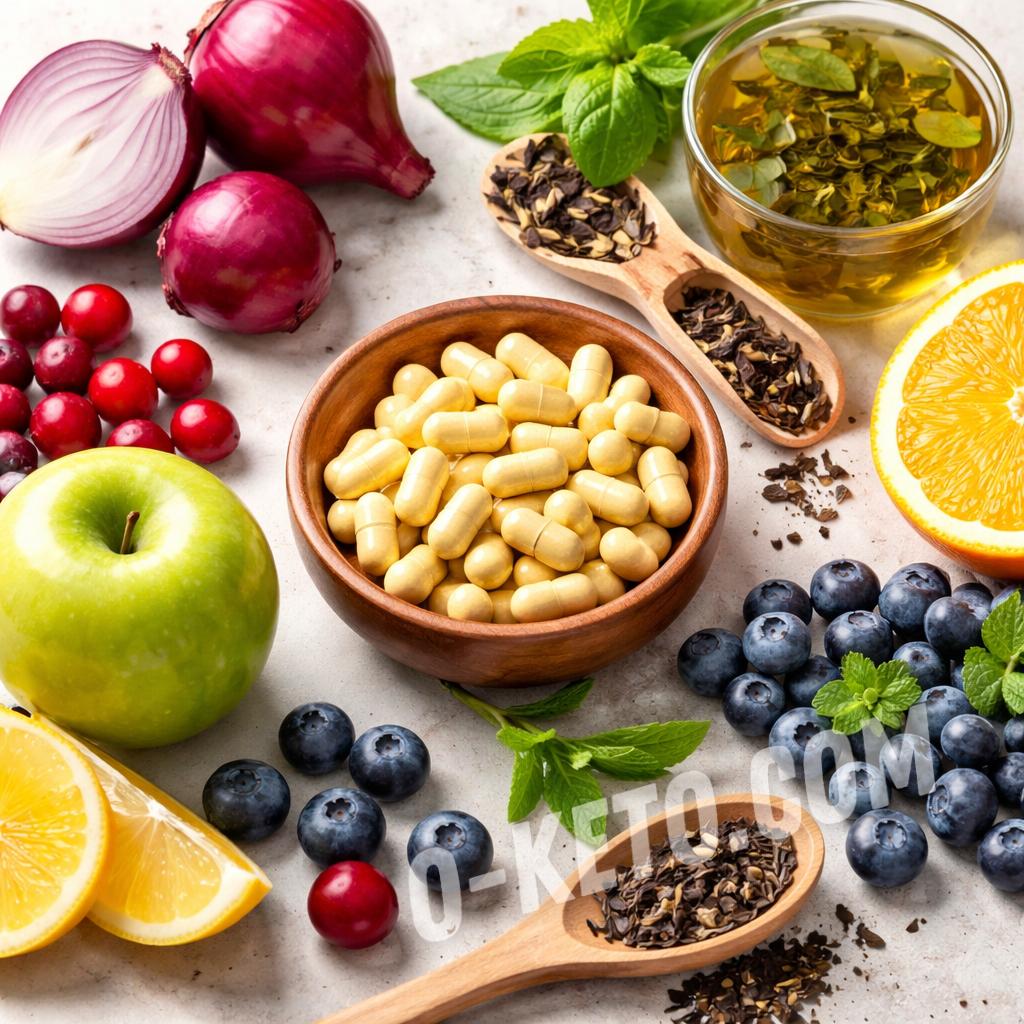

Quercetin is one of the most studied plant-derived flavonoids that regularly enters the human body through food. It is present in vegetables, fruits, berries, and plant-based beverages and performs an important protective function related to the neutralization of oxidative stress and the regulation of inflammatory reactions.
In recent years, interest in quercetin has significantly increased due to its potential role in supporting immunity, vascular health, and the body’s adaptive capabilities.
Unlike many vitamins, quercetin does not have an officially established intake norm; however, its physiological significance is supported by a large number of experimental and clinical studies.
Health Benefits
Quercetin exhibits pronounced biological activity due to its ability to interact with cell membranes, enzymes, and signaling molecules. Its main mechanism of action is associated with antioxidant activity, but the range of effects is significantly broader:
- reduction of oxidative stress and protection of cells from damage by free radicals;
- decrease in inflammatory reactions due to its influence on pro-inflammatory cytokines and enzymes;
- support of the immune system and modulation of the immune response;
- antihistamine effect and reduction of the severity of allergic reactions;
- support of vascular health and improvement of endothelial function.
Additionally, quercetin is considered a nutrient capable of increasing the body’s resistance to stress factors, including physical exertion and exposure to adverse environmental conditions.
Daily Requirement and Sources
Quercetin is not classified as an essential nutrient; however, regular intake through food is associated with more favorable health indicators.
In a typical diet, a person receives an average of 10 to 40 mg of quercetin per day, depending on dietary habits and the proportion of plant-based foods. In practical nutrition and research, doses ranging from 500 to 1000 mg per day are most often used, especially in cases of increased needs related to inflammatory processes, allergies, or high physical activity.
The main dietary sources of quercetin include:
- onions, especially red ones;
- apples with skin;
- berries, including blueberries and cranberries;
- citrus fruits;
- green and black tea.
It should be noted that the bioavailability of quercetin from food can vary and depends on the form of the compound, the presence of fats in the diet, and the condition of the gastrointestinal tract.
Symptoms and Consequences of Deficiency
There is no formal deficiency of quercetin, as with vitamins or minerals; however, low intake of flavonoids in general can affect the functional state of the body:
- increased tendency to inflammatory reactions;
- more pronounced allergic manifestations;
- decreased resistance to infectious loads;
- worsening of vascular and microcirculation conditions.
A deficiency of plant flavonoids, including quercetin, is often observed in diets low in vegetables and fruits and can be one of the factors contributing to chronic inflammation and accelerated tissue aging.
Possible Risks of Excess and Their Manifestations
Quercetin is considered a relatively safe compound; however, high doses in the form of supplements may lead to side effects. Most often, they are related to gastrointestinal tract load and individual sensitivity:
- headaches;
- discomfort in the stomach and intestines;
- nausea;
- rarely – skin reactions.
In most studies, a safe range is considered to be an intake of up to 1000 mg of quercetin per day. Higher doses require caution and are usually applied only within short-term protocols.