


How to restore smell after illness.
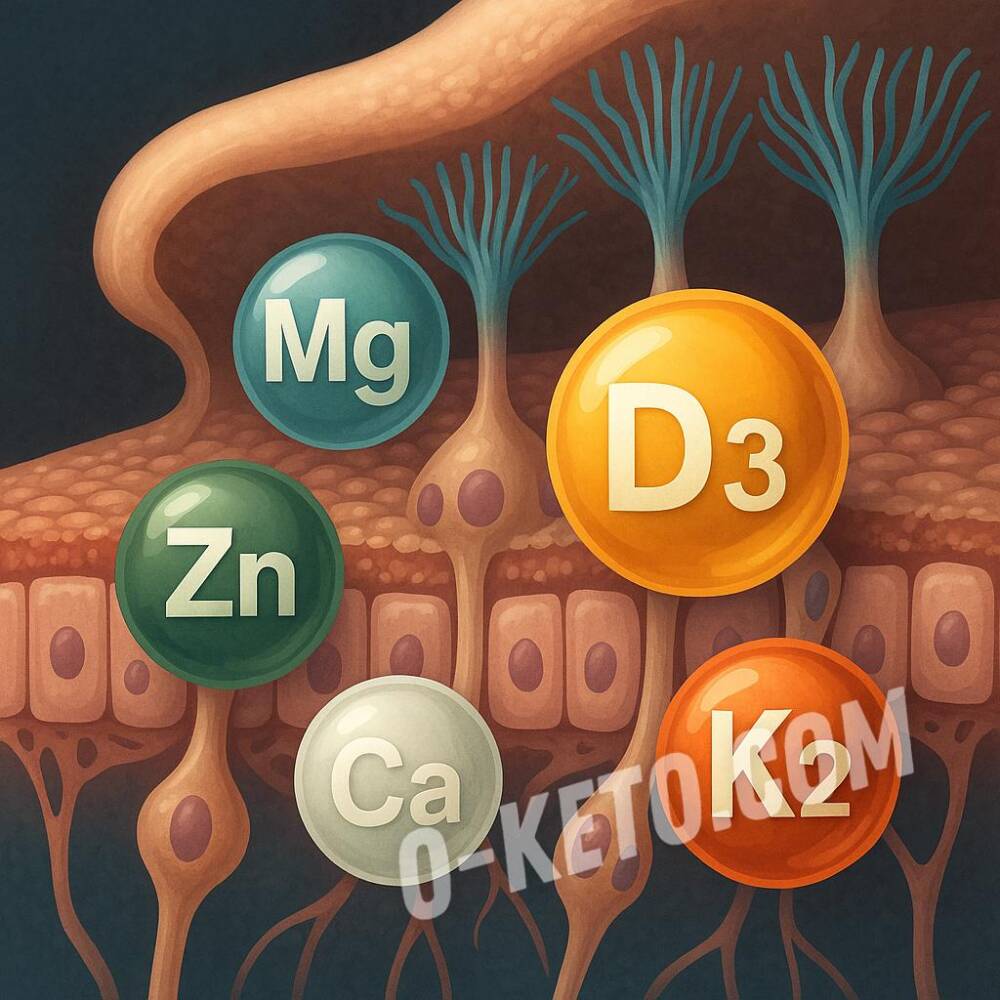

The main way to restore smell after a viral infection, intoxication, or chronic inflammation of the mucosa is the intake of magnesium, calcium, zinc, vitamins D3 and K2.
The restoration of smell in case of disorders (for example, after a viral infection, intoxication, or chronic inflammation of the mucosa) is closely related to the normalization of the mineral and vitamin balance in the body.
Magnesium
Magnesium is necessary for the normal functioning of the nervous system, including olfactory neurons. It participates in:
- Stabilizing neuron membranes, reducing their excessive excitability and protecting against damage;
- Synthesizing neurotransmitters (including glutamate and GABA), which regulate the transmission of olfactory signals;
- Reducing inflammation: magnesium suppresses the production of pro-inflammatory cytokines such as TNF-α and IL-6, which damage the nasal mucosa and neurons.
In case of magnesium deficiency, neuroinflammation may intensify, and the restoration of olfactory receptors may be hindered.
Calcium
Calcium is involved in the transmission of nerve impulses, including from olfactory receptors to the brain:
- It is necessary for the depolarization of neuron membranes—without it, normal excitation does not occur;
- Activates the regeneration of olfactory cells in the basal layer of the epithelium;
- In case of calcium deficiency, neurons become less sensitive to odors.
Calcium should be taken together with magnesium—their balance is especially important for neurofunctions. The optimal ratio is approximately 2:1 for Ca:Mg.
Zinc
Zinc is one of the main minerals for tissue regeneration and immunomodulation:
- It is part of enzymes that regulate cell growth and division, including stem cells of the nasal mucosa;
- Participates in the healing and restoration of the epithelium in the olfactory area;
- Plays a role in the synthesis of odorant-binding proteins, which deliver odor molecules to the receptors.
In case of zinc deficiency, the restorative capacity of the mucosa decreases, and the transmission of signals in the olfactory bulb is disrupted.
Vitamin D3
Vitamin D3 affects many processes, including the functioning of the immune and nervous systems:
- Modulates the immune response, preventing autoimmune damage to olfactory receptors;
- Participates in the synthesis of neurotrophic factors (for example, BDNF), which promote neuron regeneration;
- Affects the absorption of calcium and magnesium, regulating their concentration in the blood.
Especially important in viral lesions (for example, post-COVID) — D3 helps reduce the level of cytokine inflammation.
Vitamin K2
K2 works in tandem with vitamin D3. Without sufficient levels of K2, the intake of vitamin D3 and calcium can even be harmful, especially with prolonged use.
Conclusion
To restore smell, it is especially important to create conditions for neuroregeneration and reduce inflammation. All the listed substances work in synergy.
List of YouTube videos on the topic "How to restore smell after illness.":