


Why is regular intake of iron supplements dangerous?
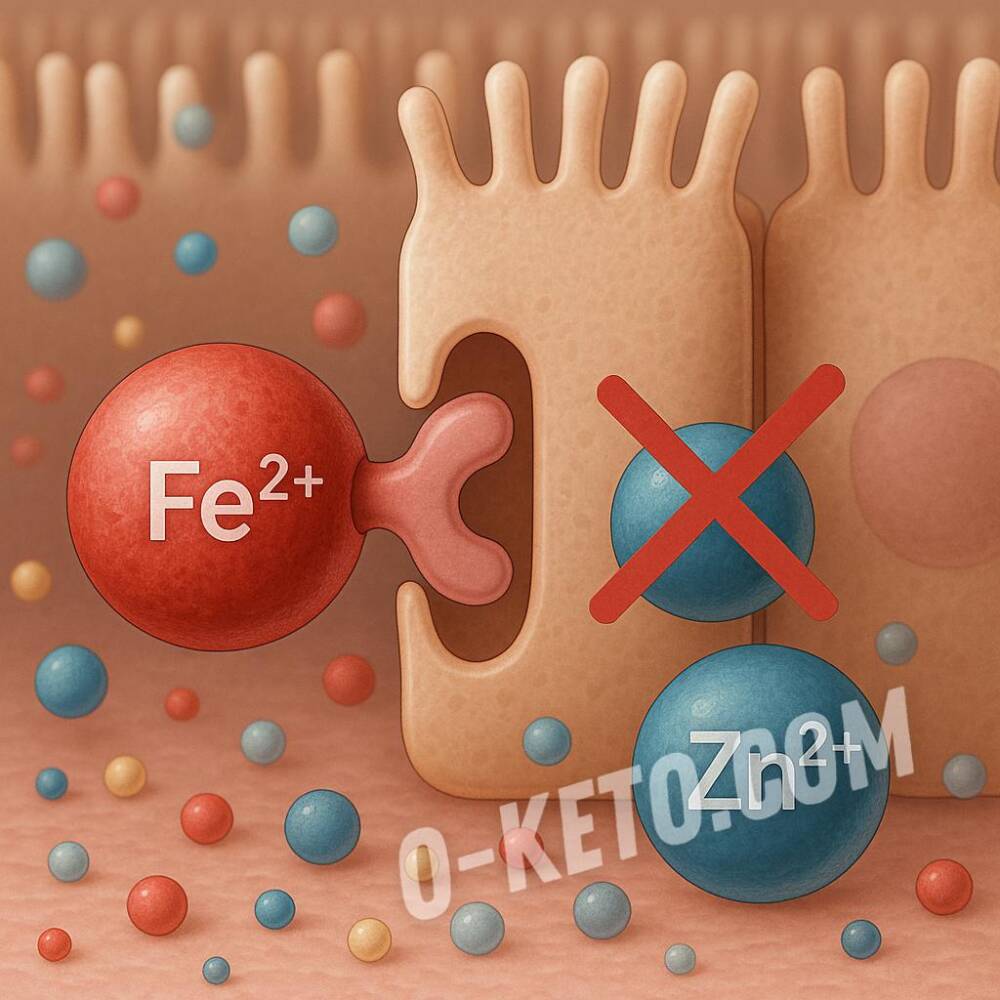

Any iron supplements, if taken regularly, lead to a deficiency of zinc. Since iron, especially unbound, is an antagonist of zinc.
Biochemical Competition: Iron vs. Zinc
Iron and zinc — are trace elements that are absorbed in the small intestine using similar transport proteins. Primarily through the DMT1 transporter (divalent metal transporter 1). This protein transports divalent metal ions, particularly Fe²⁺ (iron) and Zn²⁺ (zinc).
When there is an excess of iron in the intestine, especially in the form of supplements (e.g., ferrous sulfate, ferrum lactate, etc.), it competes for this transporter, thereby reducing the amount of zinc that can be effectively absorbed. This is called antagonism at the absorption level.
Unbound Iron is Particularly Toxic
When iron enters the body in excessive amounts and in free form (not bound to transport proteins like transferrin), it becomes a pro-oxidative factor — participating in Fenton reactions, creating free radicals (e.g., •OH). This causes damage to the cells of the gastrointestinal tract, further impairing the absorption of other nutrients, including zinc.
Long-term Consequences of Zinc Deficiency
If a person regularly takes iron without considering the antagonism with zinc, it can lead to chronic zinc deficiency, which manifests as:
- weakened immunity (zinc — is critically important for T-cells),
- slowed wound healing,
- deterioration of skin, hair, nails,
- loss of smell and taste,
- hormonal disruptions (zinc is needed for testosterone synthesis),
- intestinal dysfunction (zinc supports the mucosa).
Proportions and Forms of Supplements
To minimize antagonism:
- iron and zinc supplements should be taken at different times of the day, preferably with an interval of 4–6 hours;
- organic forms of zinc (picolinate, citrate, bisglycinate) that have better bioavailability are preferred;
- iron should only be taken when indicated and in bound form (e.g., as part of heme or in complexes with amino acids), rather than in high-dose salts.
Conclusion
When prescribing iron (including in cases of anemia), it is essential to consider the balance with other trace elements, especially zinc, to avoid a chain of new deficiencies.
List of YouTube videos on the topic "Why is regular intake of iron supplements dangerous?":