


SIBO
SIBO is small-intestinal bacterial overgrowth, a syndrome in which bloating and gas reflect not only fermentation itself, but also motility, bile flow, stomach acid, prior infections, diet and the conditions that allow overgrowth to persist.




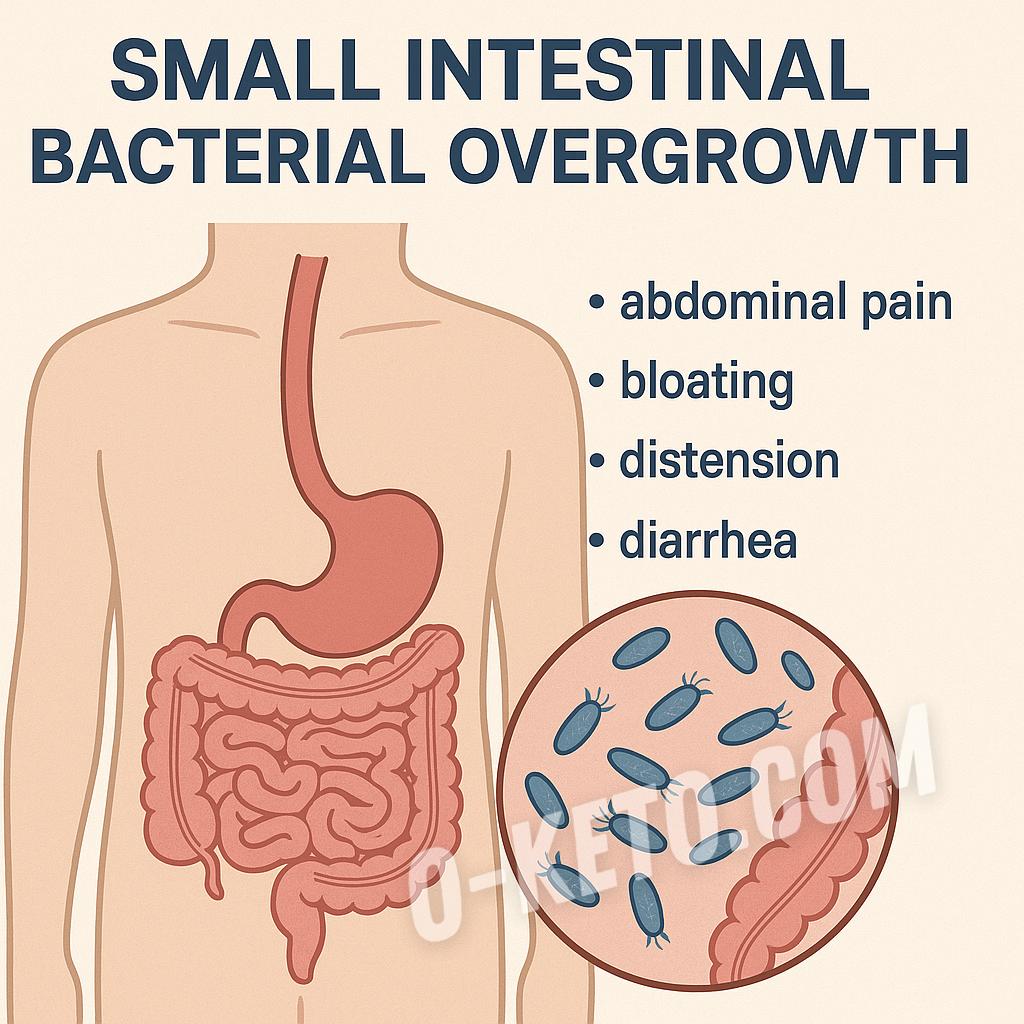
SIBO is small-intestinal bacterial overgrowth, a condition in which microbes that are normally more characteristic of other gut segments become too active in the small bowel. In practice people most often notice bloating, rumbling, gas, unstable bowel habits, heaviness after meals and the feeling that the gut reacts to almost everything. But SIBO should not be treated as a fashionable explanation for any abdominal discomfort. It makes more sense to view it as the result of impaired motility, weakened acid or bile barriers, mucosal change or structural factors rather than as a random independent invader.
Why bacteria start persisting there
The small intestine is normally protected by motility, stomach acid, bile, digestive secretions and the migrating motor complex. When those defenses weaken, bacteria can stay and multiply in a place where they should not dominate. Prior infections, surgery, adhesions, low stomach acid, poor bile flow, slowed motility, medication use and chronic bowel disorders may all contribute. That is why it is more useful to think of SIBO not as “bad bacteria suddenly appeared,” but as a state created by the conditions that let them remain there.
If those conditions are not addressed, even temporary improvement often fails to last.
How it may present
A classic complaint is strong bloating after meals that builds through the day and is accompanied by gas, pressure, discomfort and unpredictable reactions to carbohydrates, fiber or FODMAP-rich foods. Some people mainly struggle with constipation, others with diarrhea, and others alternate between the two. In some cases bowel symptoms are joined by low energy, skin changes, food intolerance or nutrient deficiency. For that reason SIBO should not be reduced to a single template such as “bloating after fruit.”
Its symptoms overlap with IBS and other functional problems, which makes simplistic self-diagnosis especially unreliable.
What keeps the problem going
If a person has low stomach acid, impaired bile flow, weak motility, post-infectious changes, adhesions, chronic stress or major dietary distortions, symptoms may return even after temporary relief. In SIBO it is therefore important not only to reduce fermentation, but also to ask why the small intestine became such a favorable place for overgrowth. Meal spacing may matter in one person, constant snacking in another, chronic overeating in a third, and extreme restriction in someone else. Eating pattern and intestinal function are tightly linked here.
A common mistake is to keep expanding the forbidden-food list without looking for the conditions that keep symptoms returning.
Diet and practical strategy
Diet often needs temporary adjustment in order to reduce fermentation and symptom intensity, but that is not the same as lifelong fear of all carbohydrates or fiber. Low-FODMAP, low-carb and similar patterns may improve comfort for a while, yet they do not always remove the deeper mechanism. If such approaches are used only to mute symptoms, people can easily become trapped in an ever-shrinking menu. In practical terms it is more useful to search for a tolerable and nutritionally sufficient pattern that reduces symptoms without dismantling the diet completely.
SIBO is one of those situations where “I keep removing foods and hope for a miracle” can make life narrower without necessarily making the gut healthier.
When closer evaluation is needed
Closer evaluation is needed with strong recurrent bloating, clear food reactivity, unstable stool, weight loss, deficiencies, suspicion of low stomach acid or poor bile flow, or symptoms that keep returning after partial improvement. In those cases it matters to distinguish SIBO from IBS, celiac disease, enzyme problems, bile issues and post-infectious consequences. The most sensible way to view SIBO is as a syndrome of disrupted small-intestinal environment in which the goal is not only to reduce bacterial fermentation, but also to restore the conditions that let the bowel function more reliably again.

If you have any questions about the term "SIBO", you can ask them to AI. Please note, a low-cost OpenAI model is used. It may answer questions about disease treatment with errors!


