


Oxalate stones
Oxalate stones form through a combination of oxalate load, urine chemistry, hydration and calcium handling, so evaluation should include fluids, diet, gut health and laboratory context rather than a simplistic blacklist of foods.

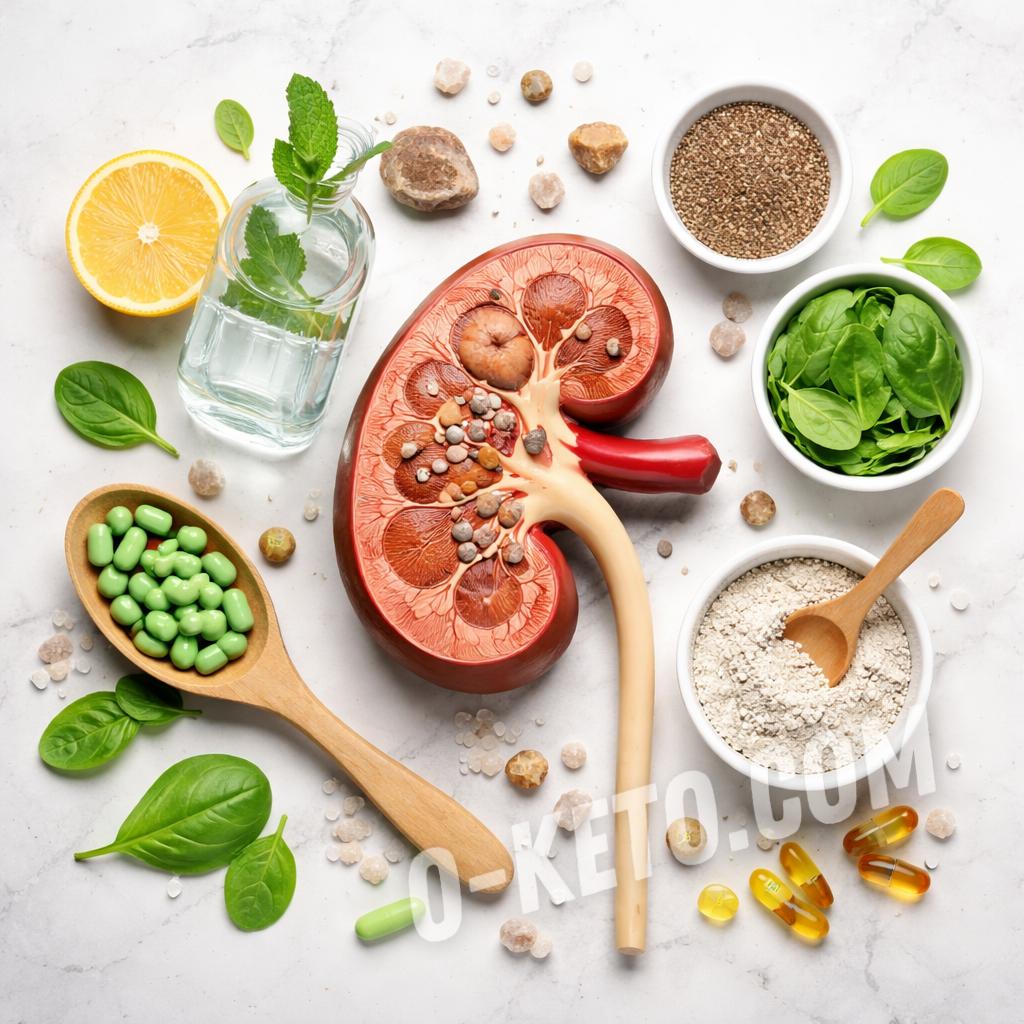
Oxalate stones are one of the most common forms of urinary stones. They develop when the urine environment favors crystallization of calcium oxalate: urine volume changes, salts become concentrated, citrate is low, absorption patterns shift and the metabolic background supports stone formation. In practice this matters because the same final diagnosis can arise from very different mechanisms. In one person dehydration dominates, in another chronic gut disturbance, and in a third the issue is high oxalate exposure combined with low calcium intake or low urine volume.
Why stones form in the first place
Stone formation is not driven by one food alone. It reflects the whole urine environment. If a person drinks too little, urine becomes more concentrated. If dietary oxalate is high while intestinal calcium is low, more oxalate may be absorbed. If urinary citrate is reduced, crystals can aggregate more easily. That is why oxalate stones cannot be explained only by spinach, chocolate or nuts. They are really about the balance between fluids, salts, intestinal absorption and individual predisposition.
In some people recurrent dehydration, heavy sweating, high-dose vitamin C, bowel disease or surgery that alters absorption becomes a major part of the story.
What should be assessed beyond pain
Once a stone is present, clinical attention often centers on pain, blood in urine, urinary flow and infection risk. But for prevention of recurrence, the deeper question is why the stone formed: fluid intake, urinalysis, 24-hour urine composition, calcium, oxalate, citrate, uric acid, kidney function and gastrointestinal background all matter. This is how one learns why stones keep returning in one person and barely recur in another.
For that reason, after the acute episode it is useful to think not only about passing the stone, but about changing the environment that allowed it to form.
After calcium-oxalate stones, it is not useful to reduce the diet to a universal list of forbidden foods. NIDDK guidance emphasizes the stone type, fluid intake, sodium, oxalate, and adequate dietary calcium; calcium from food can bind oxalate in the gut. A detailed plan should follow stone analysis and clinical assessment.
Diet and oxalates: where people often go wrong
A common mistake is to eliminate every oxalate-containing food while ignoring fluids, calcium balance, sodium load, protein intake and gut issues. Some people truly benefit from reducing a very high oxalate burden, but strict prohibitions without the full picture do not always give the best result. It is also important to remember that normal calcium intake with meals is not automatically “bad for stones”; inside the gut, calcium may actually bind oxalate and reduce absorption.
The most useful dietary discussion around oxalate stones is usually not about panic, but about individualized triggers, drinking habits, salt, protein and digestive context.
The role of the gut and broader metabolism
Bowel disease, chronic diarrhea, malabsorption, bariatric surgery and fat malabsorption can all increase oxalate delivery into blood and urine. In such people the problem is not simply “liking cocoa,” but an altered intestinal handling of food and oxalate binding. That is why recurrent oxalate stones should sometimes trigger a gastrointestinal perspective as much as a urologic one.
Fluid deficit, excess salt, protein balance and baseline kidney health also contribute to recurrence risk.
When faster in-person assessment is needed
Urgent in-person review is needed with severe pain, fever, chills, falling urine output, major nausea, suspected infection, a solitary kidney or a clear worsening of condition. In such settings the issue is no longer only recurrence prevention; it is also kidney safety and complication risk.
The most sensible way to think about oxalate stones is not as “stones from the wrong foods,” but as the result of hydration, urine chemistry, diet, intestinal handling and individual metabolism. That view makes prevention far more precise and realistic.
Why preventing recurrence matters more than the first scare
After the first stone episode many people relax once the pain settles. Yet recurrence is what creates the longer burden on the urinary tract and daily life. The most practical question after stabilization is therefore what needs to change in fluids, urine chemistry, digestion and routine so that the same situation is less likely to happen again.
If you have any questions about the term "Oxalate stones", you can ask them to AI. Please note, a low-cost OpenAI model is used. It may answer questions about disease treatment with errors!


 1 / 4
1 / 4 1 / 4
1 / 4
 1 / 4
1 / 4


 1 / 4
1 / 4