


Nephrotic syndrome
Nephrotic syndrome is a state in which the kidneys lose large amounts of protein into the urine; this leads to edema, altered protein balance, and shifts in laboratory markers that depend on circulating transport proteins.




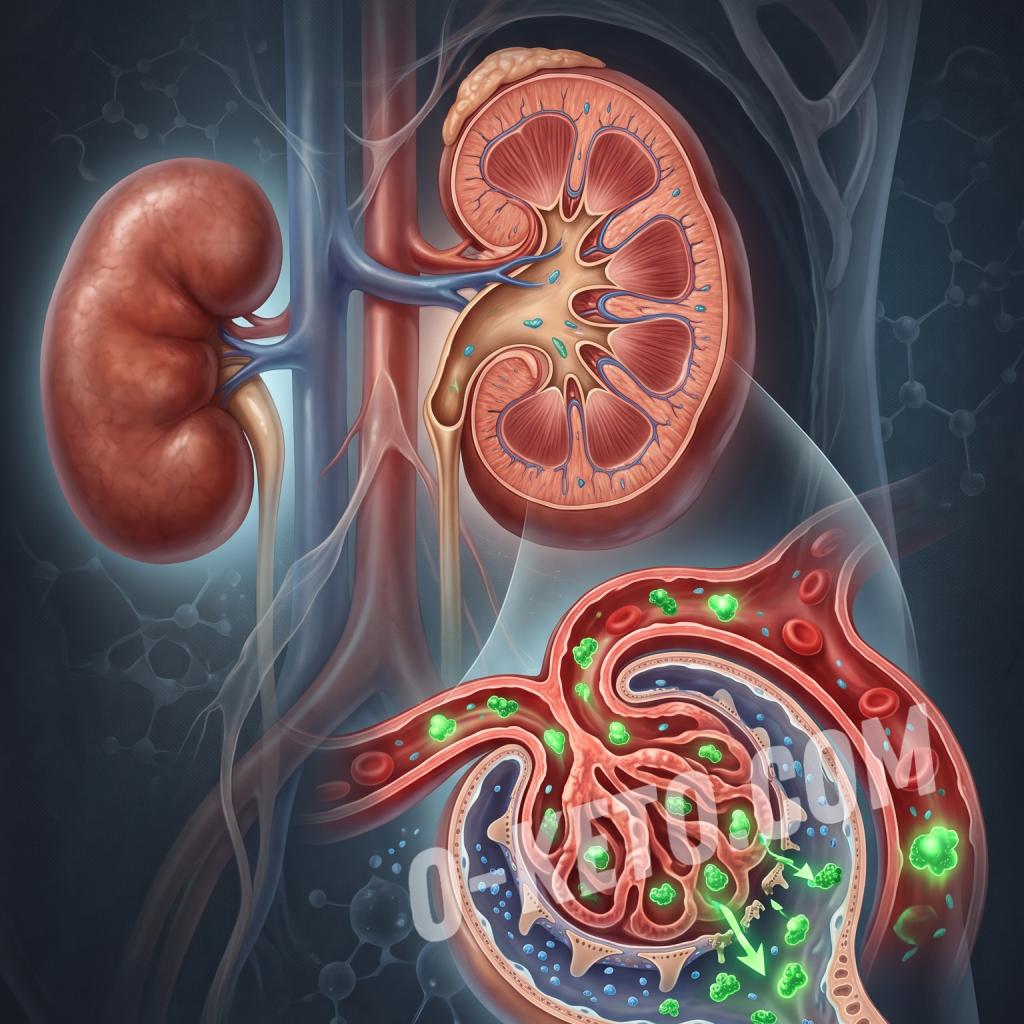
Nephrotic syndrome is a clinical state in which the kidneys begin to lose a substantial amount of protein into the urine. As that happens, the blood level of several protein fractions falls, fluid distribution between vessels and tissues changes, edema appears, and overall protein handling is disturbed. It is not just one narrow disease but a syndrome that may arise from different kidney disorders. In practice, however, it has a very recognizable pattern: swelling, proteinuria, altered albumin, and shifts in several connected laboratory markers. That is why nephrotic syndrome should not be reduced to a vague idea of “something is wrong with the kidneys.” It affects protein balance, fluid regulation, and multiple physiological systems at once.
What happens in the body
When the kidney filter starts allowing protein to pass through, the body loses into the urine what should normally remain in the bloodstream. As a result, plasma oncotic pressure falls, fluid moves more easily into tissues, and edema develops. At the same time, the blood protein profile changes, including transport proteins. Because of that, laboratory markers involved in carrying iron, drugs, and other substances may also shift. In other words, nephrotic syndrome is not only about urine; it is also a systemic disturbance in protein handling. That is why its trace may appear across several interrelated tests rather than in one isolated measurement.
Which symptoms are common
Edema is the most typical feature, especially around the eyes, face, lower legs, and feet, though more generalized swelling may appear in stronger cases. A person may notice weight gain due to fluid retention, foamy urine, heaviness, reduced stamina, and a general sense of weakness. Sometimes symptoms do not escalate immediately, and the first clue is laboratory change rather than dramatic complaints. Even if the visible symptoms seem only moderate, the syndrome deserves serious attention because behind the swelling there is a meaningful failure of the kidney’s protein-preserving barrier.
Which tests matter most
Assessment usually includes urinalysis, 24-hour urine protein or a protein-to-creatinine ratio, albumin, total protein, lipid profile, creatinine, urea, and other markers of kidney function. Because nephrotic syndrome affects transport proteins, markers related to transferrin may change as well. This matters for iron interpretation: abnormalities in the serum profile should not be read in isolation without considering protein loss through the kidneys. Nephrotic syndrome can therefore disguise itself as a strange laboratory protein pattern if only one line is examined without the larger context.
Why this affects transferrin
Transferrin is a protein, and when protein is lost substantially through the kidneys, its concentration may fall as well. If one sees only a low transferrin value without understanding the renal context, it is easy to search only for inflammatory or deficiency-related causes. But in nephrotic syndrome the logic may be different: the problem may reflect protein loss itself rather than only synthesis or inflammatory suppression. That is why the syndrome is especially important to remember when edema, urinary abnormalities, and an unusual blood-protein profile coexist in the same person.
What can happen without control
Beyond worsening edema, nephrotic syndrome raises risks related to vascular regulation, coagulation, lipid balance, and overall kidney function. Ongoing protein loss gradually exhausts the body’s compensatory capacity, and if the cause of the syndrome is not explored, a significant kidney disorder may be missed. For that reason, nephrotic syndrome is not just a laboratory curiosity. It is a signal of a major renal and systemic problem that deserves coordinated interpretation rather than fragmented reading of separate test lines.
When faster review is needed
More rapid assessment is important when edema increases, weight rises because of fluid, urine protein becomes marked, albumin falls, urine output changes, or kidney-function tests worsen. Extra caution matters when this is accompanied by weakness, shortness of breath, or unusual shifts in protein-transport markers. Nephrotic syndrome is best treated as a systemic kidney signal that requires the urinary, protein, and biochemical findings to be read together rather than explained one by one in isolation.
If you have any questions about the term "Nephrotic syndrome", you can ask them to AI. Please note, a low-cost OpenAI model is used. It may answer questions about disease treatment with errors!


 1 / 4
1 / 4


 1 / 4
1 / 4
 1 / 4
1 / 4