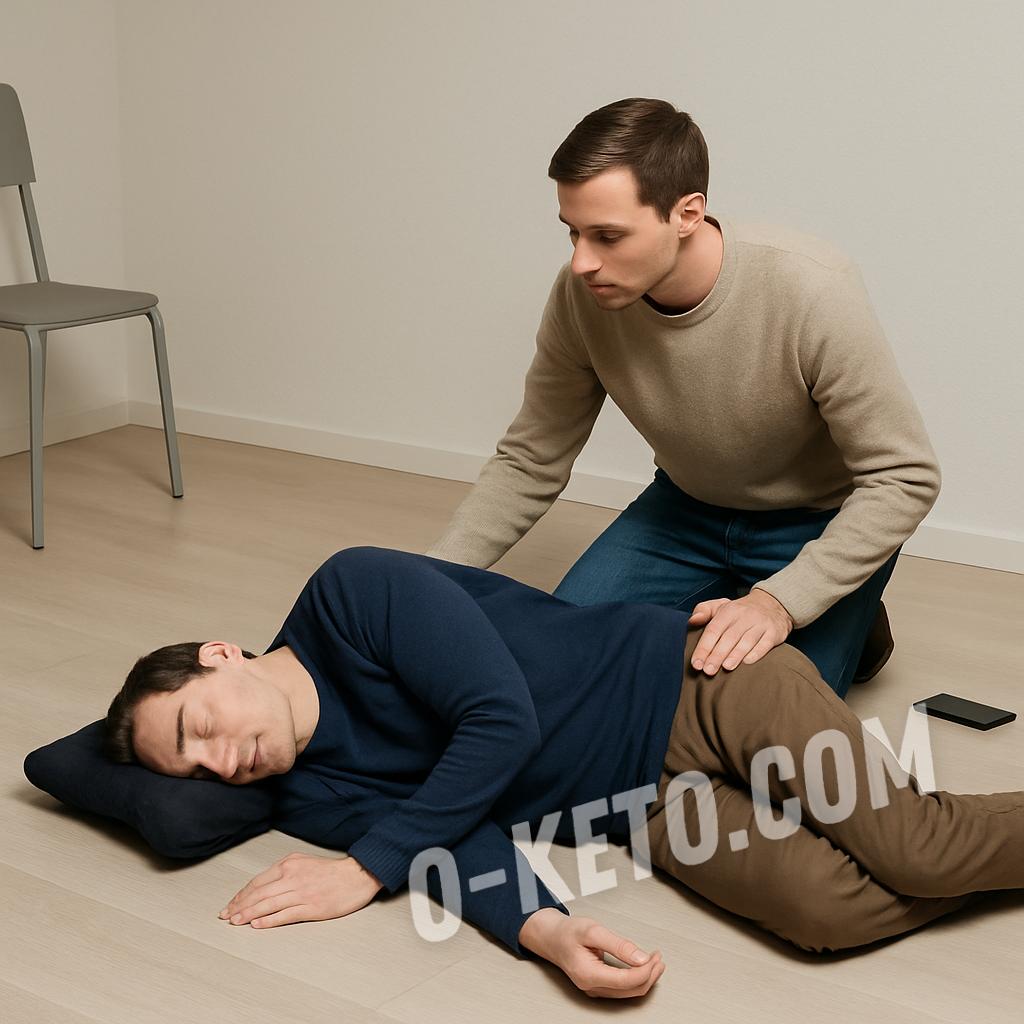

An epileptic seizure is frightening to watch, especially when a person suddenly falls, loses consciousness, and starts convulsing. In those moments, bystanders often make the same mistakes: they try to pin the arms and legs down, force something into the mouth, pour in water, or waste time arguing about whether an ambulance is really necessary. In reality, first aid is much more practical than that. Your job is not to “stop” the seizure with your hands. Your job is to prevent injury, time the episode, and stay calm enough to notice when the situation is becoming an emergency.
A seizure by itself does not automatically prove a diagnosis of epilepsy, and a witness does not need to solve that question on the spot. What matters in the moment is a safe response. You cannot shut off the abnormal electrical activity in the brain by physical force, but you can protect the person from hitting their head, remove sharp objects, avoid harmful myths, and recognize the warning signs that mean emergency medical care is needed right away.
How an epileptic seizure can look
Many people imagine only one form of seizure: a generalized convulsive episode in which a person falls, loses consciousness, stiffens, and then develops rhythmic jerking of the arms and legs. That is one of the most obvious and dramatic patterns, and it is the one that most often makes witnesses panic. But seizures do not always begin that way. Some start with a blank stare, sudden freezing, confused behavior, unusual fear, jerking in one part of the body, difficulty speaking, or short episodes of unresponsiveness.
For a bystander, the exact seizure type is usually less important than the immediate safety questions. Is the person conscious? Did they fall? Are they striking their head against the floor? Are there hard edges, glass, tools, traffic, stairs, or water nearby? How long has the episode been going on? Those are the practical details that guide first aid in the first few minutes. If the person is already on the ground and convulsing, safety matters more than trying to diagnose the event.
What to do in the first seconds
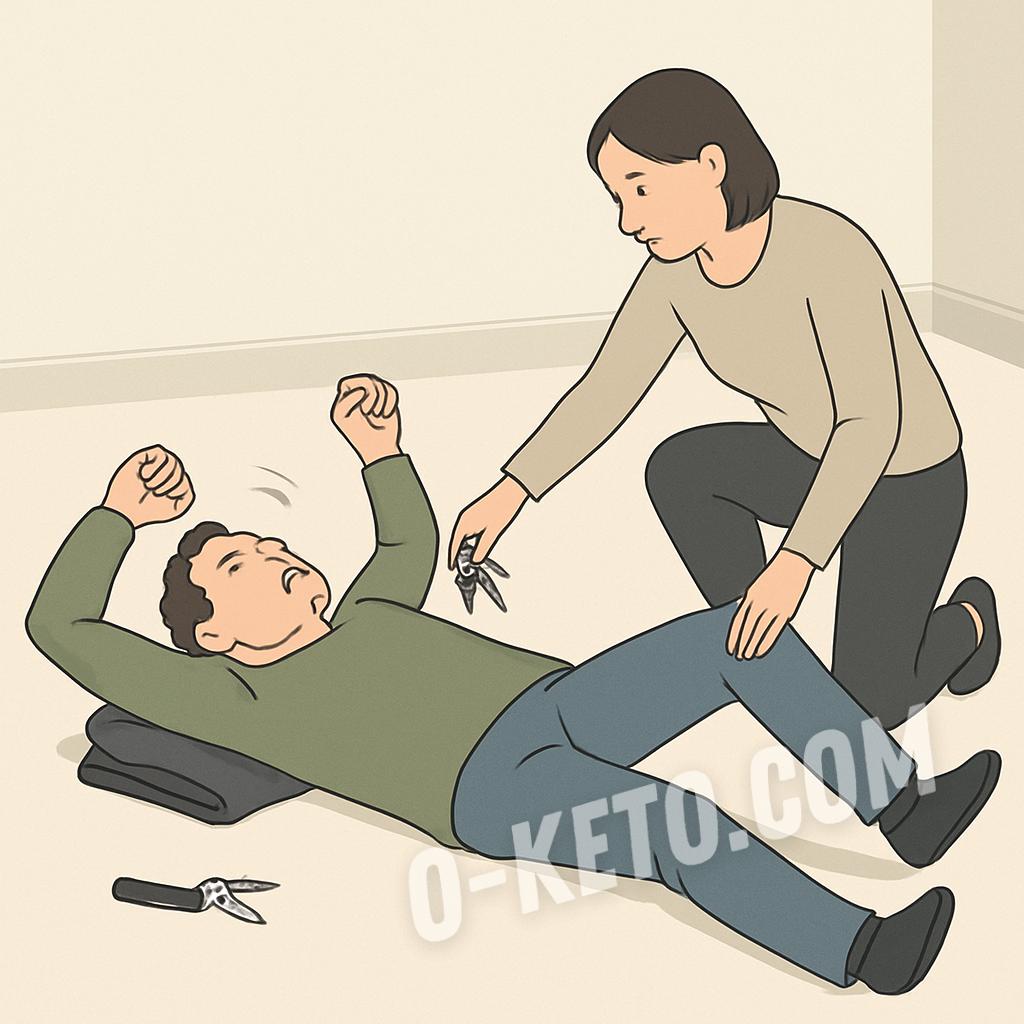
The first useful action is to stay with the person and look at the time. Timing matters because the 5-minute mark is important: a prolonged convulsive seizure, or repeated seizures without normal recovery in between, can become dangerous and needs urgent medical attention. While the seizure is happening, clear the area around the person. Move away chairs, glass, tools, dishes, electrical cords, or anything else they could hit during the convulsions.
If the person is on the floor, place something soft under the head, such as a folded jacket, sweater, or towel. That reduces the risk of a secondary head injury. Loosen a tight collar, scarf, or anything constricting around the neck. If the person can be guided away from danger without dragging or twisting the body, do that, but do not force major movements. If the convulsions are strong, do not try to hold the arms and legs down or pin the person flat against the floor.
If the person is already lying on their side, or if you can gently turn them without struggling against the convulsions, that helps saliva and vomit drain out and may help keep the airway clearer. But turning the person should not become a wrestling match. If the body is jerking too violently, protect the head first and then place the person on their side once the active convulsive phase has ended and it can be done more safely.
What not to do
The best-known and most harmful myth is that you should force the mouth open and insert a spoon, cloth, fingers, or some other object to stop the tongue from being “swallowed.” Do not do this. A person does not swallow their tongue during a seizure, but their teeth, jaw, mouth, and the rescuer’s fingers can be badly injured if anyone tries to force the mouth open. Putting anything into the mouth during a convulsive seizure adds risk and provides no real benefit.
Do not restrain the arms and legs, do not try to straighten the body by force, do not pour in water, food, or pills, and do not attempt rescue breathing during the convulsive phase itself. After a seizure, the person is often confused, exhausted, and temporarily unable to swallow safely, so trying to give water or medication too early can cause choking. Shouting, shaking, splashing water, slapping, or rubbing the person does not stop the seizure and only adds chaos and possible injury.
Another common mistake is creating a crowd and firing off multiple questions the moment the convulsions stop. Recovery after a seizure can be slow and disorienting. The person may not immediately understand where they are or what has happened. Calm space and reassurance are usually far more helpful than frantic attention.
When emergency help is needed immediately
Not every seizure in a person with a known seizure disorder automatically requires an ambulance if the recovery is normal and there has been no injury. But some situations should be treated as emergencies without debate. The most important one is time: if the seizure lasts more than 5 minutes, if one seizure follows another without the person regaining normal consciousness in between, or if you do not know what is usual for that person, emergency help should be called.
An ambulance is also needed if this is the person’s first known seizure, if they were seriously injured, if the seizure happened in water, if breathing remains difficult after the convulsions stop, or if the person does not recover as expected. Many first-aid organizations also advise emergency help when the event happens during pregnancy or when the overall picture simply looks more severe or unusual than a typical recovery. In doubtful situations, it is safer to call earlier than to lose time waiting.
What to do after the convulsions stop
Once the active jerking stops, the person usually needs time to recover. If they are not already on their side, place them on their side if possible, make sure they are breathing normally, and stay with them. It is common for a person to be sleepy, confused, embarrassed, or unable to answer questions clearly for a while after the seizure. That does not automatically mean a new catastrophe is happening, but it does mean they should be watched until their breathing and awareness are clearly improving.
If the person starts waking up, speak briefly and calmly. Tell them the seizure is over, that help is with them, and that they do not need to stand up immediately. Do not rush them to their feet. Give them time, check for head injury, tongue bite, shoulder pain, or other trauma, and only help them sit or stand when they are clearly more alert. Food, water, and medicines should wait until they are fully awake and able to swallow safely.
If the person already knows their diagnosis
Some people have an individual seizure action plan, a medical ID bracelet, or instructions from their clinician or family about what usually happens and whether rescue medication is prescribed. If you see a medical bracelet or already know that the person has seizures and usually recovers in a familiar pattern, that may help you judge whether the current event is following their usual pattern or not. But even with a known diagnosis, the basic first-aid principles do not change: safety, timing, no forced restraint, and careful observation of recovery.
If a rescue medicine has been specifically prescribed and the people present are trained to give it, the plan should be followed exactly. But if you are untrained and do not understand what the medicine is or how it is used, do not improvise. In that situation, call emergency services and clearly explain that the person appears to be having an epileptic seizure, whether they have a known history, how long the event has lasted, and how they are breathing now.
Takeaway
During an epileptic seizure, useful first aid is simple and practical: stay nearby, time the seizure, clear away dangerous objects, protect the head, avoid force, and never put anything in the mouth. After the convulsions stop, place the person on their side if possible, watch their breathing, and let them recover before offering food, water, or medication.
Call emergency services immediately if the seizure lasts longer than 5 minutes, if seizures repeat without normal recovery in between, if this is the first known seizure, if the person is badly injured, if the seizure happens in water, or if breathing and awareness do not recover normally afterwards. When in doubt, it is safer to treat the situation as a potential emergency than to wait too long.
Sources
- First Aid for Seizures: Stay, Safe, Side — Epilepsy Foundation
- First Aid During a Seizure — International League Against Epilepsy
- Seizure First Aid — Epilepsy Foundation 2025
- 2024 American Heart Association and American Red Cross Guidelines for First Aid
- 2025 Adult Basic Life Support Guidelines — Resuscitation Council UK