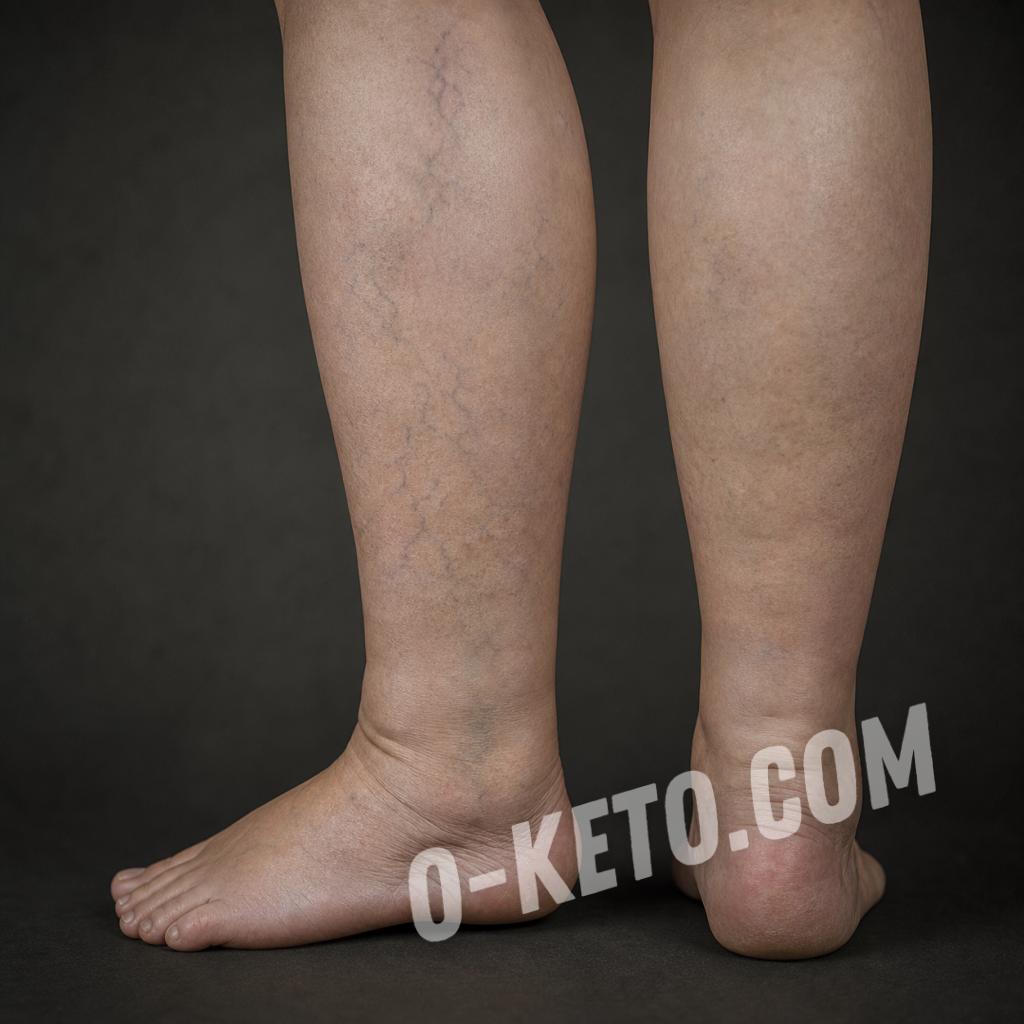

Venous overload in the legs rarely begins with a large bulging vein. Much more often the first thing that changes is how the legs feel: by evening they become heavier, the calves feel full from the inside, sock marks stay on the skin longer, and hot weather becomes harder to tolerate. A person may still have no dramatic visible varicose veins, yet venous return is already becoming less efficient, blood stays longer in the lower parts of the body, and the tissues clear excess fluid and metabolic by-products more slowly.
This distinction matters. A heavy-leg sensation is not automatically the same as a diagnosis of varicose veins, but it should not be dismissed as ordinary fatigue every single time either. The lower limbs work against gravity every day. To move blood upward toward the heart, the body needs competent venous valves, ankle and calf movement, an active muscle pump, breathing mechanics, and enough elasticity in the vessel wall. When these mechanisms begin to cope less well, the body often sends warning signs long before major visible vein changes appear.
How to recognize that the problem starts before visible veins
One of the most common mistakes is to judge the venous system only by appearance. If there are no large twisted veins, many people assume that circulation must be fine. In practice, early overload is often functional rather than visual. The legs feel heavier by the end of the day than they used to. After work, there is a strong desire to stretch out or elevate them. After sitting for a long time, standing up may bring a feeling of fullness or pressure in the calves. In hot weather, shoes may feel tighter, and the marks from socks may remain longer than before.
These complaints appear because blood leaves the lower limbs more slowly, pressure gradually rises in the venous and capillary network, and fluid moves more easily into the tissues. At this stage the process may still be reversible. But if the same pattern repeats regularly, it is no longer just a random bad day. It means the compensatory system is working close to its limits.
Why symptoms become worse in the evening, in heat, and during static work
What stresses the veins most is not movement itself but prolonged stillness. When a person sits or stands for many hours without enough walking, the calf muscle pump is almost switched off. Blood then stays lower for longer, and pressure on the venous wall remains high not for minutes but for hours. That is why office work, long drives, flights, cashier work, surgery, kitchen work, and many service jobs can produce the same pattern: heaviness, fullness, swelling, and tired legs by evening.
Heat makes the picture easier to notice. Warmth dilates blood vessels, the venous system fills more easily, and tissue fluid balance becomes harder to maintain. Many people first begin to notice the problem in summer: they want coolness, their legs feel “full,” their footwear becomes tighter by evening, and even a normal walk feels less comfortable. If heat used to be tolerable and the legs now react much more strongly, that is a useful clue that venous overload may already be present.
How movement helps venous return
Venous blood does not rise upward just because the vein exists. It needs outside help, and the most important part of that help comes from the calf muscles. During walking, the calf muscles contract rhythmically, compress the deep veins, and literally push blood upward, while the valves help prevent it from falling back down. This is why a few minutes of walking often relieve the legs better than standing still or sitting for the same amount of time.
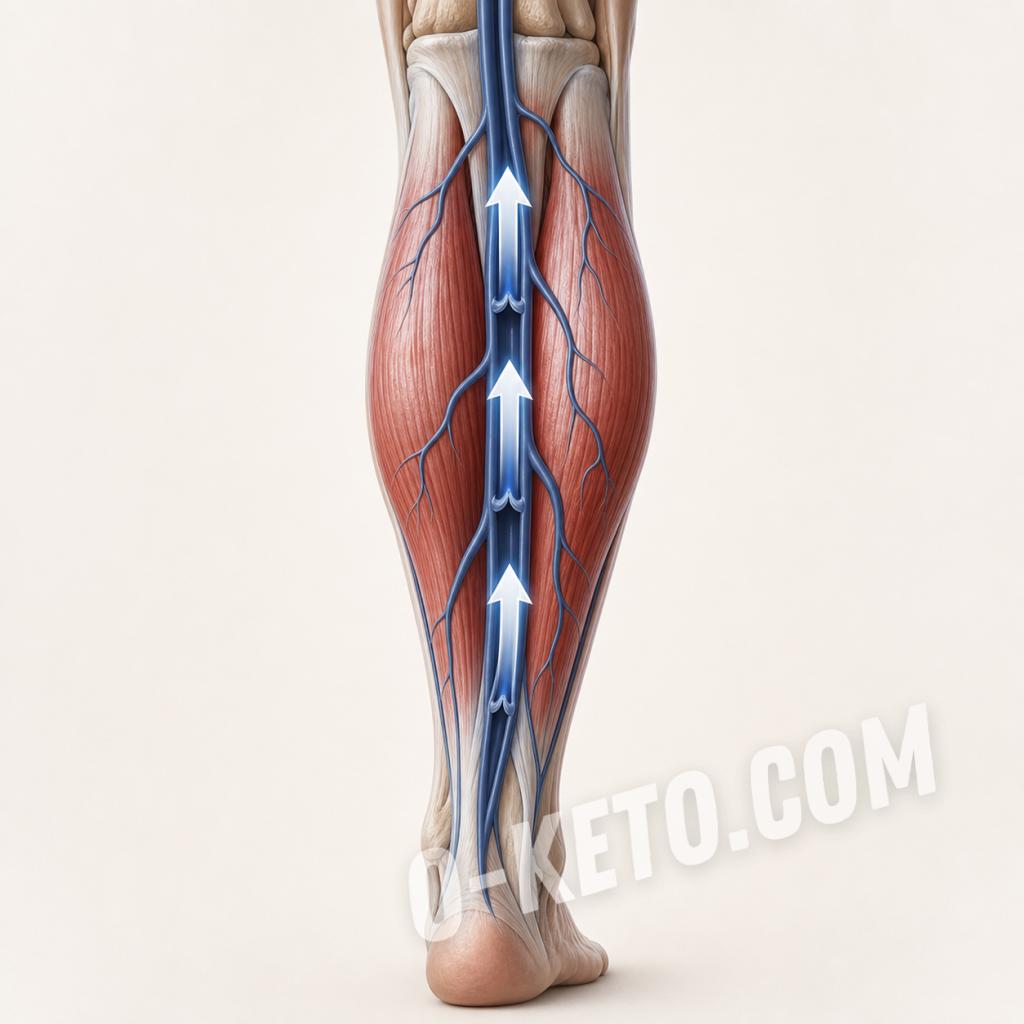
If a short walk, gentle ankle movement, or elevating the legs makes the symptoms lighter, that also indirectly supports the idea of venous overload. In contrast, a purely joint-based or traumatic problem may behave differently. This daily rhythm is characteristic: the legs are worse by evening, better by morning, and often noticeably better after movement. That pattern fits slowed venous return and fluid accumulation in the tissues.
Which signs are especially typical of venous overload
The most typical pattern is not one isolated symptom but several repeating ones together. These include heaviness in the legs by evening, a bursting sensation in the calves, marks from socks or shoes, poor tolerance of heat, a desire to elevate the legs, worsening after sitting or standing, and faster fatigue of the legs during an otherwise ordinary day. Some people also notice burning, itching, a feeling of “filled” tissues, night cramps, or restless uncomfortable legs after a demanding day.
It is also important that symptom severity does not always match the visual appearance of the veins. A person may have very visible veins with only mild complaints, while another may have strong heaviness and puffiness without large varicose veins yet. That happens because symptoms reflect not only one surface vein but the whole environment: microcirculation, capillary permeability, tissue fluid balance, and how much blood remains pooled in the lower parts of the legs.
How to distinguish functional overload from signs that need a doctor
Functional venous overload often follows a recognizable pattern: symptoms are worse by evening, lighter after night rest, stronger in heat and after static work, and partly relieved by walking or elevating the legs. But there are situations where it is unwise to wait. More concerning signs include one leg swelling clearly more than the other, swelling that no longer resolves overnight, marked pain along a vein, redness, warmth, sudden discoloration of the skin, hard tender areas, darkening of the skin, or poor healing.
It is also important not to blame every swelling episode on the veins automatically. Leg swelling can also involve the lymphatic system, medications, hormonal shifts, cardiac or kidney strain, a major salt burden, long flights, and other systemic problems. The practical rule is simple: repeating evening symptoms are a reason to pay attention to venous function and daily habits, while one-sided, painful, progressive, or persistent swelling is a reason not to delay medical assessment.
The key takeaway is that venous overload often begins earlier than the visible varicose stage. It starts at the level of sensations, daily patterns, and how the legs respond to heat, stillness, and movement. The earlier a person recognizes that pattern, the lower the chance of ignoring a body signal that has already been repeating day after day.
Sources
- Varicose Veins in the Legs: Information for the Public – NICE Guideline CG168
- Recommendations: Varicose Veins – NICE Guideline CG168
- ESVS 2022 Clinical Practice Guidelines on the Management of Chronic Venous Disease of the Lower Limbs
- Varicose Veins – NHS
- Swollen Ankles, Feet and Legs (Oedema) – NHS
- Post-thrombotic Syndrome and Chronic Venous Insufficiency – Guy’s and St Thomas’ NHS Foundation Trust