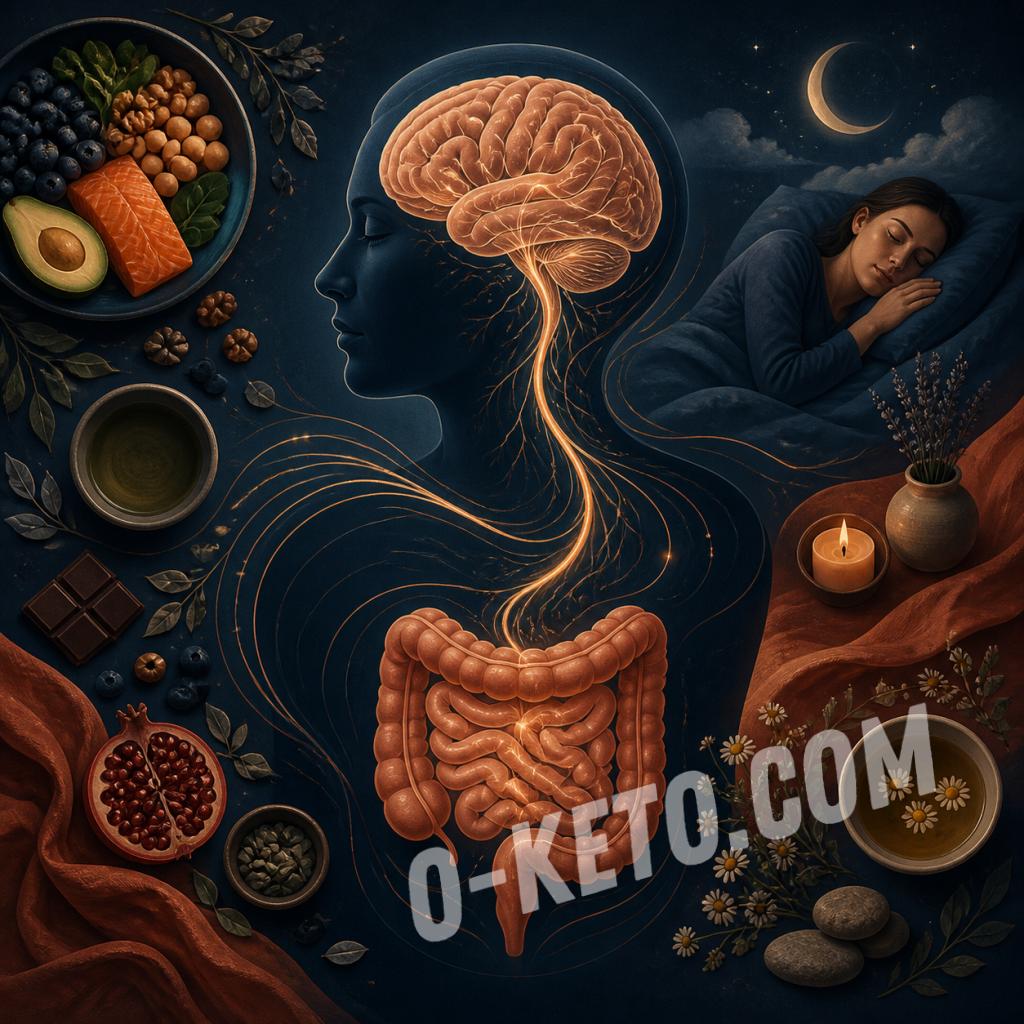

The gut and brain exchange signals all the time. Stress can affect motility, pain, bloating, and bowel habits, while persistent digestive symptoms can influence mood, sleep, and daily activity. This does not mean that every problem starts in the microbiota or that every discomfort should be treated with a probiotic. The gut–brain axis is useful as a model because it shows how several systems interact instead of reducing complex symptoms to one cause.
This article explains what is reasonably established, where the evidence becomes uncertain, and how to support the gut without promising to “reset” the brain with one supplement.
What the gut–brain axis is
The gut–brain axis is a two-way communication network. It includes the enteric and autonomic nervous systems, the vagus nerve, immune and endocrine pathways, and substances produced during microbial metabolism. Short-chain fatty acids and tryptophan-derived compounds may participate in this communication, but identifying a mechanism does not prove that a particular food or supplement will treat a disease.
The connection is not a simple cable in which “a bacterium releases a substance and the brain receives an immediate command.” Signals are shaped by sleep, stress, medicines, diet, physical activity, inflammation, and individual sensitivity. A single microbiome test therefore cannot explain a person’s mood or predict which supplement will help.
Why stress affects the gut
During stress, autonomic nervous-system activity, the way internal signals are processed, and gastrointestinal motility can change. One person may develop looser stools, another constipation, cramps, or a feeling of fullness. In irritable bowel syndrome, the two-way relationship is especially visible: gut symptoms can increase anxiety and fear of pain, while anxiety can heighten sensitivity to ordinary intestinal activity.
This does not mean that symptoms are “imagined.” Pain, urgency, and bloating are real even when tests do not show tissue damage. For that reason, a clinician may discuss not only diet and medication but also cognitive behavioral therapy, gut-directed hypnotherapy, or other approaches that work with the gut–brain axis. The goal is to reduce symptom burden and change the processing of signals, not to tell a patient that the illness exists only in the mind.
What microbiota may contribute
Gut microorganisms process some dietary fibers and other substrates. The resulting metabolites interact with the mucosa, immune cells, and neural signaling. Microbiota composition is associated with diet, antibiotics, infections, sleep, and intestinal disease. Yet an association is not proof of cause: people with the same diagnosis can have different microbial profiles, and a change in composition may follow illness rather than initiate it.
Research on microbiota in depression, anxiety, and other conditions is developing rapidly. Some findings come from laboratory work, animal models, or observational studies. Clinical trials of probiotics are heterogeneous: effects may depend on the strain, dose, duration, baseline health, and outcome measured. A change in a laboratory marker does not automatically mean better mood, and a positive result in one study does not turn a product into a universal treatment.
Psychobiotics: what the term means
Psychobiotics is a research term for probiotics, prebiotics, or other interventions proposed to influence mental well-being through the gut–brain axis. It is not a guarantee and not a separate class of medicines. Evaluation requires attention to the exact strain, dose, formulation, duration, and clinical condition.
Some reviews allow cautious use of selected probiotics as an add-on in depression, but the evidence is not strong enough to replace psychotherapy or prescribed medication. Evidence for prebiotics, synbiotics, and fecal microbiota transfer is even less settled. If you have persistent anxiety, depression, panic attacks, or disabling insomnia, seek appropriate care rather than trying to solve the problem by changing gut bacteria alone.
Food choices for the gut–brain axis
The practical goal is not to build a perfect microbiome but to make the diet regular, varied, and tolerable. Depending on the person, useful substrates may come from vegetables, greens, berries, seeds, modest portions of nuts, legumes when tolerated, spices, and unsweetened fermented foods. Increase new fiber sources gradually because a sudden change can worsen gas and discomfort.
A fermented food is not automatically a probiotic. It may contain live cultures, but their presence, amount, and properties depend on production and storage. Kefir, yogurt, kimchi, or fermented vegetables can be part of a diet when tolerated. If bloating or diarrhea is severe, or small intestinal bacterial overgrowth is suspected, choose foods with a clinician instead of forcing more “healthy” products.
The gut–brain axis on keto
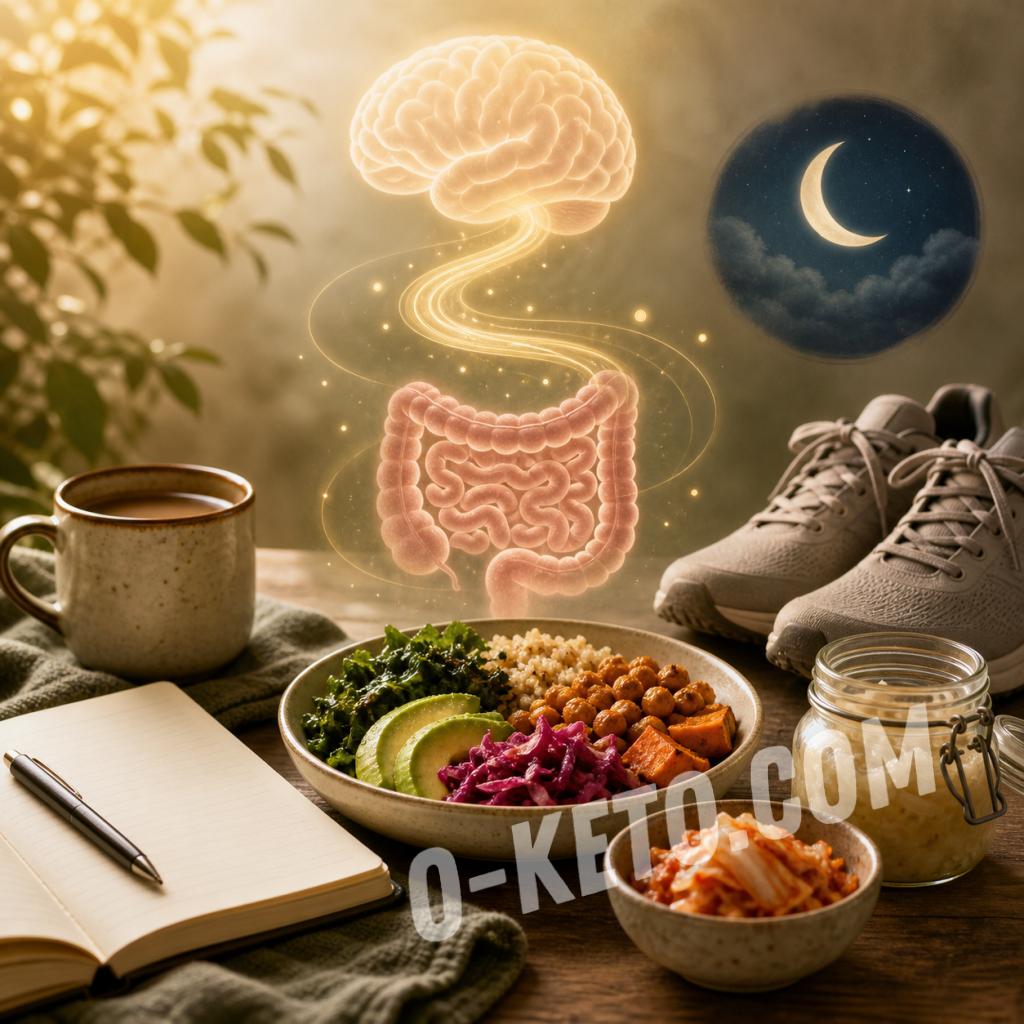
Keto reduces sugar and starch, but it does not automatically require eliminating every plant food. What matters for the gut is which fiber and other substrates remain: greens, lower-carbohydrate vegetables, seeds, measured portions of nuts, avocado, and small portions of berries can fit different low-carb approaches. Individual tolerance matters more than a universal list of permitted foods.
Keto is not a proven universal treatment for anxiety, depression, or IBS. If constipation, diarrhea, anxiety, or insomnia worsens after a sharp dietary change, look beyond carbohydrate totals to food volume, fluids, electrolytes, caffeine, fiber, and sleep quality. Persistent symptoms deserve medical assessment.
Practical steps
Start with basics that support both sides of the connection:
- keep a reasonably regular pattern of meals and sleep;
- increase fiber gradually and follow your tolerance;
- do not remove whole food groups without a clear reason and a return plan;
- choose physical activity that is realistic for you;
- notice links between symptoms, food, stress, and sleep without turning the diary into constant monitoring;
- do not stop prescribed treatment for a probiotic or “psychobiotic.”
Seek medical care for blood in the stool, unexplained weight loss, fever, nighttime symptoms, persistent vomiting, severe pain, or a sudden change in bowel habits. Seek mental-health support for persistent low mood, panic attacks, intrusive anxiety, thoughts of self-harm, or severe insomnia.
Conclusion
The gut–brain axis helps explain why stress and digestive symptoms can reinforce one another and why food, sleep, and gut health should not be treated as completely separate topics. It is not a simple story about one “good bacterium,” nor a reason to promise that a probiotic treats a psychiatric disorder. A sound approach combines assessment, tolerable food, sleep, movement, and, when needed, psychotherapy or medication.
Sources
- Gut–brain axis: mechanisms, evidence and clinical perspectives
- Nine guideline-based best practices for IBS — American Gastroenterological Association
- Incorporating psychogastroenterology into management of digestive disorders — American Gastroenterological Association
- CANMAT Task Force Report: probiotics and related interventions in mood and anxiety disorders
- Psychobiotics and the gut–brain axis: systematic review of human studies
- Diet, microbiota and short-chain fatty acids in human health