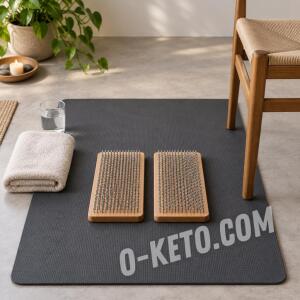
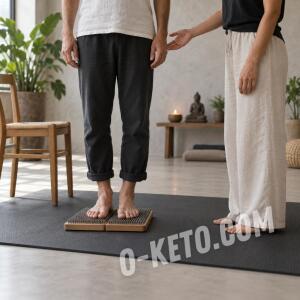
A Sadhu board is a piece of training equipment with rows of metal nails on which a person stands barefoot. The model you choose affects stability, pressure distribution and injury risk, rather than any supposed “energy” of the practice. Before buying one, check the construction, base material, nail spacing and whether the surface can be cleaned safely.
How to choose nail spacing
Nail spacing changes how many pressure points support the foot. With closer spacing, the load is usually shared by more points and may feel less concentrated at the same body weight. Wider spacing places more pressure on fewer nails and can feel more intense. There is no single correct spacing: body mass, foot size, experience and access to a helper all matter.
For a first session, choose a board with an even, relatively dense pattern and no areas where the distance changes unexpectedly. Nails should be vertical, similar in height and firmly fixed in the base. Tips must not be bent, loose or rusty. If the maker does not state spacing, base dimensions and a safe load, the board is difficult to assess and is best avoided.
Base, size and stability
Boards are made with wood and other rigid materials. In practice, the important points are the absence of cracks, movement and slipping, rather than the name of a wood species or metal. The base should lie flat, resist bending under body weight and remain stable on the floor. Rounded edges reduce the chance of catching a foot during entry or exit.
Check that each foot fits on the working surface with a small margin at the sides. A board that is too small makes balance harder and encourages weight to shift toward an edge. At home, place it on a dense non-slip mat and prepare a stable support such as a wall, rail or heavy chair. Support does not remove every risk, but it lowers the chance of a fall.
What the designs mean
Mandalas, lotuses, Om, yin-yang, the tree of life and other images are decorative or cultural symbols. Choose them for personal meaning or appearance. There is no reliable scientific basis for treating a drawing as a source of energy, a treatment or a guarantee of a special psychological outcome. A symbol cannot compensate for poor nails or an unstable base.
How to compare materials
Metal parts may be made from steel, copper or coated alloys. Copper and zinc are sometimes marketed as “healing”, but the nail material does not turn a board into a medical device. Compare models by resistance to corrosion, strength of the fasteners, weight, portability and the availability of care instructions.
A wooden base can be comfortable to handle and easy to repair, but untreated wood is sensitive to moisture. A lacquered surface has more protection, although alcohol, strong oxidisers and abrasive powders may damage the finish. Ask the maker which products are compatible with the exact model, especially when several people use the same board.
Care, cleaning and disinfection
After practice, remove sweat and moisture with a soft cloth and let the board dry fully in a ventilated place. Do not put it directly against a radiator or leave it in strong sun: rapid heating can warp wood and damage the finish. A dry soft brush is useful for the gaps between nails.
For personal equipment, routine cleaning according to the maker’s instructions is usually sufficient. In a studio, surfaces that touch different people’s skin need an approved cleaning protocol. Do not soak untreated wood or mix chemical products. If blood, an open crack or other body fluid reaches the board, stop the session, isolate the equipment and clean it according to the material instructions.
Punctures and abrasions need ordinary wound hygiene: wash your hands, rinse a minor wound with clean running water and soap, and cover it with a clean dressing. A deep puncture, persistent bleeding, increasing redness, swelling, pus or fever requires medical attention. Do not use the board until skin damage or an active infection has healed.
Safety check before the first session
Inspect the soles of the feet, remove sharp objects from the floor and place the boards on a non-slip mat. Keep a support or a trained guide within reach. Enter slowly: transfer weight to one foot and then the other while keeping the body upright. Leave in reverse order, without jumping or making sudden movements.
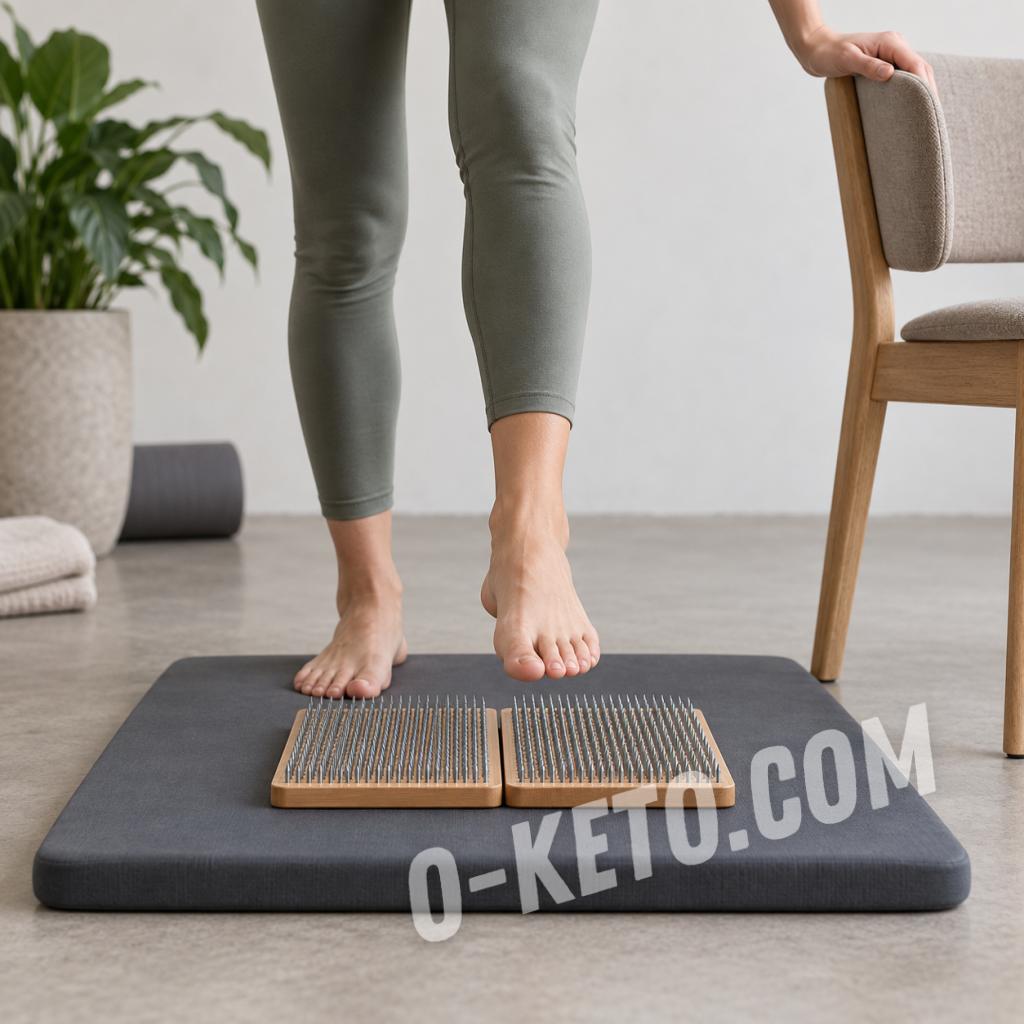
Burning, tingling, sweating and a brief emotional response can occur during acute pain and stress, but they do not prove detoxification, rejuvenation or treatment of an organ. Stop immediately if you feel dizzy, faint, have chest pain, unusual breathlessness, confusion, severe pain or any worsening symptom. Sit or lie down and seek help when needed. Pregnancy, recent surgery, injury, epilepsy, serious cardiovascular symptoms, an acute illness, and medicines that affect consciousness or balance require an individual decision with a clinician.
Conclusion
A sound Sadhu board has verifiable qualities: a flat base, even nail spacing and height, stable construction, no rust and clear care instructions. Choose the design and material for practical reasons and personal preference, without assigning them healing powers. A non-slip mat, a support, gradual entry, a clean dry surface and the willingness to stop when warning signs appear provide the most useful safety margin.
Sources
Key sources:
- Preventing Group A Strep Infection — Centers for Disease Control and Prevention.
- Clinical Guidance for Wound Management to Prevent Tetanus — Centers for Disease Control and Prevention.
- Should You Exercise If You Have Heart Disease? — Mayo Clinic.