


Varicose veins
Dilated superficial veins usually reflect valve failure and increased venous pressure; nutrition can support the background, but compression, movement, and vascular assessment remain central.




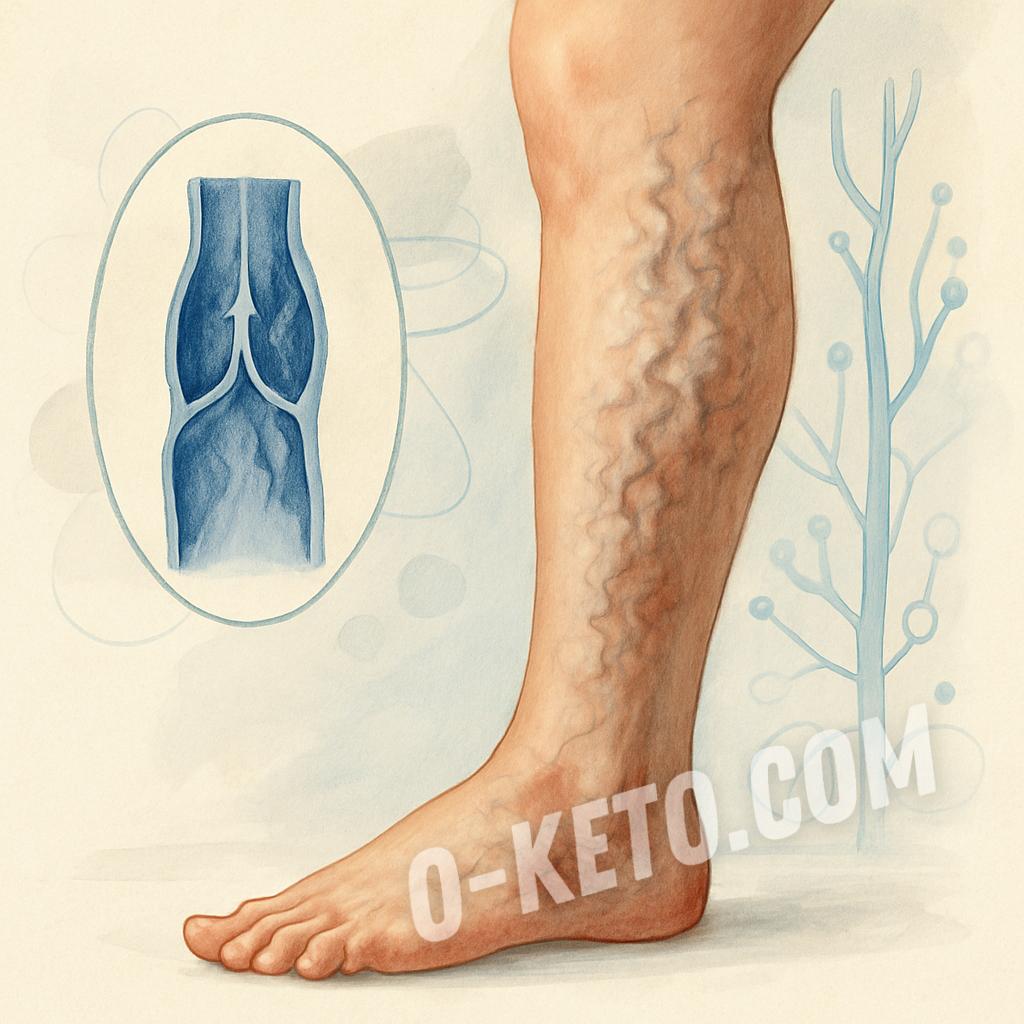
Varicose veins are not merely cosmetic blue lines on the legs. Most often they are dilated superficial veins in which venous valves no longer prevent backward flow effectively. Blood pools, venous pressure rises, the wall stretches, and twisted veins, heaviness, swelling, itching, night cramps, heat, and leg fatigue may appear. The problem can look external for a long time, but chronic venous insufficiency can darken and harden the skin, impair healing, and in severe cases lead to venous ulcers.
Why varicose veins develop
The main mechanism is venous hypertension. When valves are damaged or the vein wall is weak, blood more easily flows downward with gravity, especially during long standing. Risk increases with heredity, age, pregnancy, excess weight, immobility, standing occupations, previous thrombosis, trauma, and some hormonal factors. Strength training itself does not automatically cause varicose veins, but constant breath-holding strain, poor recovery, and existing venous insufficiency may worsen symptoms.
Leg veins depend on the muscle pump. When the calf muscles contract during walking, they help push blood upward. The paradox is that standing still is often worse than walking. A long flight, a standing work shift, sitting without movement, and dehydration can increase swelling and heaviness. Regular walking, calf raises, movement breaks, and weight control reduce venous load, but they do not restore damaged valves to a perfect state.
What actually helps
Basic measures include movement, losing excess weight, elevating the legs during rest, avoiding long immobile standing, and properly fitted compression stockings. Compression is not a decorative accessory and should not be chosen only by color or thickness. Compression class, size, tolerance, arterial status, and goal matter: swelling prevention, standing work, pregnancy, post-procedure period, or advanced venous insufficiency. If there is uncertainty, stockings should be selected with a clinician, especially in diabetes, foot numbness, arterial disease, or pain during walking.
Modern treatment may include endovenous laser or radiofrequency ablation, sclerotherapy, miniphlebectomy, and other procedures. Choice depends on venous ultrasound, vein diameter, reflux, symptoms, and the state of deep veins. Cooling ointments may temporarily improve comfort, but they do not correct valve failure. Venoactive tablets sometimes reduce swelling and heaviness, but their effect is limited and they do not replace diagnosis.
Nutrition and low-carbohydrate context
Diet does not make varicose veins disappear, but it influences factors that worsen the condition. Excess body weight raises pressure in leg veins, chronically high glucose worsens vascular health and skin healing, inadequate protein impairs tissue repair, and ultra-processed food can intensify swelling through salt, inflammation, and overeating. A low-carbohydrate diet may help if it supports weight loss, steadier glucose, and fewer snacks, but it still needs nutrient density.
For venous tissue, protein, vitamin C, copper, zinc, collagen-related amino acids as part of adequate protein intake, omega-3 from fish, vegetables, and enough fluid all matter. This does not mean that collagen or vitamin C cures varicose veins. They support tissues but do not mechanically repair valves. When swelling is present, venous fluid retention should be distinguished from heart, kidney, liver, medication, and lymphatic causes. On keto, increasing or sharply restricting salt without considering blood pressure, kidneys, and medication is unwise.
When urgent assessment is needed
Varicose veins must be distinguished from deep vein thrombosis and superficial vein inflammation. Medical help is urgent with sudden marked swelling of one leg, calf pain, redness and heat along a vein, shortness of breath, chest pain, coughing blood, sudden weakness, or fainting. Venous ulcers, dark skin around the ankles, bleeding from a varicose node, and rapidly worsening symptoms should also not be ignored. The earlier veins are assessed by ultrasound, the easier it is to choose treatment before severe skin changes appear.

If you have any questions about the term "Varicose veins", you can ask them to AI. Please note, a low-cost OpenAI model is used. It may answer questions about disease treatment with errors!


 1 / 4
1 / 4


 1 / 4
1 / 4 1 / 4
1 / 4