


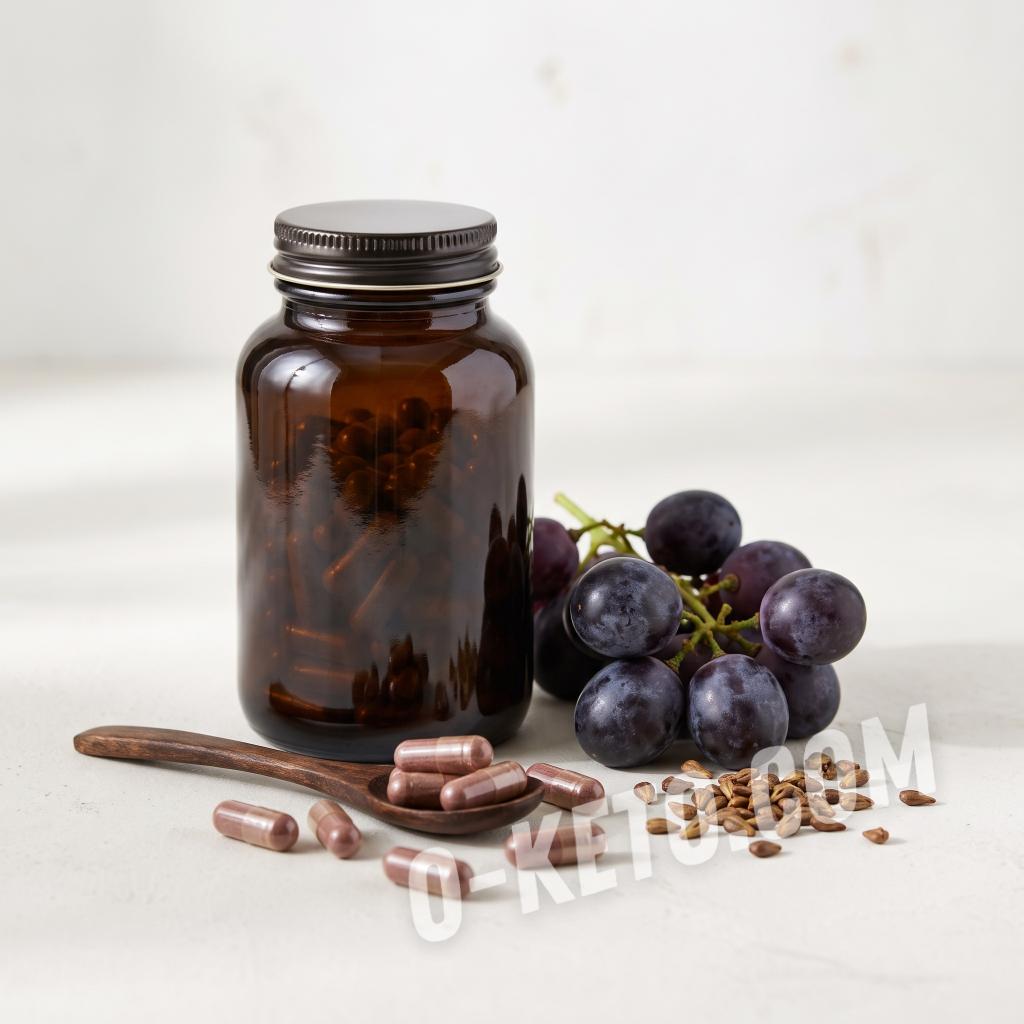

Grape seed extract is made from grape seeds, most often from Vitis vinifera. Unlike grapeseed oil, which is used as a culinary fat, the extract is a concentrated supplement. It is sold as capsules, tablets, powders, and liquid forms, and interest in it is mainly linked to its content of proanthocyanidins and other polyphenols.
This product is not the same as a serving of grapes and it is not a substitute for food. It contributes little as a source of protein, fat, or carbohydrates, but it may differ greatly in strength depending on standardization, dose, and excipients. For practical use, the important details are the composition, the form, and the quality of the labeling, not broad marketing promises.
What it is
The extract is produced from dried and processed grape seeds after the concentrate is isolated. Better supplements often specify the proportion of proanthocyanidins or use the label OPC. That matters because two products with the same name may differ substantially in concentration and daily serving size.
It is important not to confuse grape seed extract with grapeseed oil or with whole grape seeds. Oil is mainly a fat source for cooking, while the extract is used for its concentrated polyphenols. Whole seeds or grape flour behave like food ingredients, whereas the extract is usually taken in small supplemental amounts.
Why it is used
Grape seed extract is used in supplement routines that aim to add a concentrated source of antioxidant polyphenols. It is commonly discussed in connection with vascular support, oxidative stress, and skin-related goals. Even so, it should not be treated as a universal fix. The practical value depends on the specific product, the dose, and the broader health context.
According to NCCIH, there are some controlled studies on grape seed extract for lipid markers and diastolic blood pressure, but the evidence is still mixed and the tested products are not identical. That makes it more reasonable to view the extract as a possible adjunct rather than a replacement for medical care, sleep, diet quality, or basic cardiovascular risk management.
How it fits low-carb and keto eating
Grape seed extract usually does not interfere with keto because it is taken in small amounts and is not a meaningful carbohydrate source by itself. The practical issue is the formulation. Liquid versions may use glycerin or alcohol, and some flavored or sweetened products can contain extra ingredients that matter more than the extract itself.
For stricter low-carb use, it is better to choose unsweetened forms without syrups, maltodextrin, or sugary drink-style carriers. The extract does not make a diet “clean” on its own and it does not compensate for poor food choices. It is simply a supplement that should be evaluated on its own merits and limits.
How to choose
A useful label should clearly show the dose, the form, and the standardization. It is a good sign when the manufacturer states the amount of proanthocyanidins or total polyphenols instead of relying on vague claims about a “grape complex.” It is also worth checking whether the formula contains sweeteners, unnecessary colors, or filler-heavy blends.
If digestion is sensitive, a liquid concentrate or a high dose may be harder to tolerate than capsules. If a person already uses several medicines, a shorter and more transparent ingredient list is usually the safer choice because interactions are easier to assess. Everyday details also matter: capsule size, smell, and how easy the product is to dose consistently.
Limits and safety
Grape seed extract is generally considered well tolerated, but that does not remove the need for caution. NCCIH advises people to discuss supplements with a health care professional when they use medicines. Memorial Sloan Kettering also notes that grape seed extract may raise bleeding risk when combined with blood thinners or other drugs that affect clotting.
There is not enough reliable safety information for pregnancy or breastfeeding. Extra caution is also sensible before surgery, with clotting disorders, or in complex supplement stacks. If stomach upset, headache, unusual bruising, or another unexpected reaction appears after starting it, it is better to pause the product and review the situation with a qualified clinician.


