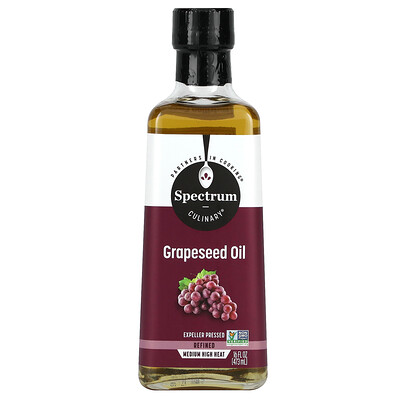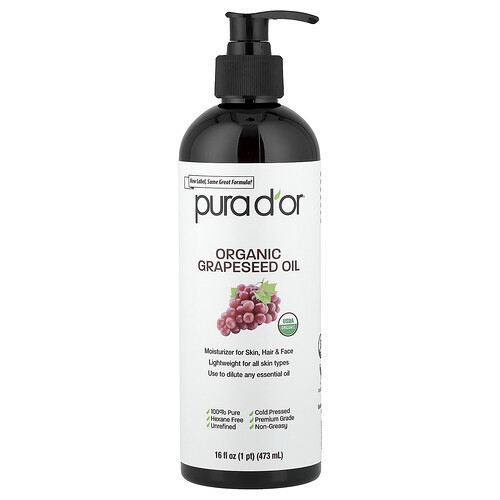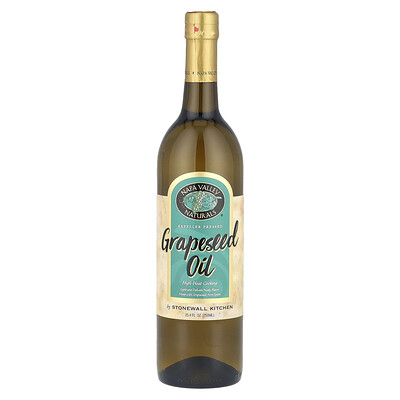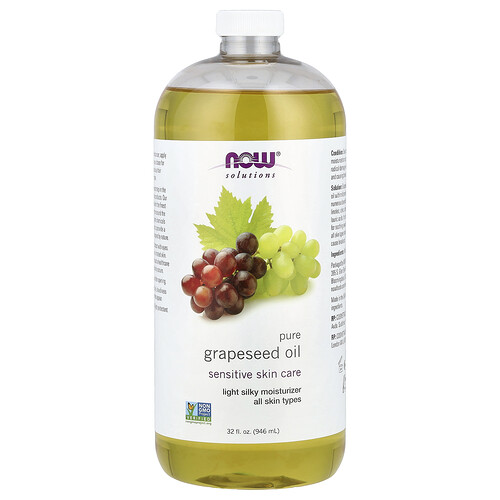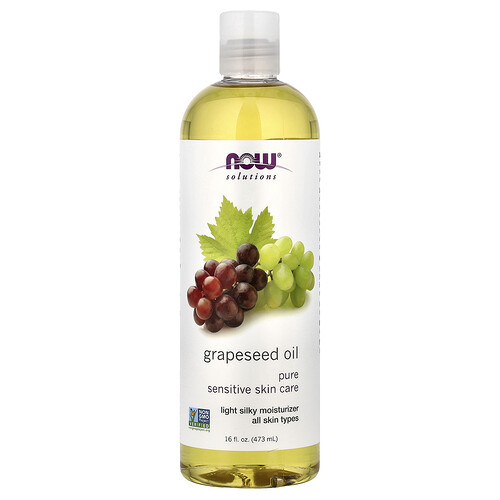

Grapeseed oil is a light vegetable oil with a neutral taste, obtained from grape seeds. It is often chosen where the strong aroma of olive, coconut, or butter is not needed: for mayonnaise, dressings, marinades, quick frying, and sauces. In a dish, it hardly competes with other ingredients and carries spices, garlic, herbs, and acidity well.
The oil has two important features. The first is a high share of polyunsaturated fats, mainly omega-6 linoleic acid. The second is a usually neutral taste and a relatively high smoke point in refined versions. This makes it technologically convenient, but not always the best choice as the main daily oil if the diet already contains a lot of omega-6 from nuts, seeds, mayonnaise, and ready foods.
Nutritional value
Like other pure oils, grapeseed oil is almost entirely fat. In 100 g there are about 884–900 kcal, 0 g of protein, and 0 g of carbohydrates. The glycemic load is zero if there are no additives. One tablespoon gives about 120 kcal and 13–14 g of fat, so portion size matters even without carbohydrates.
By fat composition, polyunsaturated fats usually dominate, followed by monounsaturated fats and a small share of saturated fat. The oil also contains vitamin E, but the amount depends on raw material, refining, and storage. Cold pressing may give a more pronounced taste and more accompanying compounds, while refined oil is milder in aroma and more convenient for heating.
Is it suitable for keto?
For keto and LCHF, grapeseed oil fits by carbohydrates: it contains none. It can be part of a dressing, sugar-free mayonnaise, marinade, or sauce. But keto is not only the absence of carbohydrates, so fat quality and the overall diet pattern matter. If the oil is used daily by large spoonfuls, the omega-6 share may rise noticeably.
A practical approach is to use it as a neutral oil for specific tasks, not as the only fat source. It can be rotated with olive oil, butter, ghee, avocado, fatty fish, and other foods. For cold salads where a stronger taste is welcome, olive oil is often more interesting; for neutral homemade mayonnaise, grapeseed oil can be more convenient.
How to use it
Refined grapeseed oil is suitable for quick frying, stewing, moderate-temperature roasting, marinades, and sauces. It does not add a strong aroma of its own, so it works well in mayonnaise, dressing with lemon, sugar-free vinegar, mustard, garlic, herbs, and black pepper. In keto cooking, it can be used for salads with fish, chicken, eggs, avocado, and greens.
For long frying at very high temperature, any oil with a large share of polyunsaturated fats is not the best option. If the oil smokes, the smell becomes harsh, or the color darkens noticeably, the heat is too strong. For deep frying and repeated use, choose more stable fats and avoid overheating.
How to choose
Look at the type of oil: refined or unrefined, cold-pressed or extracted. For heating, refined oil with a neutral smell is usually chosen. For cold dressings, unrefined oil can be tried if its taste is pleasant. The ingredient list should be short: only grapeseed oil, without flavorings, colors, or blends of unclear origin.
Good oil should not smell of rancid nuts, paint, or old frying. A dark bottle protects from light better, and a small volume is more convenient if the oil is used rarely. The bottling date matters: vegetable oils with a high share of polyunsaturated fats are sensitive to air, heat, and light.
Limitations
The main limitation is not carbohydrates, but the overall fat balance. Grapeseed oil is rich in omega-6, and modern diets often already contain a lot of it. This does not make the product “forbidden”, but large daily portions without fat variety are undesirable. If a person already eats many nuts, seeds, chicken skin, mayonnaise, and ready sauces, another omega-6 oil should be dosed carefully.
With sensitive digestion, a large amount of any oil can cause heaviness or loose stool. Allergy to grape products is uncommon, but individual reactions are possible. For children’s food and mild-tasting dishes, the dose should stay moderate.
How to store it
Keep the oil tightly closed in a dark cool place, away from the stove. After opening, it is better to use it without long storage and not leave the bottle in the light. If the smell becomes rancid, the taste turns bitter, or a sticky film appears near the neck, the oil is better discarded. Spoons and funnels should be dry so water does not get into the bottle.
What can replace it?
For a neutral dressing, avocado oil, mild olive oil, refined olive oil, or MCT oil in cold dishes can work. For frying, ghee, avocado oil, or another more stable fat can be used. For neutral-tasting mayonnaise, mild olive oil is often mixed with avocado oil or a small amount of grapeseed oil so the flavor is not sharp.