


Mediterranean diet
The Mediterranean diet is built around vegetables, fish, olive oil, nuts, and whole foods; when needed, it can be adapted to LCHF by reducing starch and hidden sugars.


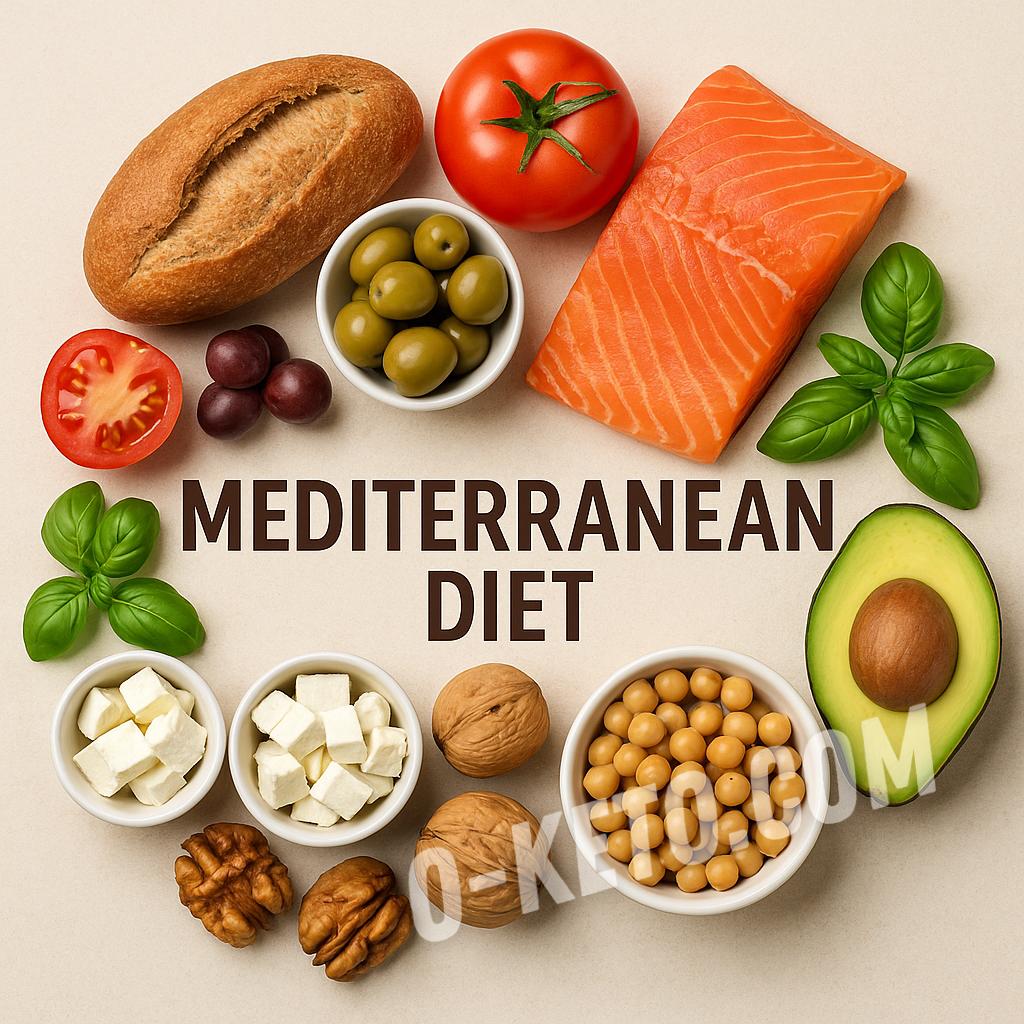
The Mediterranean diet is a dietary pattern built around vegetables, greens, fish, seafood, olive oil, nuts, legumes, fruit, whole foods, and moderation. It is associated with better cardiovascular health, higher diet quality, and a lower share of ultra-processed food.
The classical version is not ketogenic: it may include bread, grains, legumes, and fruit. But Mediterranean principles can be adapted to LCHF if olive oil, fish, eggs, vegetables, greens, and nuts remain the core while excess starch and sugar are removed.
How the Mediterranean pattern is adapted to a specific goal
The Mediterranean diet can vary greatly in carbohydrate load. One version is built around fish, olive oil, vegetables, and protein, while another can easily accumulate a lot of bread, grains, legumes, and fruit. In practice, the key issue is not the name itself but whether the actual version fits the goal: lowering inflammation, controlling weight, improving lipids, stabilizing blood sugar, or moving toward ketosis.
If the goal is moderate and tolerance is good, the Mediterranean pattern often works well as a sustainable long-term base. But when a person needs a much lower carbohydrate intake or stable ketosis, part of the traditional menu has to be reduced, and the pattern must be rebuilt in a more clearly low-carb form instead of relying on the reputation of the diet alone.
Which foods form the practical foundation of the diet
In everyday life, this pattern does not depend on a beautiful label. It depends on a simple food base. At the center are usually fish and seafood, vegetables, greens, olive oil, nuts, simple dressings, and minimally processed foods. This is the part of the diet that creates good nutrient density, provides useful fatty acids and fiber, and makes meals satisfying enough to reduce the pull of random processed snacks.
Practically, it is helpful to think in shopping categories. If the basket regularly contains fish, leafy vegetables, cruciferous vegetables, olive oil, avocados, olives, nuts, eggs, and straightforward protein foods, the diet is already moving in a Mediterranean direction. In that sense, the Mediterranean diet is not a list of exotic dishes but a way of organizing ordinary food around whole ingredients with a predictable composition.
For a version closer to LCHF, the emphasis shifts even more toward fish, seafood, eggs, olive oil, nuts, and non-starchy vegetables. Legumes, fruit, bread, and grains are reduced or used as a secondary part of the diet only when they do not interfere with appetite control, glucose stability, or body-weight goals. This makes the pattern more manageable for people who want Mediterranean logic without an excessive carbohydrate load.
How to choose fish, seafood, and olive oil
Two blocks matter especially in the Mediterranean model: seafood and fats. Fish and seafood provide protein, iodine, selenium, and Omega-3, while olive oil becomes the main culinary fat and dressing. In practice, the value of this diet depends less on saying “I eat Mediterranean” and more on what exactly is bought and how often those foods truly reach the table.
A good working rule is to choose foods with a short and understandable ingredient list. If canned fish is used, it is usually better when the jar contains fish, olive oil, water, or salt rather than sugary marinades, starchy sauces, or flavor-heavy additives. If frozen fish is used, the decisive issue is not freezing itself but the quality of the fish and the absence of unnecessary glaze, sweeteners, or extra fillers. Salted and smoked fish can still fit the pattern, but they require more attention to sodium, added sugar, and individual tolerance.
Olive oil follows a similar principle. The best oil is often the one that a person can use regularly and generously enough to make meals stable and repeatable. For salads and cold dishes, cleaner flavor and understandable origin matter. For hot dishes, practical kitchen reliability matters more. In daily life, one stable good olive oil used consistently is usually more valuable than a collection of fashionable bottles that are bought rarely and used inconsistently.
Another reason the Mediterranean pattern often works better than modern “healthy eating” is the quality of fats behind it. Historically, it is built not around an excess of refined seed oils but around olive oil, fish, and seafood. This usually creates a calmer Omega-6 to Omega-3 balance. When a diet is built mainly on sunflower, corn, soybean, or similar oils, the Omega-6 side can become too dominant even if the menu looks decent on paper. That is why Mediterranean logic is not just about adding olives or olive oil to meals. It is also about not replacing the fat base of the diet with cheap refined oils that are marketed as healthy while pushing the fatty-acid balance in the wrong direction.
Why marketing can easily distort a Mediterranean diet
One common mistake is to trust labels such as “natural,” “fitness,” “healthy,” “farm,” or “Mediterranean style” without looking deeper. The Mediterranean diet quickly loses its meaning when that image hides sweet sauces, syrups, low-quality vegetable oils, breaded products, starch-heavy mixes, excess flour, or desserts that are presented as healthier versions of ordinary sweets.
That is why reading ingredients logically matters more than reacting emotionally to packaging. The shorter and clearer the ingredient list, the easier it is to fit a food into a good Mediterranean-style pattern. If sugar is the first ingredient in a sauce, if fish is heavily glazed and sweetened, if a nut spread is built around syrups and flavorings, or if an “olive” dressing is mostly made from cheap refined oils, the product is already working against the underlying logic of the diet.
Another mistake is to treat the Mediterranean pattern as permission to eat any processed product as long as it contains one approved ingredient. Crackers, chocolate, desserts, sweet drinks, and ready-made snacks can look neat and include some respectable components, yet still bring too much sugar, too many calories, or too many random additives. For weight control, appetite, and glycemic stability, that matters far more than the branding of the package.
How to build a Mediterranean shopping basket on different budgets
The Mediterranean diet does not have to be expensive. It can be built in several budget scenarios. A basic version may rely on good frozen fish, seasonal vegetables, greens, eggs, simple nuts, accessible olive oil, and straightforward products with a clean composition. A mid-range version adds more choice in seafood, oils, farm vegetables, and natural sauces. A premium version often focuses on origin, certifications, and taste nuance, but this does not automatically make the diet physiologically better.
For most people, consistency matters more than luxury. If expensive “ideal” foods appear only once a month while the rest of the time the diet slips back into convenience food and sugary snacks, the benefit is smaller than from a calm, repeatable system based on affordable whole foods. The Mediterranean approach works best when a person can buy a stable base regularly and does not need to spend excessive mental energy on every store visit.
When this approach is especially useful and where its limits are
The Mediterranean diet is especially helpful as a soft anti-inflammatory and cardiometabolic framework. It suits people who need to improve fat quality, reduce ultra-processed food, create better meal structure, and make the diet more predictable without severe restriction. In that format it is often psychologically easier to maintain than harsh dieting cycles.
But it also has limitations. If a person has marked insulin resistance, diabetes, a very strong appetite for carbohydrates, or a goal of maintaining ketosis, the label “Mediterranean diet” guarantees nothing by itself. Without controlling bread, grains, sweet fruit, desserts, and hidden sugars, the pattern can easily become too high in carbohydrates. In that situation, the practical version has to move closer to LCHF: more fish, eggs, vegetables, olive oil, and protein, and less starch and sugary food.
In the end, the Mediterranean diet is useful not as a fashionable brand but as a system of food decisions. When a person knows how to choose simple fish and seafood, reliable oils, vegetables, greens, nuts, and sauces without unnecessary chemical clutter, this pattern becomes a genuinely workable base. It is at the level of the daily shopping basket and ingredient reading that the Mediterranean approach either supports health, weight control, and metabolic stability or remains only a good-looking idea.

If you have any questions about the term "Mediterranean diet", you can ask them to AI. Please note, a low-cost OpenAI model is used. It may answer questions about disease treatment with errors!


 1 / 4
1 / 4


 1 / 4
1 / 4


