


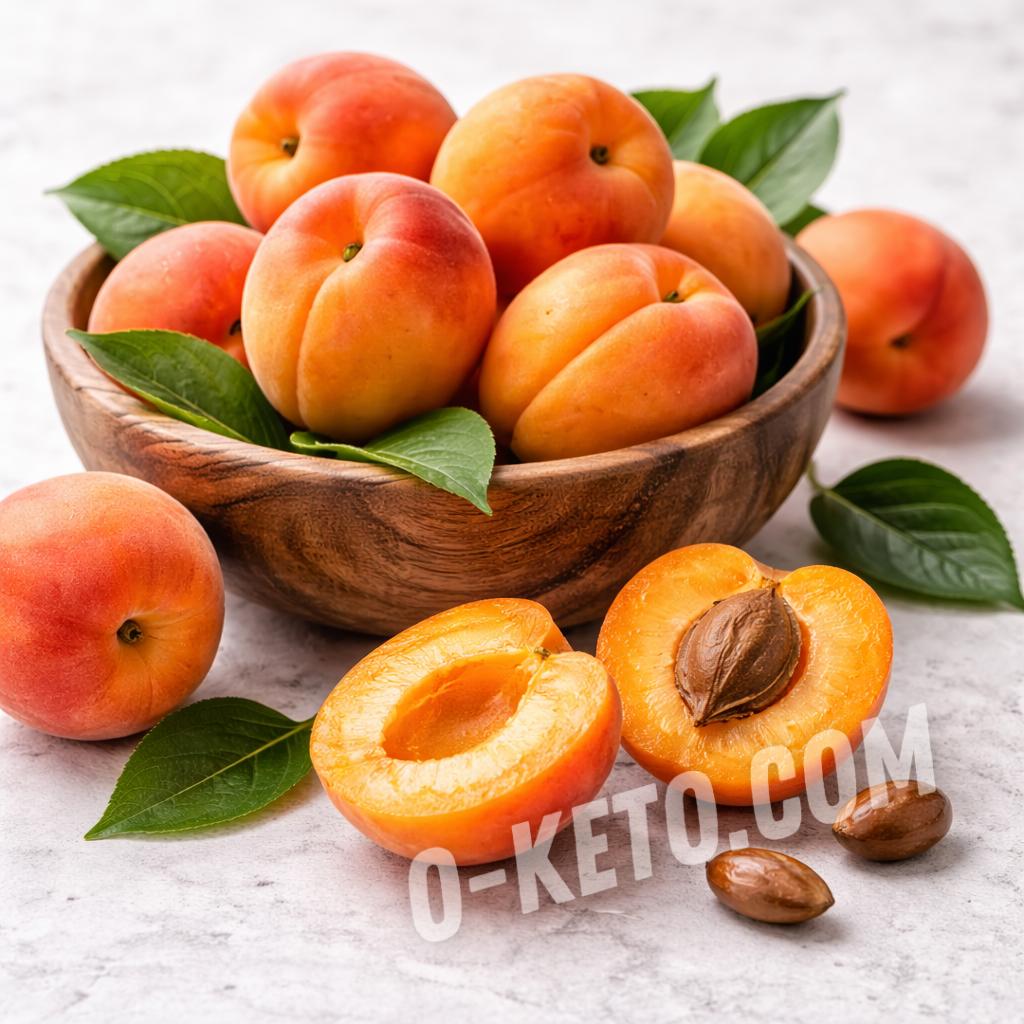

Zherdela is a local name for a small aromatic apricot or a wild-growing form of apricot found in southern parts of Eastern Europe, the Caucasus, and Central Asia. The fruits are usually smaller than large cultivated apricots, with a bright aroma, juicy flesh, and sweet-sour taste. They are eaten fresh, dried, added to sauces, compotes, jams, and desserts.
For keto, zherdela is a difficult product: it is a fruit, so it contains natural sugars. A small fresh portion may sometimes fit a looser low-carb diet, but dried fruits, jam, and sugar-sweetened compotes are usually too concentrated in carbohydrates.
Nutritional value
In 100 g of fresh zherdela there are roughly 45–55 kcal, about 1 g protein, less than 1 g fat, and 10–12 g carbohydrates. Part of the carbohydrates are natural sugars, and part is fiber. Exact numbers depend on variety, ripeness, and fruit size. The riper and softer the fruit, the sweeter it tastes.
The fruits contain carotenoids, vitamin C, potassium, magnesium, folates, and organic acids. The orange color is linked with carotenoids, but that does not remove the carbohydrate load. Dried zherdela contains much more sugar and calories per 100 g because water has been removed.
Is it suitable for keto?
For strict keto, zherdela is usually not suitable as a regular product. Even a few fruits can take a noticeable part of the daily carbohydrate limit. If a person tracks ketosis or keeps carbohydrates very low, a small portion of berries or no sweet fruit at all is usually safer.
In a more flexible LCHF approach, fresh zherdela is sometimes used as a seasonal taste: one small fruit after a main meal, not as a separate sweet snack. This makes the portion easier to control and appetite less likely to rise. Jam, preserves, syrups, sugar compotes, and dried zherdela usually do not fit keto.
How to use it
Fresh zherdela is eaten on its own, added in small amounts to unsweetened Greek yogurt, used in salads with cheese, herbs, and nuts, or cooked into a sweet-sour sauce for meat. For a low-carb plate, scale matters: not a bowl of fruit, but a few slices for aroma.
In ordinary cooking, zherdela is used for jam, fruit butter, fruit leather, compotes, pie fillings, and sauces. Drying makes the taste more concentrated, but carbohydrates concentrate too. Kernels of some apricots may be bitter; they should not be eaten without confidence in their safety.
How to choose
Ripe zherdela smells like apricot, yields slightly to pressure, and has no mold, wet cracks, or dark sunken spots. Fruits that are too hard may be sour and do not always ripen well. Overripe soft fruits are better used quickly because they bruise easily and can start fermenting.
For drying and sauces, aromatic but not spoiled fruits are suitable. If dried fruit is bought at a market, it is worth asking whether it was treated with syrup after drying. Bright orange dried apricots may be treated with sulfites; this is not always a problem, but sensitive people should read labeling.
What to pair it with
Zherdela pairs with cottage cheese, unsweetened Greek yogurt, soft cheese, poultry, pork, lamb, nuts, almonds, mint, basil, cinnamon, and cardamom. For keto, a small portion of fruit is better paired with protein or fat rather than eaten with bread, porridge, or a sweet dessert.
Limitations
The main limitation is sugar and portion size. Dried fruits are especially easy to overeat: a few pieces can provide more carbohydrates than expected. With sensitive digestion, many apricots may cause discomfort because of fiber and fructose. Jams and sugar compotes should be counted as sweets.
How to store it
Ripe zherdela is kept in the refrigerator and eaten quickly. Unripe fruits can be left briefly at room temperature, without a bag and away from direct sun. Washing is better done before eating, not in advance. For long storage, fruits are dried, frozen as pitted halves, or preserved while accounting for added sugar.
What can replace it?
The closest replacements are apricot, cherry plum, peach, nectarine, or plum, but all contain carbohydrates. For keto, instead of sweet fruit flavor, a small portion of raspberries, strawberries, lemon zest, spices, or unsweetened berry sauce is used more often.


