


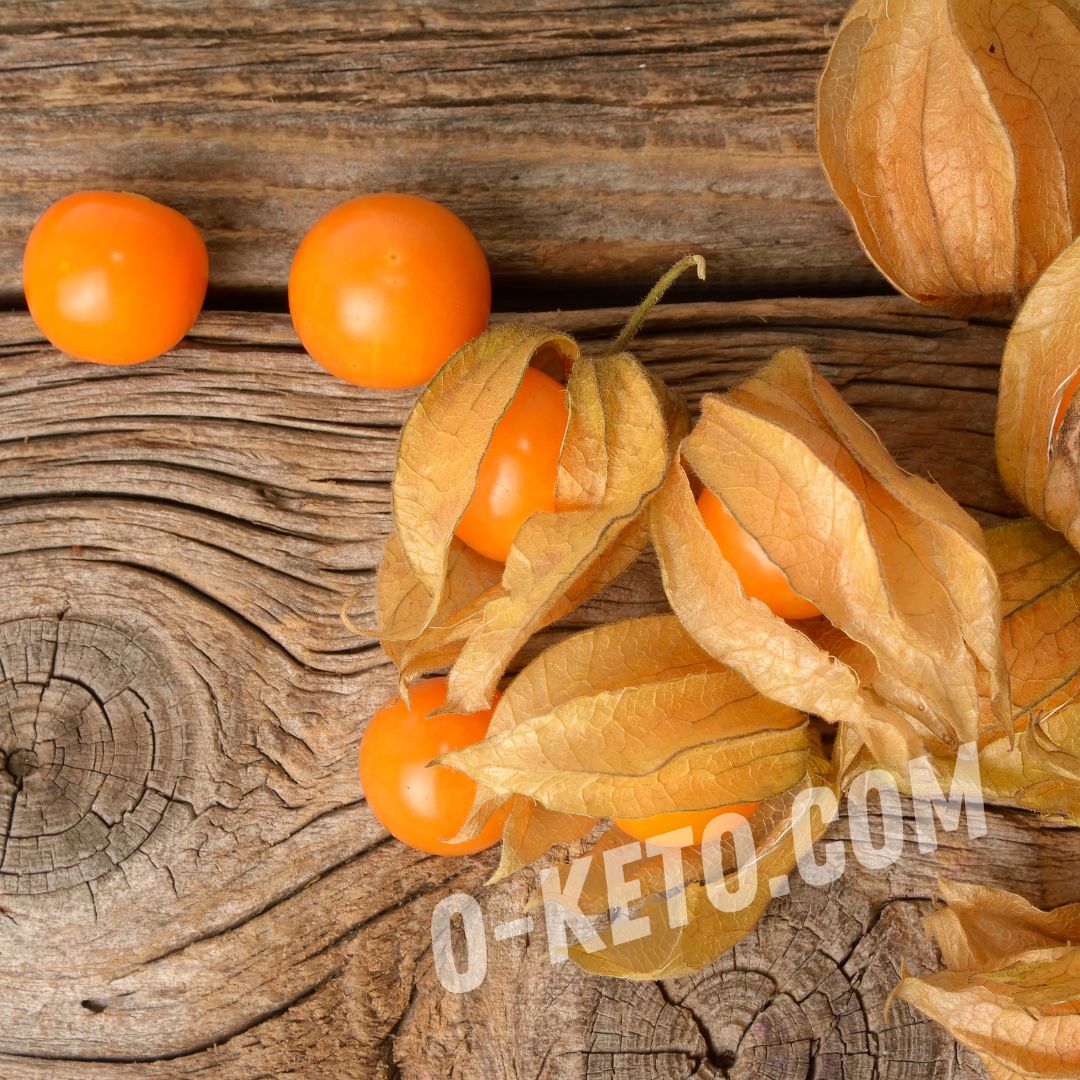

Physalis is a small fruit from the nightshade family, enclosed in a thin papery husk. The type most often sold as golden berries is sweet and tart, close to the Peruvian species, while Mexican cooking uses tomatillo, a more acidic relative for salsa and sauces. Although they look similar, their culinary roles are different: golden berries are usually eaten fresh, while tomatillos are usually cooked.
The taste of physalis combines acidity, light sweetness, and a grassy note. It is not as sweet as grapes or dates, but it is not a neutral vegetable either. In a low-carb diet it is best treated as a tart berry for accent: a little with cheese, salad, fish, poultry, unsweetened yogurt, or dessert, rather than as a large fruit serving.
Nutrition
In 100 g of fresh physalis there are usually about 50-60 kcal, roughly 1.5-2 g of protein, less than 1 g of fat, and around 9-11 g of carbohydrates. Part of those carbohydrates comes from fiber, but the exact numbers depend on variety, ripeness, and growing conditions. Sweet golden berries contain more noticeable sugars; sour culinary types taste less sweet.
The fruit contains vitamin C, carotenoids, potassium, magnesium, and plant acids. These compounds do not make physalis essential, but they explain why a small portion can be interesting in meals: it adds freshness, acidity, color, and contrast to fatty or protein-rich dishes. For keto, the serving size and the foods served with it matter more than the general micronutrient list.
Place in keto and LCHF
Fresh physalis can be included in keto and LCHF in small amounts if it fits your personal carbohydrate limit. A practical serving is a few berries or 30-50 g as part of a dish. A 100-150 g portion may already be significant for stricter keto, especially if the same day includes nuts, dairy, tomatoes, onion, or a dessert made with sweeteners.
Dried physalis is a very different product. During drying, water is removed and sugars become concentrated, so a small handful can provide far more carbohydrates than it seems. Candied physalis, jams, syrups, chocolate-coated berries, and sweet sauces made from physalis are usually not suitable for keto. If you want to use it in a dessert, fresh berries with an unsweetened rich base are the better option.
How to use
Before eating, remove the husk and rinse the berries: the surface may have a sticky coating that some people dislike. Fresh physalis can be cut in half and added to a salad with greens, avocado, cucumber, goat cheese, nuts, or olive oil. Its sweet-tart taste brightens rich cheeses, pâtés, roasted poultry, white fish, and shrimp.
In low-carb desserts, physalis works best as a bright accent rather than the main bulk. A few berries can be served with unsweetened Greek yogurt, mascarpone, cream, chia pudding, or dark chocolate with a high cocoa content. For sauces, physalis can be warmed briefly with lime, chili, salt, and cilantro, without sugar or starch.
How to choose
Ripe golden physalis usually has a dry light beige husk and a firm orange-yellow berry inside. Very green fruit may be harsh and sour, while soft, darkened, or wet fruit can indicate overripeness or poor storage. The papery husk should not smell moldy or feel damp.
If the berries are sold without husks, choose dry, firm fruit without cracks, spots, or sticky moisture in the package. Size is not always a sign of quality: smaller berries can be more aromatic than large ones. For salads, firmer and more acidic fruit works well; for desserts, fully ripe sweeter berries are usually better.
Limits
Physalis belongs to the nightshade family, like tomatoes, eggplants, and peppers. If you react to foods from this group, try it cautiously or avoid it. Unripe parts of the plant and decorative species are not meant for eating; only ripe edible fruit should be used. If you are not sure what species you have, it is better not to experiment.
Because of its acidity, physalis may irritate a sensitive stomach, especially on an empty stomach. In keto, it is not worth replacing missing fruit with large portions of physalis: carbohydrates still add up. It is better used as a flavor accent that makes a dish more interesting without taking over half the plate.
Storage and substitutes
Physalis keeps better in its husk than peeled. Keep the berries dry, in a cool place or in the refrigerator, do not wash them in advance, and remove damaged fruit. Peeled berries should be eaten sooner: without the husk they lose firmness and aroma more quickly. Rinse and dry them just before serving.
The substitute depends on the purpose. For fresh acidity in a salad, use a few cranberries, red currants, tart cherry tomatoes, or a little lime. For Mexican sauces, tomatillo is the closest option if the recipe meant green physalis for cooking. For dessert, a small serving of raspberries, blackberries, or strawberries can work. Dried fruit is not a good keto substitute because it brings a much denser carbohydrate load.


