


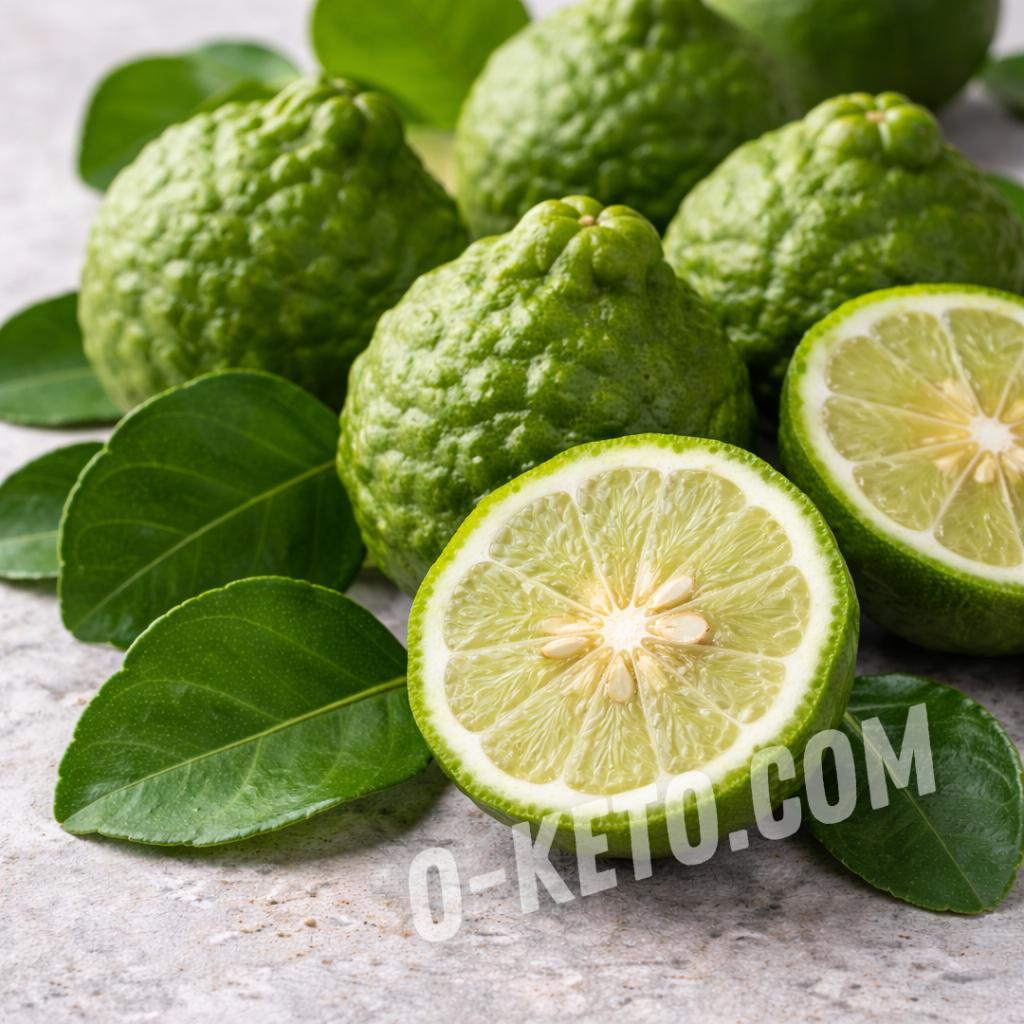

Kaffir lime, or Citrus hystrix, is a tropical citrus with bumpy green skin and very aromatic leaves. In cooking, the leaves and zest are used much more often than the juice: the fruit has little pulp, and it is sour and often bitter. The aroma is more complex than ordinary lime: citrusy, herbal, slightly floral, and a little sharp.
The plant is associated with Southeast Asian cooking, especially Thailand, Indonesia, Malaysia, and Sri Lanka. The leaves are added to soups, curries, pastes, sauces, and dishes with coconut milk. The fruit looks impressive, but at home the frozen or fresh leaves are often the most valuable part: they give a recognizable aroma even in small amounts.
Nutritional value
Kaffir lime is used as an aromatic ingredient, so the usual portion is very small. A few leaves, a strip of zest, or a little juice almost does not change the calories of a dish and adds minimal carbohydrates. If the whole fruit is considered, it contains water, organic acids, fiber, vitamin C, flavonoids, and essential compounds, including limonene and citronellal.
For practical eating, the form of use matters more than a table for 100 g. The leaves are usually not eaten like greens: they are added whole or finely sliced, and often removed before serving. Zest is used very sparingly because the white part of the peel can bring sharp bitterness.
Is it suitable for keto?
Kaffir lime fits keto and LCHF well as a spice and aroma source. It helps make soups, curries, marinades, and sauces brighter without sugar, flour, or starch. It pairs especially well with unsweetened coconut milk, fish, shrimp, chicken, beef, mushrooms, cauliflower, and herbs.
Caution is needed with ready-made pastes and sauces where kaffir lime is only one ingredient. Curry pastes, marinades, and bottled sauces may contain sugar, starch, syrups, or a lot of vegetable oil. The leaf itself is low-carb, but the finished mixture is not always just as simple.
How to use it
Fresh leaves can be lightly torn and added to soup, broth, curry, or coconut sauce so they release aroma. Whole leaves are usually removed before serving because they are tough. If the leaves are very young and finely sliced, they are sometimes left in the dish, but the amount should still be small.
Zest is grated only from the green part of the peel and added to curry pastes, marinades, fish cakes, sauces for poultry, and spicy dressings. The juice is used less often because it is less expressive and can be bitter. If a clean sour taste is needed, ordinary lime is often more convenient, while kaffir lime is better kept for aroma.
In home recipes, 1–2 leaves are enough for a pot of soup or sauce. If the leaves are cut into thin strips, the tough central vein is usually removed. Too much can give a soapy bitterness, so the aroma is better built gradually, especially in dishes with coconut milk.
The leaves tolerate long simmering well, but the fresh top note is brighter if part is added closer to the end. In curry, one leaf can go in at the beginning and the second a few minutes before the dish is ready. This gives both a deep citrus background and a fresher aroma at serving.
How to choose
Fresh leaves should be firm, dark green, without mold, yellow wet spots, or strong wilting. Good leaves smell noticeable even before cutting. Dried leaves are convenient for storage, but their aroma is weaker; frozen leaves are often closer to fresh ones if they were packed quickly.
Fruits should be firm, heavy for their size, with bright bumpy skin. Small spots are not a problem, but soft areas, fermented smell, and mold are reasons to avoid them. If only zest is needed, the condition of the peel matters more than the amount of juice.
How to store it
Fresh leaves are kept in the refrigerator in a closed bag or container so they do not dry out. For longer storage, freeze them whole: the aroma stays better than after drying. Frozen leaves do not need to be thawed before use; they can be added directly to a hot dish.
The fruit is kept in the refrigerator and used quickly after cutting. Zest can be grated in advance and frozen in small portions. Dried leaves are kept in a dark cupboard, in a tightly closed jar, away from strongly scented spices.
What can replace it?
There is no full replacement: the aroma of kaffir lime leaves is recognizable. In soups and curries, ordinary lime zest, lemongrass, a little lemon zest, and fresh cilantro come closest. For acidity, ordinary lime juice works, but it will not give the same herbal citrus note.


