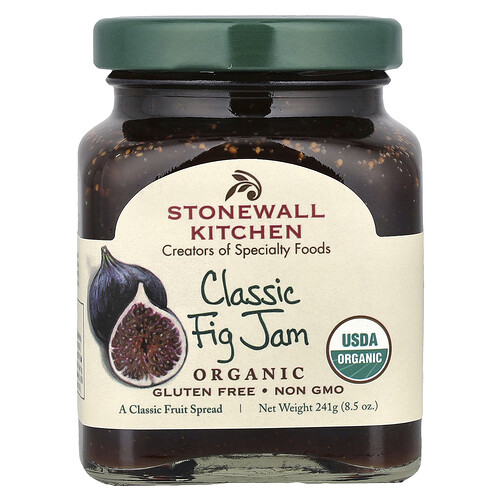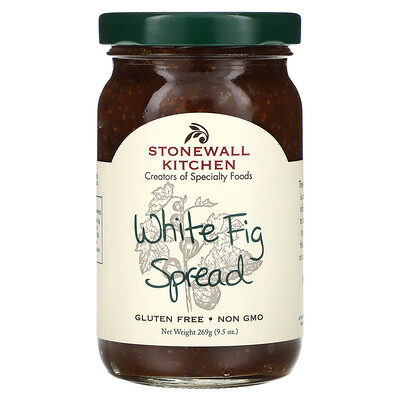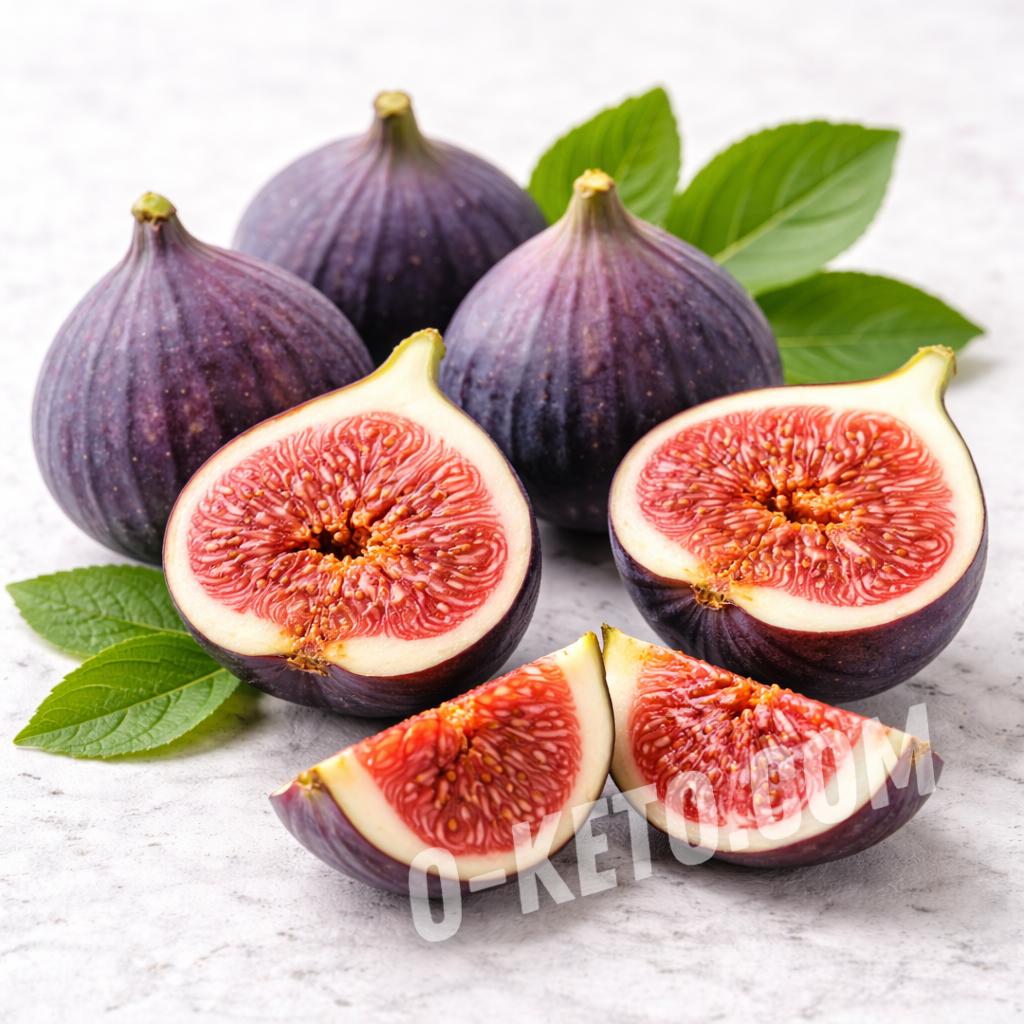

A fig is the fruit of the fig tree, with thin skin, soft flesh, and many tiny crunchy seeds inside. Depending on variety and ripeness, it can be green, yellow, purple, or almost black. A ripe fig tastes honeyed, floral, and berry-like, sometimes with a light caramel note. Fresh figs are eaten soon after buying, paired with cheese, meat, poultry, salads, and savory sauces; dried figs are used as a concentrated sweet ingredient.
This fruit has been known around the Mediterranean, the Middle East, the Caucasus, and Central Asia for a very long time. In southern cuisines it is valued not only as a dessert fruit but also for contrast: sweet flesh works well with salty cheese, fatty meat, nuts, vinegar, herbs, and yogurt-based sauces. For low-carb eating, however, figs require caution: the sweetness is real sugar, not just aroma.
Nutrition
Fresh figs contain plenty of water, small amounts of protein and fat, dietary fiber, organic acids, potassium, magnesium, small amounts of calcium, and plant polyphenols. On average, 100 g of fresh figs provides about 70-75 kcal and roughly 18-19 g of carbohydrates. Exact values depend on variety, ripeness, and fruit size.
Dried figs are a very different product in density. During drying, water leaves while sugars, calories, and flavor become concentrated. A few dried figs can therefore bring more carbohydrates than their volume suggests. In general cooking this is convenient because dried figs store well and sweeten dishes easily. For keto and strict low-carb eating, that is the main problem.
Keto and LCHF
Figs are usually not suitable for strict keto, especially in dried form. Even fresh figs contain a noticeable amount of natural sugars, and dried figs can quickly use up a daily carbohydrate limit. If the diet is built around ketosis, figs are better treated as a rare flavor accent rather than a fruit for regular servings.
On a more flexible LCHF approach, a small piece of fresh fig can sometimes fit if the rest of the day’s carbohydrates are planned. It is better paired not with bread, grains, or desserts, but with foods that slow the meal and add satiety: soft cheese, unsweetened Greek yogurt, meat, poultry, a small portion of nuts, or greens.
How to choose
Fresh figs should be soft but not collapsing. Fine cracks in the skin are not always a bad sign; very ripe fruit often looks that way. Bad signs include a fermented smell, wet spots, mold, sticky slime, hollowness inside, and severe wilting. A very hard fig is usually underripe; it may soften, but often will not develop a full honeyed flavor.
Figs do not tolerate long transport and pressure well, so it is better to buy a small amount. If they are sold in a tray, check the lower layer because crushed and leaking fruit often hides there. Dried figs should be flexible, without a stale smell, dark sticky mold, or a sugar crust that hides old raw material.
How to use them
Fresh figs are at their best in simple pairings. Cut them into quarters and serve with goat cheese, feta-style cheese, blue cheese, prosciutto, duck, turkey, arugula, walnuts, or pecans. A few thin slices give a sweet contrast to a salad without turning the dish into dessert. The acidity of sherry, wine, or balsamic vinegar helps make the flavor more focused.
In warm dishes, figs should be used carefully because heat makes them softer and sweeter very quickly. They can be added at the end to a meat sauce, poultry, a warm cheese appetizer, or mushrooms. Dried figs are sometimes soaked before slicing, but for a low-carb menu this rarely changes the main issue: the texture improves, while the carbohydrates remain.
Storage
Fresh figs are best eaten on the day of purchase or within the next day. Keep them in the refrigerator in a single layer, in a container lined with a paper towel, without pressing them tightly. Do not wash them in advance because extra moisture speeds spoilage. Store dried figs in a tightly closed package in a cool dry place, and after opening make sure moisture does not build up inside.
Substitutes
If you need a sweet fruit accent in a regular dish, pear, plum, or a small amount of berries can work, but carbohydrates still need counting. For a lower-carb cheese plate, figs are often replaced with olives, sugar-free pickles, nuts, greens, or a few raspberries or strawberries. That will not reproduce the honeyed flesh of a fig, but it fits strict carbohydrate control better.