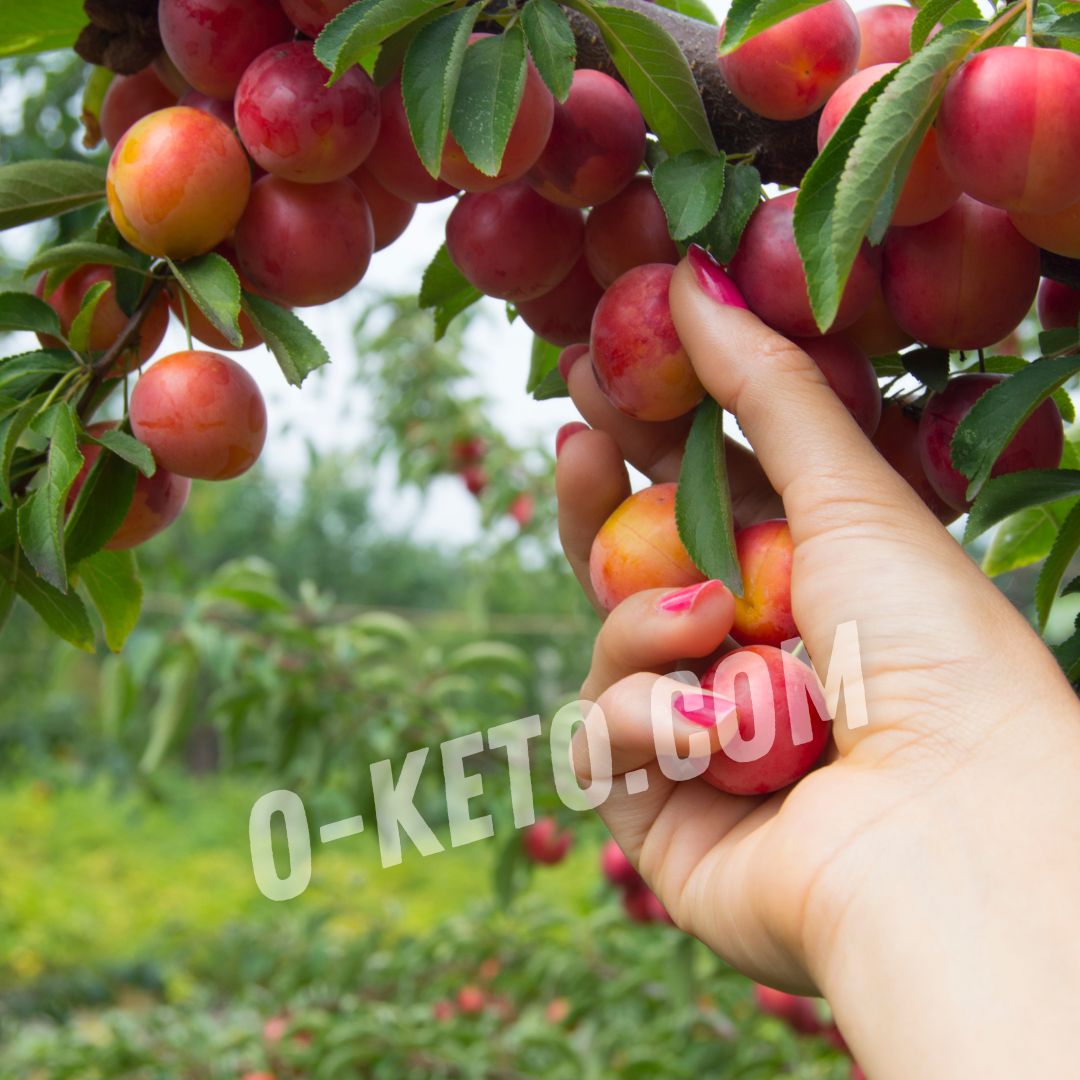

Cherry plum is a small relative of the plum with brighter acidity and a pronounced fruity aroma. The fruits may be yellow, red, pink, purple, or almost dark; the taste ranges from very tart to sweet-sour. Fresh cherry plum is eaten as a seasonal fruit, but in cooking it is especially valued as an acidic base for sauces, marinades, compotes, fruit leather, and seasonings for meat.
Unlike a sweet dessert plum, cherry plum often acts as a sour ingredient. It is used for tkemali and similar sauces served with lamb, poultry, fish, eggs, and vegetables. The acidity freshens fatty dishes, so a small spoonful of sauce may make more sense than a large bowl of fruit. For low-carb eating, this distinction matters.
Varieties differ by size, skin color, flesh firmness, ripening time, and balance of acidity. Yellow cherry plum often tastes fresher and sharper; red and dark varieties may be sweeter and more aromatic. Color alone does not guarantee flavor: ripeness and variety matter more.
Nutritional value
In 100 g of fresh cherry plum there are usually about 30–45 kcal and roughly 8–12 g of carbohydrates, mostly natural sugars and organic acids. It contains some fiber, potassium, vitamin C, and polyphenols, but the carbohydrate amount still matters by portion.
Dried cherry plum, fruit leather, sweet sauce, jam, sugared compote, and industrial condiments may contain far more carbohydrate than fresh fruit. When water is evaporated, sugars become concentrated. For keto, the product form, ingredient list, and serving size are therefore more important than the name.
Is it suitable for keto?
For strict keto, cherry plum is not an unlimited food. Fresh fruit can be used only as a small tart addition if carbohydrates are counted in advance. A 20–40 g amount in sauce or marinade is usually easier to fit than 150–200 g of fruit as a separate snack.
The best LCHF format is an unsweetened sauce made from sour cherry plum, herbs, garlic, salt, and spices. Such a sauce is used by spoonfuls, not by glasses. It brings acidity and aroma to fatty meat, fish, eggs, cheese, zucchini, eggplant, cauliflower, and salads. Sweet versions with sugar, honey, dates, or starch do not fit keto.
How to use it
Fresh cherry plum can be added to salads in small pieces, stewed with meat, turned into a tart sauce, or used for marinade. For tkemali, the fruit is usually heated until soft, strained away from pits and skins, then mixed with garlic, herbs, coriander, pepper, and salt. For a low-carb version, sugar is omitted, while sharp acidity is softened with oil, broth, or a naturally sweeter variety.
In meat dishes, cherry plum works as an acidic seasoning, not as a sweet fruit side. It pairs well with lamb, duck, chicken, pork, fatty fish, organ meats, cheeses, and dishes with nuts. In vegetable dishes it should be used carefully so acidity does not become the only flavor.
How to choose
For fresh eating, choose whole fruit without mold, cracks, sticky juice, or a sharp fermented smell. Ripe cherry plum may be soft, but not watery. For sauce, more acidic fruit is fine: after heating it gives a bright base. For eating raw, more aromatic and ripe varieties are better.
Ready sauce should be checked by ingredients. Traditional recipes may contain only cherry plum, herbs, garlic, salt, and spices, but store-bought versions often include sugar, starch, apple puree, syrups, and preservatives. For keto, choose a sugar-free option or make a small batch at home.
Limitations
Very sour cherry plum may irritate a sensitive stomach, especially on an empty stomach and in large amounts. The pits are not eaten. For some people, sour fruits increase cravings for sweet food, so it is often easier to use them as seasoning for a complete dish rather than as a separate snack.
How to store it
Ripe fruit should be kept in the refrigerator and eaten within a few days. Underripe cherry plum can stay briefly at room temperature, but not in a closed damp bag. For longer storage, remove the pits and freeze the fruit, or turn it into an unsweetened sauce. Open sauce should be kept in the refrigerator, served with a clean spoon, and used quickly.
What can replace it?
If acidity and a fruity note are needed, use sour plum, sloe, a little cranberry, red currant, lemon juice, lime, sumac, or wine vinegar. In a meat sauce, lemon can be combined with herbs and garlic. The replacement should match the sour role of cherry plum; sweet dried fruit and jams give another taste and extra carbohydrates.