






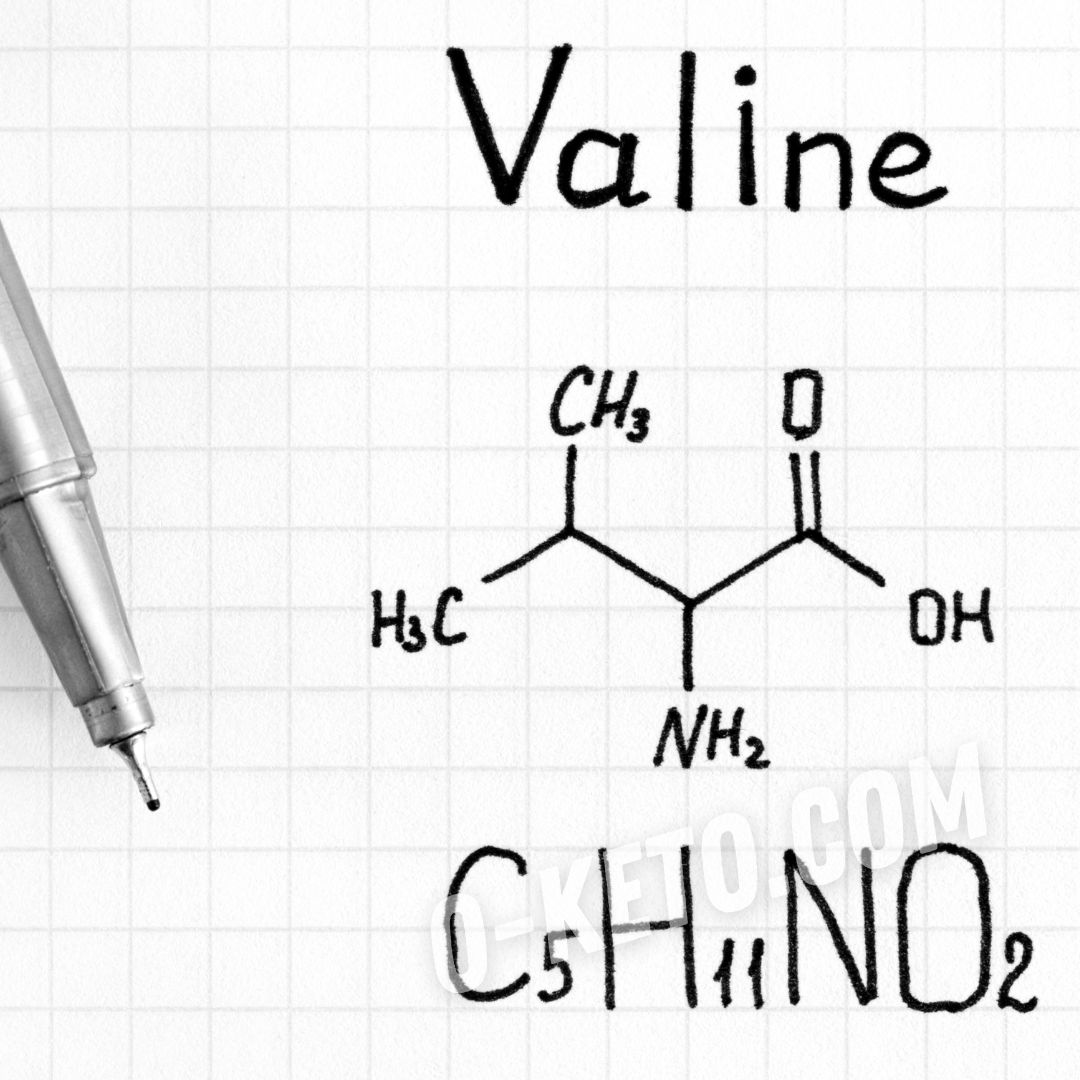

Valine — an essential amino acid that is part of BCAA (branched-chain amino acids).
It plays a key role in maintaining muscle health, metabolism, and overall energy balance. It is necessary for protein synthesis, tissue repair, nervous system function, and immunity.
Valine is not synthesized in the body, so it must be obtained from food.
Beneficial properties
Valine participates in numerous physiological processes:
- provides muscles with energy during physical exertion;
- promotes growth and recovery of muscle tissue;
- supports the immune system and antibody production;
- involved in regulating blood sugar levels;
- affects the synthesis of neurotransmitters and helps cope with stress.
Daily requirement and sources
The recommended daily intake of valine:
- adults — 10–12 mg per kg of body weight (approximately 700–850 mg per day);
- under high loads — up to 15–20 mg per kg of body weight;
- upper acceptable limit — up to 2 g per day without medical supervision.
Sources of valine in the diet:
- meat (beef, chicken, pork);
- fish (salmon, tuna, herring);
- dairy products (cheese, cottage cheese, yogurt);
- eggs;
- plant sources (legumes, nuts, seeds);
- plant protein powders (soy, pea protein).
Possible forms and their absorption
Nutrient forms are listed from best to worst:
Symptoms and consequences of deficiency
A lack of valine may manifest with the following symptoms:
- muscle weakness and rapid fatigue;
- decreased concentration and cognitive functions;
- increased anxiety and irritability;
- sleep disturbances;
- reduced immune protection and susceptibility to infections.
Prolonged deficiency may lead to loss of muscle mass and disruption of metabolic processes.
Possible risks of excess and their manifestations
Excessive consumption of valine, especially in the form of supplements, may cause:
- headaches and increased irritability;
- nausea and digestive disorders;
- imbalance of other amino acids (e.g., leucine and isoleucine);
- overload of the liver and kidneys with prolonged intake of high doses.
Consuming more than 5–6 g per day without necessity may carry potential risks and should only be done under the supervision of a specialist.
Valine and BCAA
Valine is a branched-chain amino acid together with leucine and isoleucine. It contributes to protein synthesis, can be used by muscle as an energy substrate and supports recovery after training.
Valine does not work in isolation. Muscle protein synthesis requires all essential amino acids, enough energy, mechanical loading and sleep. Complete protein is usually more useful than a separate BCAA supplement.
Keto and training
Protein needs do not disappear on keto. People who train, lose weight or are over 50 should pay attention to protein quality at each meal: meat, fish, eggs, dairy and whey protein when needed.
High-dose BCAA without the rest of the amino acid spectrum may be poorly justified. Kidney disease, liver disease and amino acid metabolism disorders require medical guidance before supplementation.