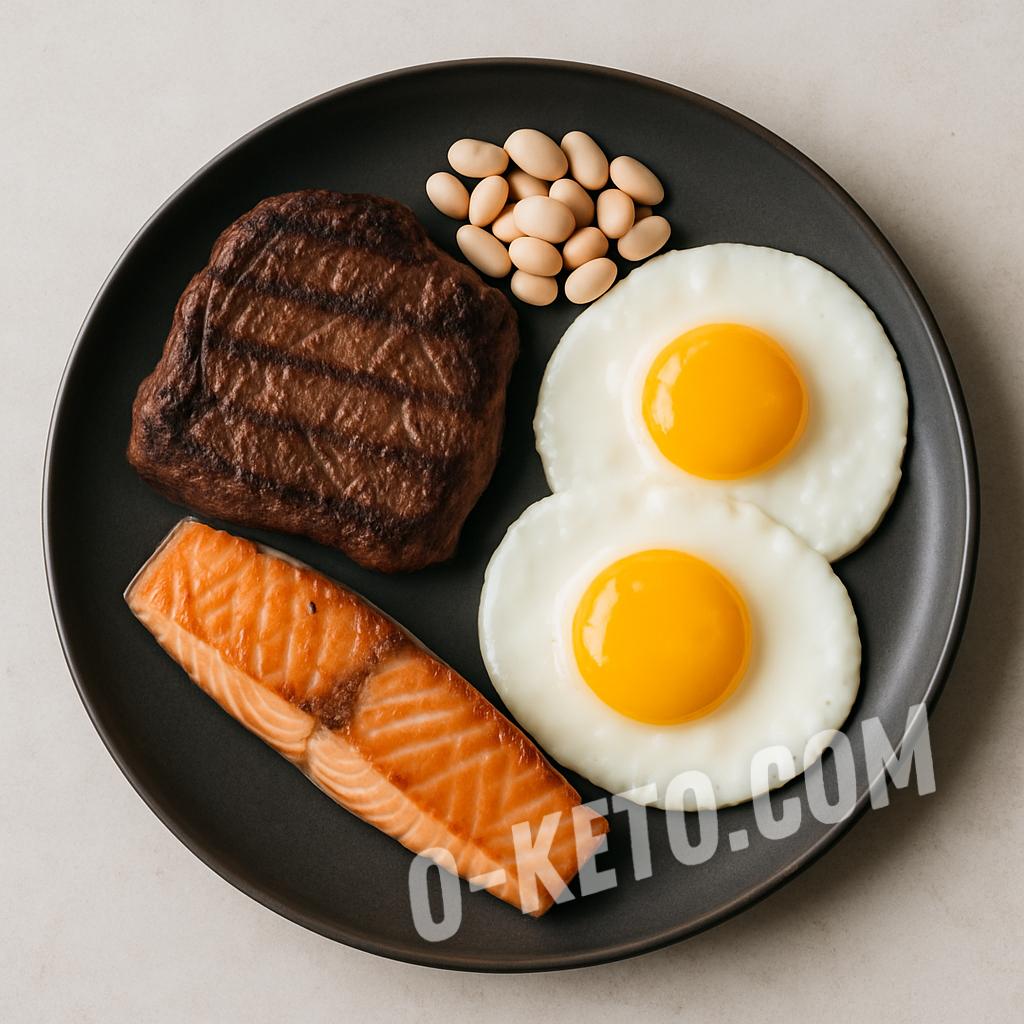

Protein is not only about muscles. Amino acids build enzymes, immune proteins, iron carriers, connective tissue, skin, hair, hormonal signaling systems, and many structures that renew every day. That is why the real question is not only how many grams of protein appear in a food table, but which amino acids the body actually receives and how well it can use them.
In a low-carb diet, protein becomes especially noticeable. A person can eat enough fat and still lack satiety, recovery, and structural material if protein is too low. Protein also cannot be stored for a month in advance. The body needs a regular flow of amino acids from food, and source quality matters as much as the number of grams per 100 g.
What Complete Protein Means
Complete protein contains all essential amino acids in a ratio that is useful for the body. Essential amino acids cannot be made in sufficient amounts internally, so they must come from food.
Conditionally essential amino acids can be made from other amino acids, but only when there is enough raw material and no increased demand. This is why protein deficiency is not just one missing number in the diet. It can weaken the whole chain of building blocks.
| amino acid type | meaning |
| essential | must come from food: valine, isoleucine, leucine, lysine, methionine, threonine, tryptophan, phenylalanine |
| conditionally essential | can be made from other amino acids, but depend on available raw material and body state |
| nonessential | can be synthesized by the body, but still depend on overall protein supply |
Protein from different foods therefore cannot be judged only by the line “protein” in the nutrition facts. Two portions may provide a similar amount of protein grams but differ in amino acid profile, digestibility, and food volume.
Why Protein Grams Do Not Always Equal Protein Quality
Protein grams show only the total amount of nitrogen-containing compounds in a food. In practical nutrition, it matters more which amino acids are present, how much food is needed to reach the target, and how comfortably the stomach and intestines handle that portion.
Animal foods usually provide a denser set of essential amino acids in a smaller volume of food. Meat, fish, eggs, and dairy also bring fats, iron, zinc, B12, choline, and other nutrients. This does not make plant foods “bad,” but it explains why they often work less well as the main tool for restoring protein status.
Steak and Beans: Why Equal Protein Grams Are Not the Same
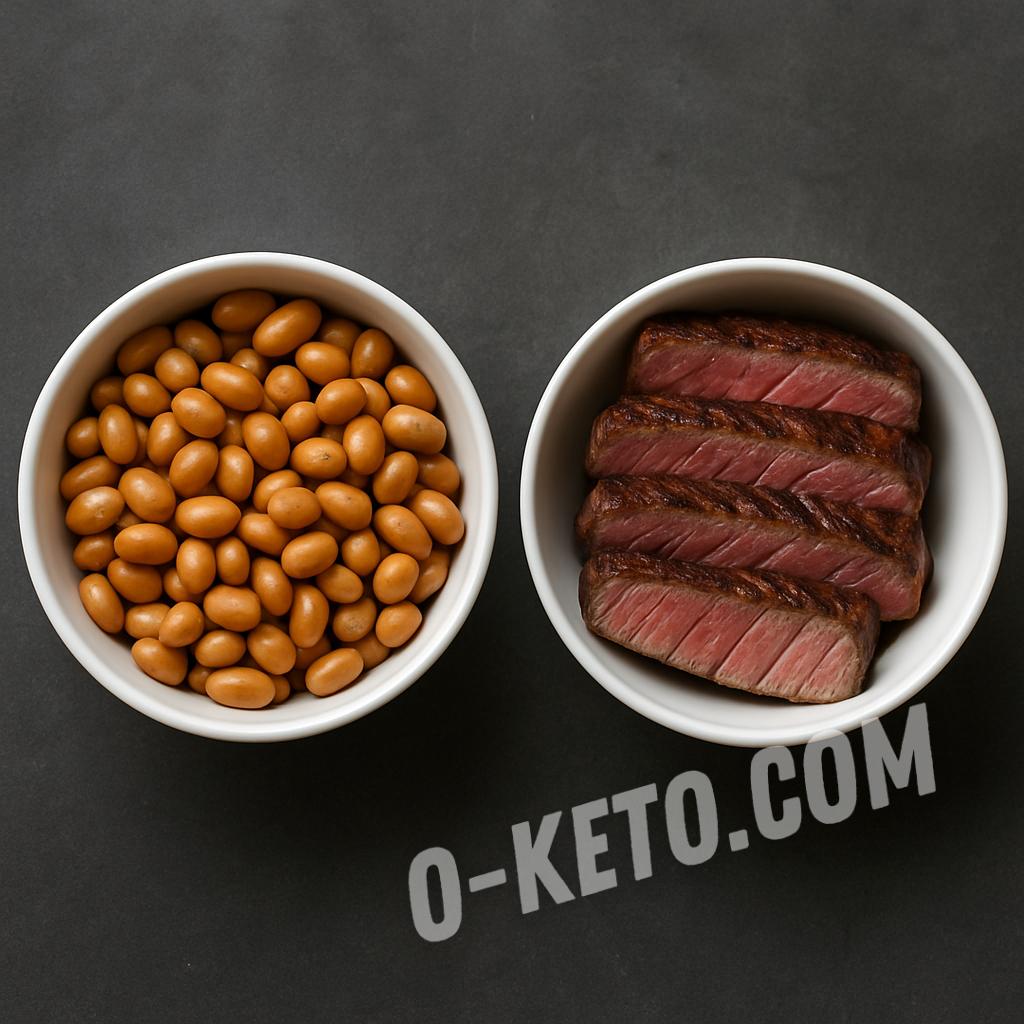
A simple comparison is cooked fatty steak versus cooked beans. In 100 g of steak there are about 26.7 g of protein, while 100 g of cooked beans provide about 8.2 g. To get the same amount of protein from beans, the portion has to become much larger.
| marker | 100 g fatty steak | 100 g cooked beans |
| protein | about 26.7 g | about 8.2 g |
| leucine | about 2.1 g | about 0.7 g |
| methionine | about 0.7 g | about 0.1 g |
| valine | about 1.5 g | about 0.5 g |
| practical volume | a normal adult portion can provide a high amount of protein and amino acids | the same protein target requires a much larger food volume |
Even if beans are increased enough to provide about 26-27 g of protein, some essential amino acids may still be lower than what is easier to obtain from animal food. There is also a practical question: can a person digest that volume of legumes without heaviness, bloating, and reduced appetite for more nutrient-dense food?
Why Plant Protein Is Harder to Use as the Main Source
Legumes, grains, nuts, and seeds can be part of a diet, but they are rarely the most convenient way to meet the need for complete protein. Their limits become especially visible when the goal is to raise protein intake rather than simply add something “healthy” to the plate.
The main practical limits are these:
- a larger food volume is needed to reach the same protein target;
- the amino acid profile is often less dense in specific essential amino acids;
- legumes require soaking and long cooking to be better tolerated;
- too much fiber and fermentable carbohydrate can cause bloating and discomfort;
- nuts and nut-flour baking take up stomach space but should not replace meat, fish, eggs, and other animal foods.
This matters especially during recovery after deficiencies, anemia, weak appetite, low stomach acid, or poor tolerance of large portions. The task is not to make the plate as bulky as possible, but to provide concentrated and digestible building material.
Plant-protein products should be separated into whole foods, concentrates, and isolates. In legumes, grains, nuts, and seeds, protein comes together with fiber, starch, and fat, so keto suitability depends on the entire serving. In an isolate, much of the surrounding material has been removed, but this does not make the powder an automatic replacement for ordinary food: the result still depends on the amino-acid profile, serving size, and the specific formulation.
Read the label for more than the protein percentage. Check carbohydrates, sugar, maltodextrin, syrups, starches, flavorings, and the stated serving size. A marketing claim about digestibility is not a universal clinical result for every person. In kidney disease, significant undernutrition, or sarcopenia treatment, protein intake and supplement choice should be individualized with a clinician or dietitian.
Protein, Hemoglobin, and Recovery
Protein is involved in much more than muscle. Hemoglobin is a protein that transports oxygen. Transferrin is a protein that carries iron. Digestive enzymes, immune structures, connective-tissue collagen, and many repair processes also depend on amino acids.
That is why anemia, chronic fatigue, poor recovery, and fragile tissues cannot be approached only through iron, vitamins, or isolated supplements. Iron must be transported, incorporated, and used. For that, the body needs carrier proteins, digestion, adequate stomach acidity, and a regular supply of amino acids.
If someone eats little animal protein, cannot tolerate meat well, or feels heavy after a normal portion, the problem should be viewed more broadly. Sometimes the issue is not unwillingness to eat protein, but the state of the stomach, bile flow, enzymes, intestines, and overall food tolerance.
Why rapidly renewing tissues react first to low protein intake
Not all tissues tolerate amino acid shortage equally well. When protein is low, people usually think first about muscle, but in practice the earliest strain often appears in structures that renew continuously and need a steady supply of newly built proteins. This includes the intestinal lining, immune proteins, enzymes, transport proteins, part of the blood cell system, skin, and other tissues where repair is happening daily rather than every few months.
The intestinal epithelium is one of the fastest-renewing tissues in the body: cells in the small intestine are replaced within days. That pace requires not only amino acids, but also adequate zinc, iron, vitamin A, vitamin B12, folate, and other cofactors. If complete protein intake is low and appetite, stomach acidity, bile flow, or digestion are also impaired, the body may keep functioning, but the quality of tissue renewal gradually declines.
That is why protein deficiency often shows up not as an abstract low number on paper, but as everyday problems: slower recovery after exercise, brittle hair and nails, weaker healing, low resilience, poor tolerance of dense meals, unstable satiety, and greater sensitivity to other nutrient gaps. In low-carb nutrition this matters even more, because it is easy to emphasize fat and accidentally under-eat protein, and rapidly renewing tissues are often the first to notice it.
How Much Protein Is Needed in Practice
Exact needs depend on body weight, age, activity, pregnancy, lactation, recovery after illness, and digestive state. But without numbers, it is easy to undereat protein, especially when someone eats infrequently, gets full from fat quickly, or replaces meat with vegetables, nuts, and “healthy” extras.
| reference point | protein amount | how to understand it |
| lowest edge | 0.8 g per kg of body weight per day | this is not an optimum, but the lower boundary where deficiency risk becomes more visible |
| practical minimum | about 1.2 g per kg of body weight | a more realistic lower target for adults who want to support tissues, immunity, and recovery |
| good target | about 1.6 g per kg of body weight | often more useful for satiety, muscle maintenance, low-carb nutrition, and recovery |
| physical training | 2 g per kg of body weight and above | may be appropriate with strength training, active sport, or muscle gain and maintenance goals |
When there is significant excess weight, these numbers are often more practical when calculated from target or healthy body weight. Otherwise the result can be too high to eat and digest comfortably. Low body weight, recovery after illness, pregnancy, lactation, age, and intense training can increase the need, but digestive tolerance still matters.
For low-carb nutrition, the goal is not only to hit a number but to distribute protein across meals. Every main meal should contain a clear source of complete protein: meat, fish, eggs, poultry, organ meats, seafood, or well-tolerated dairy.
For adults who train regularly, the ISSN gives a practical target of about 20–40 g of high-quality protein per meal, or roughly 0.25 g/kg, spread at intervals of about 3–4 hours. For example, at 70 kg and a daily target of 1.6 g/kg, the total is 112 g; across four meals that averages 28 g each. This is a practical range, not a strict absorption ceiling or a universal prescription. If large portions are uncomfortable, adjust meal size and frequency to tolerance while keeping the appropriate daily total in view.
If a large portion causes heaviness, it is not always necessary to force it into one meal. During digestive recovery, adding one more meal can be more comfortable. This is especially reasonable when the food is nutrient-dense and free from sugar, flour, and unnecessary starch load.
How to Build a Plate When the Goal Is More Protein
When the goal is to raise protein intake, most of the plate should serve that goal. Vegetables, greens, sauces, and nuts can support the diet, but they should not push out the protein-fat base.
A practical plate is built in this order:
- choose the main animal protein first: meat, fish, eggs, poultry, organ meats, or seafood;
- then choose a cooking method that is comfortable for digestion: stewing, baking, sous-vide, broth, or gentle slow cooking;
- add fat: butter, egg yolks, fatty fish, sour cream sauce, or cream sauce if tolerated;
- add vegetables and greens for flavor and fiber, not as a replacement for the protein part;
- eat slowly and chew well, because protein digestion begins before the intestines.
This approach may look simpler than a colorful high-carb plate, but it often works better when deficiencies are present. First comes the building material, and only then the flavor and decorative elements.
When Supplements Can Help
Amino acids, collagen, protein powders, and bone broth can support the diet when food volume is limited, large portions are poorly tolerated, or digestion is being restored. But supplements do not replace the basic diet and are not a universal “course” for everyone.
Protein has an important feature: it is not stored as a reserve for months. While amino acids arrive regularly, the body receives building material. When intake stops, there is no simple “protein storage” to rely on. This is why collagen broths, aspic, meat, fish, eggs, and other protein foods matter as ordinary nutrition, not as a one-time intervention.
Tryptophan, serotonin, and melatonin
One of the reasons why the topic of complete protein is so important for well-being, mood, and sleep is related to tryptophan. This is an essential amino acid from which the body builds not only protein structures but also biochemical pathways associated with serotonin and melatonin. If there is a chronic deficiency of protein in the diet, and the choices consistently lean towards foods low in amino acids, the brain receives less building material for these pathways. In practice, this can exacerbate sleep problems, irritability, cravings for quick carbohydrates, and a feeling that stress is managed worse.
Which foods are particularly rich in tryptophan
The highest amounts of tryptophan are usually provided not by sweet products, but by protein sources: turkey, chicken, eggs, fish, seafood, hard cheeses, cottage cheese, meat, and some seeds. For keto and LCHF, this is a convenient story because many of these products fit into the diet anyway. It is not about one hero product, but about regularity: if eggs, poultry, fish, meat, and high-quality dairy products are consistently present in the diet throughout the week, the likelihood of tryptophan deficiency is lower than with infrequent protein meals and reliance on random snacks.
What prevents the normal use of tryptophan
Even with a good diet, tryptophan is not always utilized perfectly. It can be hindered by deficiencies in B6, magnesium, folate, chronic inflammation, poor sleep, alcohol overload, constant stress, and overall lack of energy. Therefore, complaints about sleep and mood are not automatically resolved by a single tryptophan supplement. It is usually better to first assess the basic quality of protein, overall dietary density, sleep, electrolytes, and only then think about targeted supplements.
Conclusion
Complete protein is not just a number in nutrition facts. Essential amino acids, protein density per portion, digestibility, food volume, and accompanying nutrients all matter. This is why meat, fish, eggs, organ meats, and other animal foods are often the most convenient foundation for restoring protein in a low-carb diet.
Plant sources can be used as an addition when they are well tolerated, but they should not become the only support when complete amino acid supply is needed. The more demands the body has — recovery, anemia, weak digestion, stress, aging, training — the more important it becomes to choose protein that actually meets the need.
Sources
- Dietary Reference Intakes for Energy, Carbohydrate, Fiber, Fat, Fatty Acids, Cholesterol, Protein, and Amino Acids — National Academies of Sciences, Engineering, and Medicine
- Dietary protein quality evaluation in human nutrition: Report of an FAO Expert Consultation — Food and Agriculture Organization of the United Nations
- DIAAS: 10 years on — Frontiers in Nutrition
- International Society of Sports Nutrition Position Stand: Protein and Exercise — Journal of the International Society of Sports Nutrition
- Protein and amino acid requirements in human nutrition: report of a joint FAO/WHO/UNU expert consultation
- Practical Guideline: Clinical Nutrition and Hydration in Geriatrics — European Society for Clinical Nutrition and Metabolism
- Neither Soy nor Isoflavone Intake Affects Male Reproductive Hormones: An Expanded and Updated Meta-analysis of Clinical Studies — Reproductive Toxicology
- Blue-Green Algae Products and Microcystins — U.S. Food and Drug Administration