Eggs look simple, but buying and storing them raises several practical questions: what do size categories mean, how can you judge freshness, should eggs stay in the refrigerator door, and is home pasteurization reliable? This guide brings chicken, quail and duck eggs together in one safety-first system.
Freshness and size category are different
A category describes size and weight, not how many days have passed since the egg was laid. Check the date and storage instructions on the carton. A larger egg is not automatically fresher than a smaller one. Shell color is also not a quality scale; it mainly reflects the bird’s breed.
How to choose eggs at the store
Choose a clean, dry carton and eggs with intact shells. Reject cracked eggs and packaging with visible moisture or leakage. Check the date, take eggs from a refrigerated display, and bring them home promptly. Do not choose only by shell color, size or an attractive carton.
How to store eggs at home
Keep raw eggs in their original carton on an interior refrigerator shelf, where the temperature is more stable, rather than in the door. Follow the local date label first; a common refrigerated-storage guide for shell eggs is about 3–5 weeks. Hard-boiled eggs keep for up to one week in the refrigerator. Refrigerate cooked egg dishes within two hours and use them within 3–4 days.
How to check an egg’s freshness
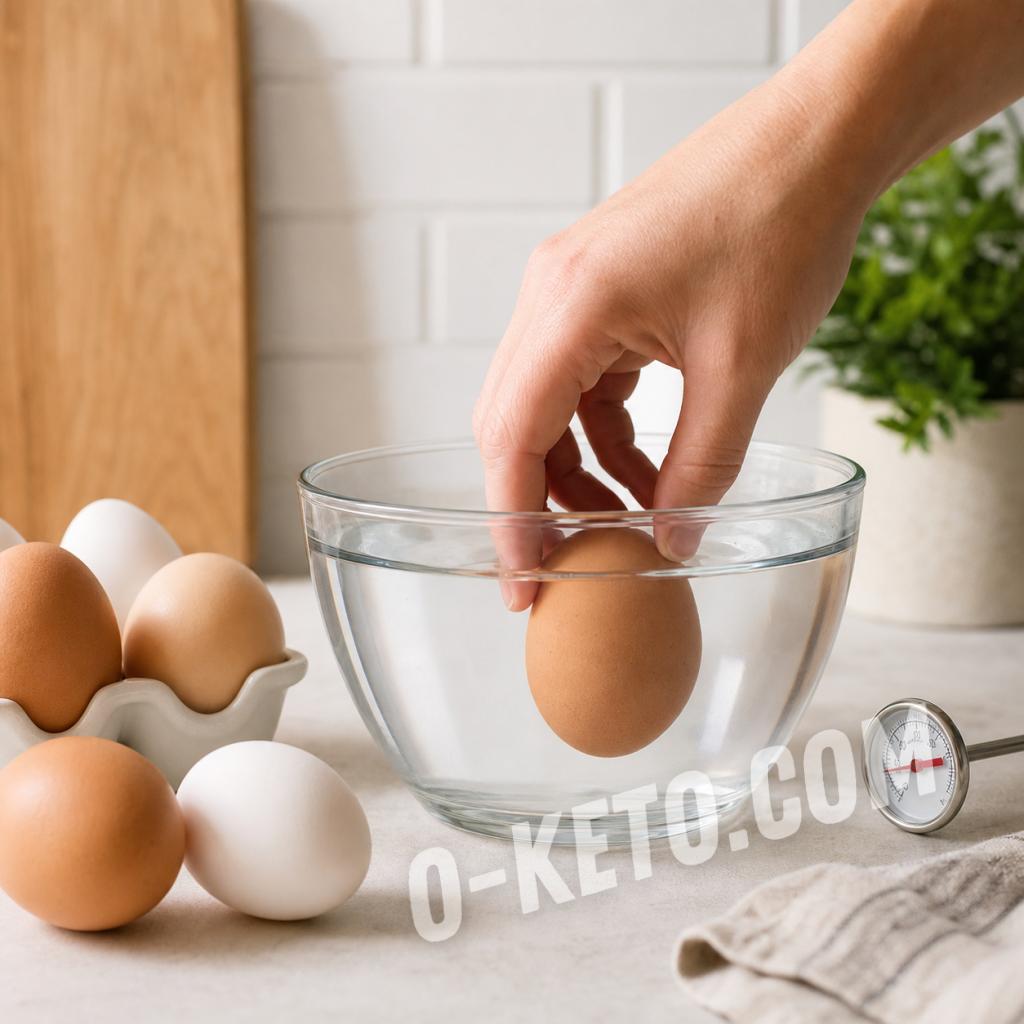
The water test estimates age, but it is not a safety test. Place an egg in cold water: a fresher egg usually lies flat on the bottom, while an older egg tilts or floats as its air cell grows. A floating egg is not automatically unsafe, but crack it into a separate bowl and inspect it carefully.
A strong sulfur smell, mold, an unusual appearance or a cracked shell means the egg should be discarded. Never taste a questionable raw egg. The most useful home check is the combination of the date, cold storage, intact shell, smell and appearance.
Which eggs suit different dishes
Fresh eggs are helpful for poached eggs, fried eggs and soft omelets because the white holds its shape better. Scrambled eggs and ordinary omelets depend more on sound eggs and correct storage. Eggs that have been stored for a while can be easier to peel after boiling, but age never makes unsafe storage acceptable.
Egg types: housing labels and composition
Labels such as caged, cage-free, free-range, organic and omega-3 describe different properties and are not interchangeable. Cage-free generally means that hens are not kept in cages, although they may remain indoors. Free-range refers to outdoor access under the rules of the relevant country, while organic adds requirements for feed and farming practices. None of these labels alone guarantees a fixed omega-3 content or an ideal fatty-acid ratio.
The hen’s diet usually matters more to yolk composition than the marketing name for the housing system. In individual studies, pasture-access eggs contained about three times more omega-3 and a 5–10 times lower omega-6:omega-3 ratio than the compared cage-free eggs. That is a result of specific feed, season and farm conditions, not a universal table for every farm.
A standard grain-based diet often gives the yolk more linoleic acid, an omega-6 fatty acid. Feed containing flaxseed, fish oil or another omega-3 source can substantially increase ALA, EPA or DHA and lower the omega-6:omega-3 ratio; these eggs are often labeled omega-3 enriched. If the goal is to increase omega-3 in a regular diet, check the omega-3 claim and nutrition information rather than relying only on the words free-range or farm egg. A lower ratio does not make an egg a medicine and does not replace an overall dietary assessment.
In practical terms, housing labels matter for hen welfare, while the yolk’s fatty-acid profile is driven mainly by feed. Choose a verified omega-3 product when that is your goal, and do not judge nutrition by shell color, yolk color or the word “farm” alone.
Chicken, quail and duck eggs
Quail eggs are much smaller than chicken eggs, so their boiling time is shorter and depends on size. Duck eggs are larger, with a denser white and a richer yolk; adjust the amount and cook them longer than small eggs. For all three types, use the same basic safety habits: intact shells, refrigeration, clean utensils and adequate cooking. It is not accurate to promise that one type is automatically healthier; composition varies with feed, size and the individual product.
Safety and home pasteurization
Raw eggs can carry bacteria, including Salmonella. For runny-yolk dishes, use fresh eggs from an intact carton and consider who will eat them. Pregnant people, young children, older adults and people with weakened immune systems should preferably eat fully cooked eggs or use pasteurized eggs and egg products.
For ordinary dishes, cook until the whites and yolks are firm; egg mixtures and egg dishes should reach 71°C/160°F. A home water bath using an approximate temperature and time does not provide a universal safety guarantee because temperature control, egg size and later storage all affect the result. For sauces, desserts and other recipes containing raw or lightly cooked egg, use a pasteurized product instead of relying on an approximate home process.
A practical routine
Check the carton and shell before buying, then refrigerate the eggs in their carton as soon as you get home. Before cooking, inspect the shell and crack a doubtful egg separately. Choose the cooking time for the dish and the egg size. After cooking, do not leave eggs or egg dishes at room temperature for long. This routine protects flavor, reduces waste and lowers the risk of foodborne illness.
Sources
- What You Need to Know About Egg Safety — U.S. Food and Drug Administration;
- Shell Eggs from Farm to Table — Food Safety and Inspection Service, U.S. Department of Agriculture;
- Dietary Cholesterol and Cardiovascular Risk: A Science Advisory — American Heart Association.