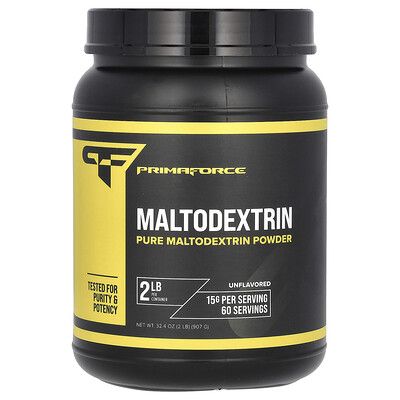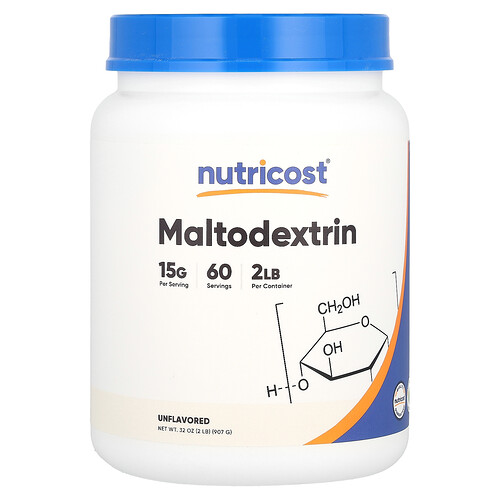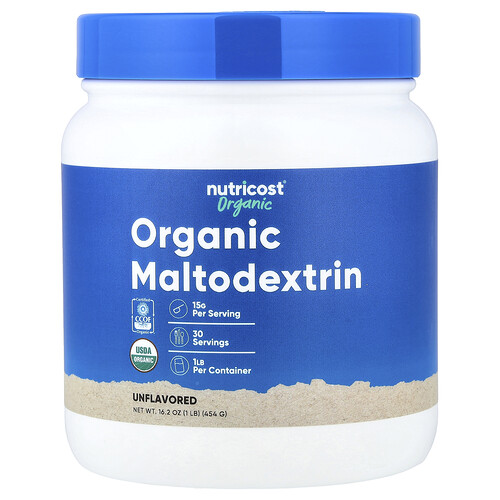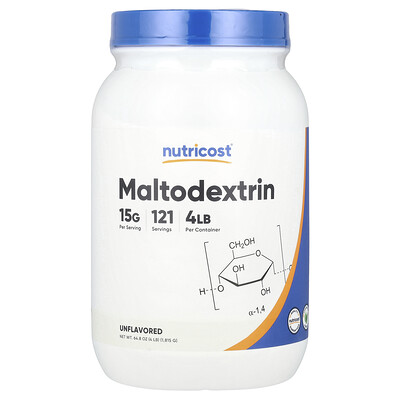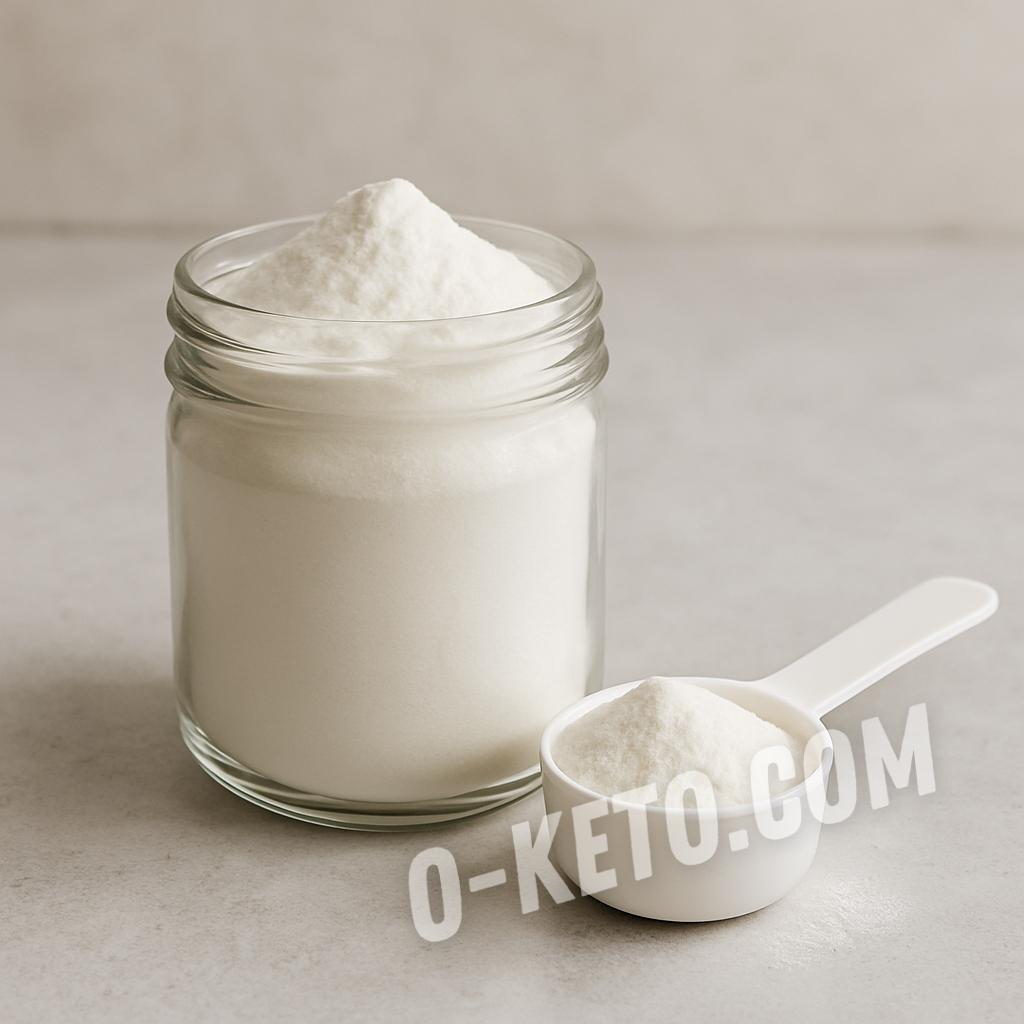

Maltodextrin is a white or almost white carbohydrate powder obtained by partial breakdown of starch. The source may be corn, rice, potato, wheat, tapioca, or another starchy product. The taste is usually neutral or slightly sweetish, so the ingredient can hide easily in an ingredient list.
In the food industry, maltodextrin is used as a filler, flavor carrier, powder base, thickener, anti-caking aid, and quick carbohydrate source. For keto and LCHF, it is one of the ingredients that should be checked especially carefully: the phrase “sugar-free” does not mean the product has no rapidly absorbed carbohydrates.
Nutritional value
In 100 g of maltodextrin there are usually about 380–400 kcal, almost entirely from carbohydrates. Protein, fat, and fiber are practically absent. The glycemic effect is often high because the molecules are shorter than ordinary starch and are quickly broken down to glucose.
Maltodextrin may taste less sweet than sugar, but that does not make it neutral for carbohydrate tracking. In powder blends, sometimes only a little is used, and sometimes it is one of the first ingredients. So the name, position in the ingredient list, serving size, and frequency of use all matter.
Technologically, it is not a sweetener in the narrow sense but a convenient powder carrier. It increases blend volume, helps distribute flavor evenly, improves solubility, and simplifies packaging. That is why it can appear where the buyer expects spices, a drink, a flavoring, or a supplement rather than a separate carbohydrate product.
Is it suitable for keto?
For strict keto, maltodextrin usually does not fit. It is counted as a source of net carbohydrates even when the product is sold as diet, sports, or “no added sugar”. Questions often arise with sweetener blends, protein powders, drinks, electrolytes, sauces, spices, and encapsulated supplements.
If maltodextrin is at the end of the ingredient list and the serving is very small, the contribution may be minor. But with daily use of several such products, the total becomes noticeable. In practice, products without maltodextrin are easier to choose when the goal is to keep carbohydrates low and predictable.
Products used every day deserve special attention: sweetener in coffee, electrolytes, a protein shake, a spice blend for meat, or a ready-made sauce. A single pinch may be minor, but a repeated habit quickly changes the final numbers.
Where it is found
Maltodextrin is often added to instant drinks, powder mixes, instant soups, processed meats, sauces, marinades, sugar-free sweets, infant formulas, protein shakes, energy gels, flavorings, spices, and supplements. In supplements it can carry an active ingredient, while in spices it helps distribute aroma evenly.
A separate trap is sweetener blends. Stevia, sucralose, or another intense sweetener may be placed on a carbohydrate carrier so that the powder is easy to dose with a spoon. As a result, the product looks like a sugar substitute, but part of its volume is an ordinary fast carbohydrate.
How to read the label
Look for the words “maltodextrin”, “dextrin”, “modified starch”, and similar technological carriers. They are not always identical, but for a low-carb choice all such positions require checking. If syrups, starches, flour, or poorly tolerated sugar alcohols are nearby, the product is better assessed especially strictly.
The nutrition table is important. Sometimes the producer lists zero sugar but significant carbohydrates per serving. For keto, not only sugar but all digestible carbohydrates matter. If the serving is unrealistically small, recalculate for the amount you actually use.
Another clue is the product form. A tablet or capsule usually contains less maltodextrin than a powder measured by spoons, but this is not a universal rule. If the ingredient list is unclear or the producer does not disclose carbohydrates, a clearer alternative is more practical for a strict plan.
When it may be appropriate
In sports nutrition, maltodextrin is used as a fast carbohydrate during long exercise or immediately after it. That task is different from an ordinary keto menu. If someone intentionally plans carbohydrates around training, it is done consciously and counted within the daily limit, not treated as a “zero” product.
Limitations
The main limitation is the fast carbohydrate contribution. In sensitive people, large doses of powdered carbohydrates can cause abdominal discomfort. For people who need strict glucose control, such ingredients are especially important to discuss with a doctor or qualified specialist because the response can be individual.
Maltodextrin is also inconvenient because it is rarely perceived as a separate food. It is easy to miss in the ingredient list and leave out of daily tracking, although in practice it is the same kind of carbohydrate contribution as a small addition of starch or syrup.
How to replace it
In sweeteners, it is better to choose erythritol, stevia, monk fruit, allulose, or sucralose without carbohydrate carriers if they suit you. For thickening in keto recipes, psyllium, xanthan gum, guar gum, chia, gelatin, or reducing a sauce are more common. For spices, it is simpler to choose pure ground spices without powder fillers.