


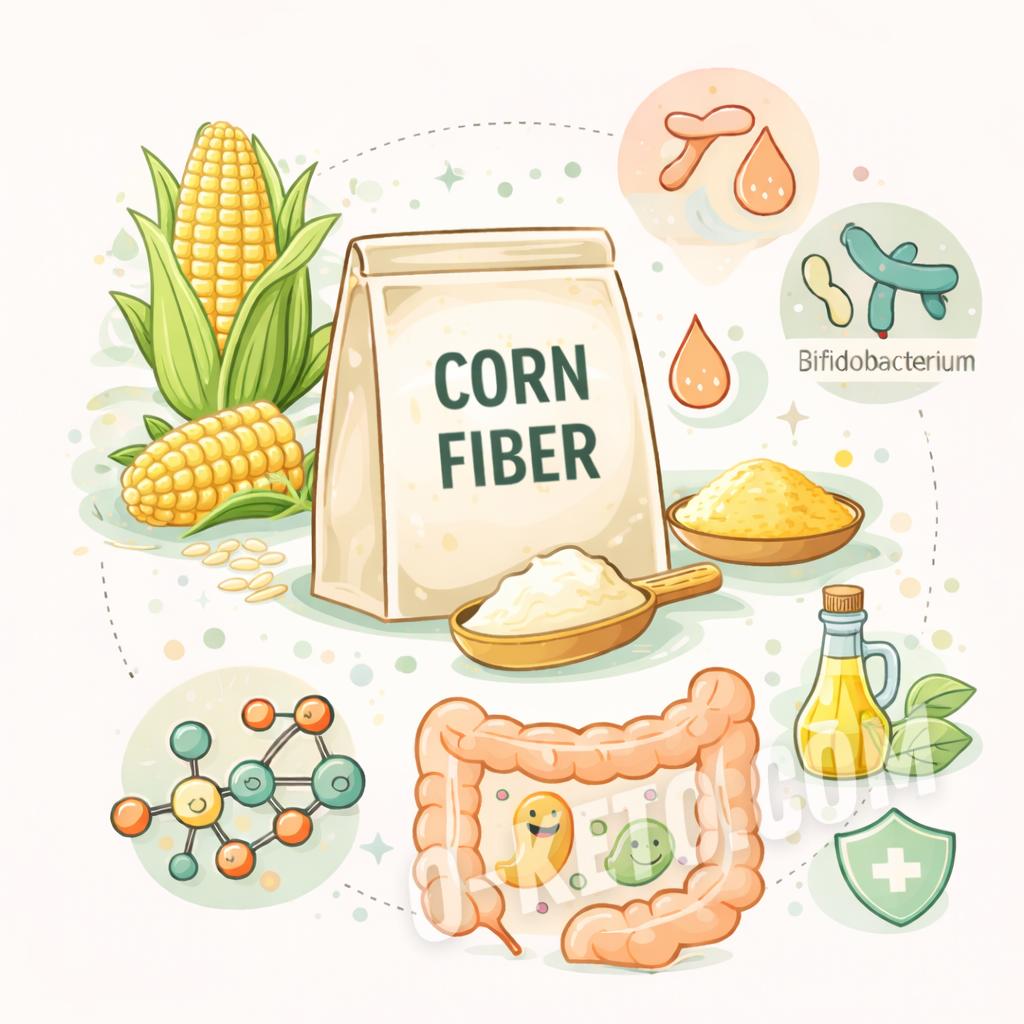

Corn fiber is a purified fraction of dietary fiber obtained from corn. It is not corn flour, starch, or grits: it has another job. It is added to baked goods, mixes, bars, crispbreads, and prepared foods to give bulk, hold moisture, change texture, and increase fiber without noticeable sweetness.
In food, corn fiber works mainly as a technological and mechanical ingredient. It provides little energy in a normal serving, has a mild taste, and is usually not used on its own. For keto, the specific label matters: different fiber ingredients can be sold as corn fiber, and starch, syrups, or maltodextrin may appear nearby in the formula.
Nutritional value
Values depend on the degree of purification. In 100 g there may be a lot of dietary fiber, little fat and protein, and usually fewer digestible carbohydrates than in flour or starch. But the product should not be treated as “zero” without the label: producers count fiber, soluble fibers, and net carbohydrates differently.
Corn fiber is not a meaningful source of vitamins or minerals. Its value in a recipe is usually not about micronutrients, but function: it absorbs water, makes the crumb less wet, adds density to low-carb baking, and helps reduce the share of ordinary flour in a blend.
Is it suitable for keto?
Purified corn fiber itself is usually compatible with keto and LCHF if it contains no sugar, dextrose, starch, or sweet fillers. Recipe portions are usually small: teaspoons or tablespoons for a whole baking form. Therefore, the final carbohydrate load depends on the entire mixture.
The main mistake is confusing fiber with corn flour. Corn flour, grits, and polenta are rich in starch and usually do not fit strict keto. Corn fiber is another ingredient, but it still needs to be checked by composition because marketing names can be vague.
How to use it
In low-carb baking, corn fiber is added to almond flour, coconut flour, psyllium, flax meal, eggs, cheese, and baking powder. It can make dough less sticky, give crispbreads a cleaner cut, reduce wetness in muffins, or add a more bread-like density.
It is better to start with small amounts: 1–2 teaspoons per recipe, then increase if needed. If too much is added, baking can become dry, crumbly, or unpleasantly fibrous. Fiber needs time to hydrate, so dough is often better left for 5–10 minutes before baking.
In sauces and minced mixtures, corn fiber can work as a mild moisture absorber. But it does not behave like starch: it does not make a glossy thick sauce and does not replace gelatin, xanthan, or cream where a bound creamy texture is needed.
If the recipe already contains psyllium or coconut flour, water is better added gradually. All these ingredients absorb moisture actively, so the same mixture can become much thicker after a few minutes.
How to choose
The package should clearly say dietary fiber or corn fiber, not flour, starch, syrup solids, or meal. Ideally, the ingredient list is short: corn fiber without sugar, flavorings, or a mixture of unclear fibers. For keto, the net carbs line or clear listing of dietary fiber and total carbohydrates also matters.
The grind is worth checking. Fine fiber distributes better in dough, while coarse fiber may be felt between the teeth. The smell should be neutral and grain-like, without dampness, mustiness, or mold. Lumps usually indicate moisture or poor storage.
Limitations
In sensitive people, excess fiber can cause bloating, abdominal pressure, stool changes, or discomfort. The risk is higher if the portion is increased sharply, water intake is low, or psyllium, inulin, bran, and other fiber additions are used at the same time.
There is no separate requirement for corn fiber specifically. If the diet is tolerated well without it, adding it on purpose is not necessary. It is useful when it solves a specific recipe problem or helps make low-carb baking more convenient.
How to store it
Corn fiber is stored dry, tightly closed, away from moisture, the stove, and strong smells. After opening, it is better poured into a jar or container. If a damp smell, lumps, insects, or mold appear, the product should not be used.
What can replace it?
In keto baking, replacements can include psyllium, oat fiber without starchy additions, bamboo fiber, ground flax, coconut flour, or a small amount of xanthan. Replacement is not always one to one: psyllium binds water more strongly, coconut flour dries dough, and xanthan gives viscosity without bulk.


