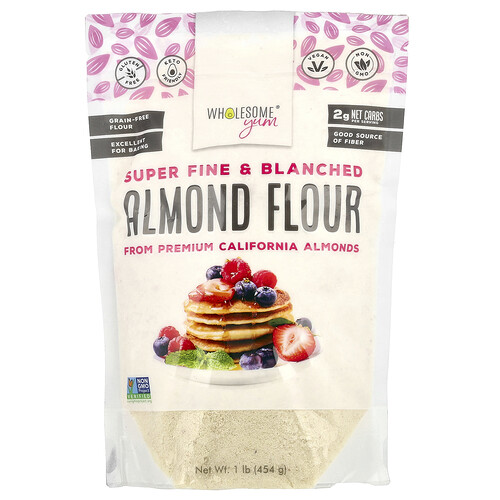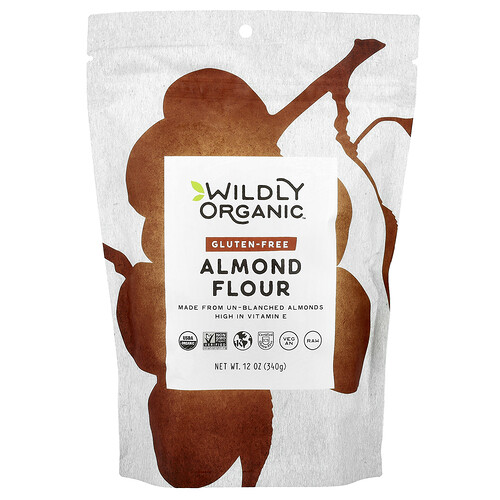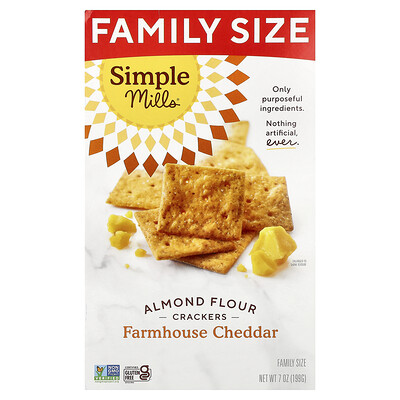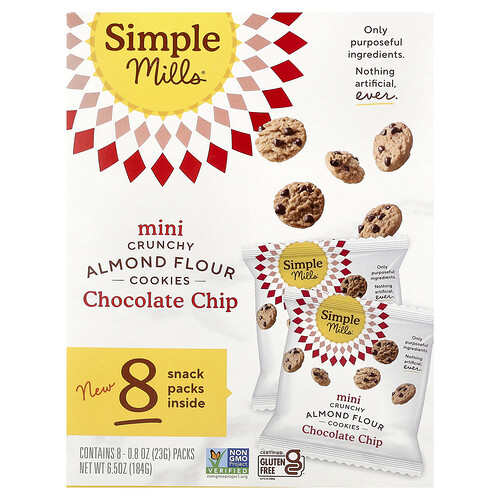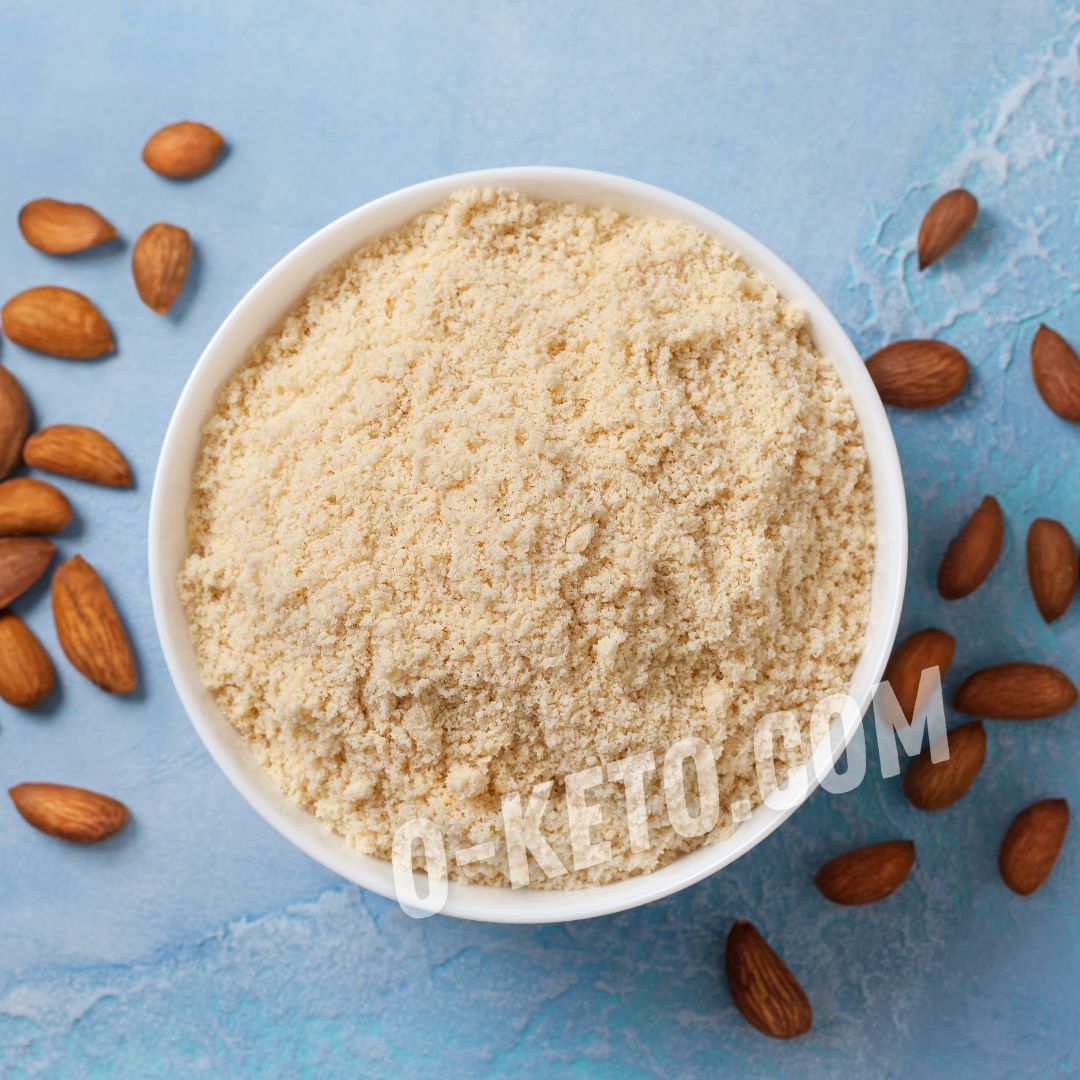

Almond flour is finely ground almonds, most often blanched and peeled. In low-carb cooking it is used instead of part of wheat flour in baked desserts, cake layers, keto bread, breading, sauces, and meat mixtures. It gives a mild nutty flavor, fat, and a moist crumb, but it does not behave like grain flour.
It is important to distinguish almond flour from almond meal. Blanched flour is usually pale, fine, and better for macarons, sponge cakes, muffins, and delicate baking. Flour made with almond skins is darker, more aromatic, and coarser. Almond pulp left after pressing almond oil is drier and may absorb more liquid from dough.
Almond flour contains no gluten, so it does not form an elastic network like wheat flour. Doughs with it are usually held together by eggs, psyllium, cheese, butter, baking powder, or other binders. If wheat flour is simply replaced 1:1, the result may be crumbly, oily, or too moist.
Nutritional value
In 100 g of almond flour there are usually about 570–620 kcal, 20–25 g of protein, 45–55 g of fat, and roughly 15–22 g of carbohydrates, part of which is fiber. In 28 g, about a quarter cup, there are often 150–170 kcal, 5–7 g of protein, 13–15 g of fat, and 2–4 g of net carbohydrates. Exact values depend on grind and producer.
The flour contains vitamin E, magnesium, manganese, phosphorus, potassium, and plant polyphenols. The more practical point is that it is energy-dense and high in fat. Even with low carbohydrates, almond-flour baking can become very rich, especially when a recipe also contains butter, cheese, cream, or nut butter.
Is it suitable for keto?
For keto and LCHF, almond flour fits much better than most grain flours. It helps make cake bases, cookies, pancakes, breading, and thickeners without wheat or starch. Still, portion matters: a keto cake made with almond flour is not light only because it contains little sugar.
If the goal is to reduce energy density or make texture drier, part of the almond flour can sometimes be replaced with coconut flour, psyllium, flaxseed meal, or sugar-free protein powder. Replacements should be careful: coconut flour absorbs far more liquid, and psyllium quickly makes dough dense.
How to use it
For muffins, cake layers, and cookies, almond flour is often combined with eggs, baking powder, butter, cream cheese, erythritol, and vanilla. In savory cooking it works as a fine breading for fish, chicken, cheese, patties, or vegetables. In sauces it is used little by little because too much can create graininess.
When baking, moderate temperature is better: almond flour browns faster because of fat and protein. If the top is already brown while the center is still wet, the pan can be covered with parchment or foil. Finished baked goods often need to cool: hot keto baking feels fragile, but becomes more stable after cooling.
How to choose
Good almond flour should smell like fresh nuts, without bitterness, mustiness, or stale oil. For delicate baking, choose a fine grind from blanched almonds. For breading, tarts, and rustic cakes, a coarser grind can work. The ingredient list should not include sugar, starch, or flavorings.
If the package is transparent, check for lumps, dark spots, and moisture marks. Some lumps may come from fat, but damp smell or mold is unacceptable. Very cheap flour may sometimes be a mix with coarse nut meal or poorly dried product.
Limitations
Almond is an allergen, so with nut reactions the product is excluded. A large amount of almond-flour baking may feel heavy because of fat, fiber, and density. If the diet already contains many nuts, pastes, and cheeses, almond flour quickly adds another energy-dense base.
How to store it
Because of its high fat content, almond flour turns rancid faster than grain flour. After opening, it is better kept in a tightly closed jar in the refrigerator, while extra stock can be frozen. Use a dry spoon. If bitter taste, stale-oil smell, or damp clumps appear, the flour should not be used.
What can replace it?
For keto baking, the closest replacements are hazelnut flour, walnut flour, seed flour, flaxseed meal, coconut flour, and mixes with psyllium. But a direct 1:1 replacement usually does not exist: each flour absorbs liquid and holds shape differently. For breading, ground pork rinds, parmesan, sesame, or almond flour mixed with spices can work.