


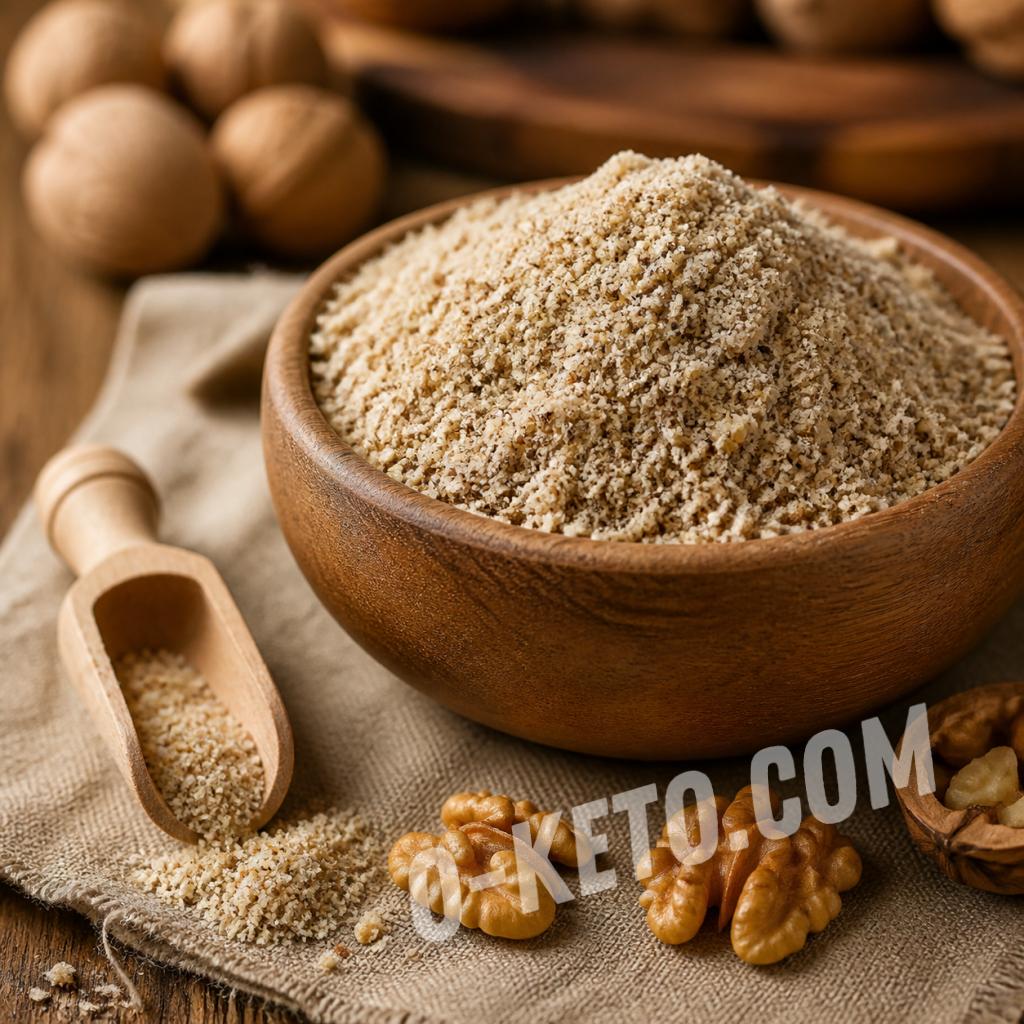

Walnut flour is made from ground walnut kernels. Depending on the grind and whether part of the oil has been removed, it may resemble fine nut meal, a drier defatted flour or a paste-like base. These formats are not automatically interchangeable: they absorb liquid differently and produce different levels of richness in dough.
Composition and flavor
Flour made from whole kernels has a pronounced walnut aroma, a slight bitterness and a high fat content. It supplies protein, fiber, magnesium, phosphorus, copper and manganese. Polyphenols and unsaturated fatty acids are naturally present, but their levels depend on variety, freshness and how finely the product is ground.
The reference panel below uses the profile of raw English walnuts per 100 g. A commercial flour may have some oil removed or contain other ingredients, so the package label takes priority. Flour with more skin particles is darker and more astringent, while a more refined grind tastes milder.
How to use it
Use walnut flour in low-carbohydrate bread, cookies, pancakes, cakes, fillings and nut sauces. It pairs with cocoa, coffee, cinnamon, cream cheese, eggs and dark chocolate. Walnut does not create gluten, so eggs, psyllium, ground flax or another flour may be needed for structure.
Because it contains oil, walnut flour can make dough heavy quickly. Add it in small portions, let the mixture stand and then adjust the liquid. It should not replace almond flour by volume without testing: walnut has a stronger flavor and can produce a softer, moister crumb.
How to choose it
Check the ingredient list. Pure flour may contain only walnuts; a defatted product should explain the oil-removal process. Avoid sugar, syrups, starch and flavorings when buying it for low-carbohydrate baking. Look for a fresh aroma, even milling and no rancid bitterness.
Walnut flour oxidizes more readily than dry grain flour. A small package is often more practical when it is used occasionally. After opening, smell matters as much as the printed date: an old-oil aroma indicates that the fats have deteriorated.
Keto and carbohydrates
Whole walnuts provide about 654 kcal, 65.2 g fat, 15.2 g protein and 13.7 g total carbohydrate per 100 g, with approximately 6.7 g as fiber. That leaves about 7 g net carbohydrate per 100 g, which can fit a measured keto portion, but the flour remains very energy-dense. Weigh the actual amount used rather than relying on spoon volume.
Limitations
Walnuts are a common food allergen. Anyone with a tree-nut allergy should avoid the flour even in a small amount, and cross-contact with other nuts or peanuts should be checked on the production label. With a sensitive digestive system, start with a modest portion because concentrated fat and fiber may cause heaviness or bloating.
Because the product is made from a tree nut, it is also unsuitable for recipes intended to be free of all nuts, even when the flour is used only as a minor binder. Keep a separate utensil and work surface when preparing food for an allergic person.
Storage
Keep walnut flour tightly sealed and protected from light, heat and moisture. After opening, refrigeration is preferable; for infrequent use, it can be frozen in a well-sealed container. Remove excess air before freezing so the flour does not absorb odors from neighboring foods.
Do not use flour that smells of old oil, paint, damp mold or has a distinctly rancid bitter taste. Oil-related clumps are possible, but moisture, mold or a sticky surface means the product should be discarded. Portion out a small working amount instead of leaving the whole package open.
Substitutes
Almond, pecan, hazelnut or defatted nut flour can work in baking. For sauces and fillings, ground walnuts provide a coarser texture. The substitute changes fat, sweetness and water absorption, so adjust liquid and baking time gradually.


