




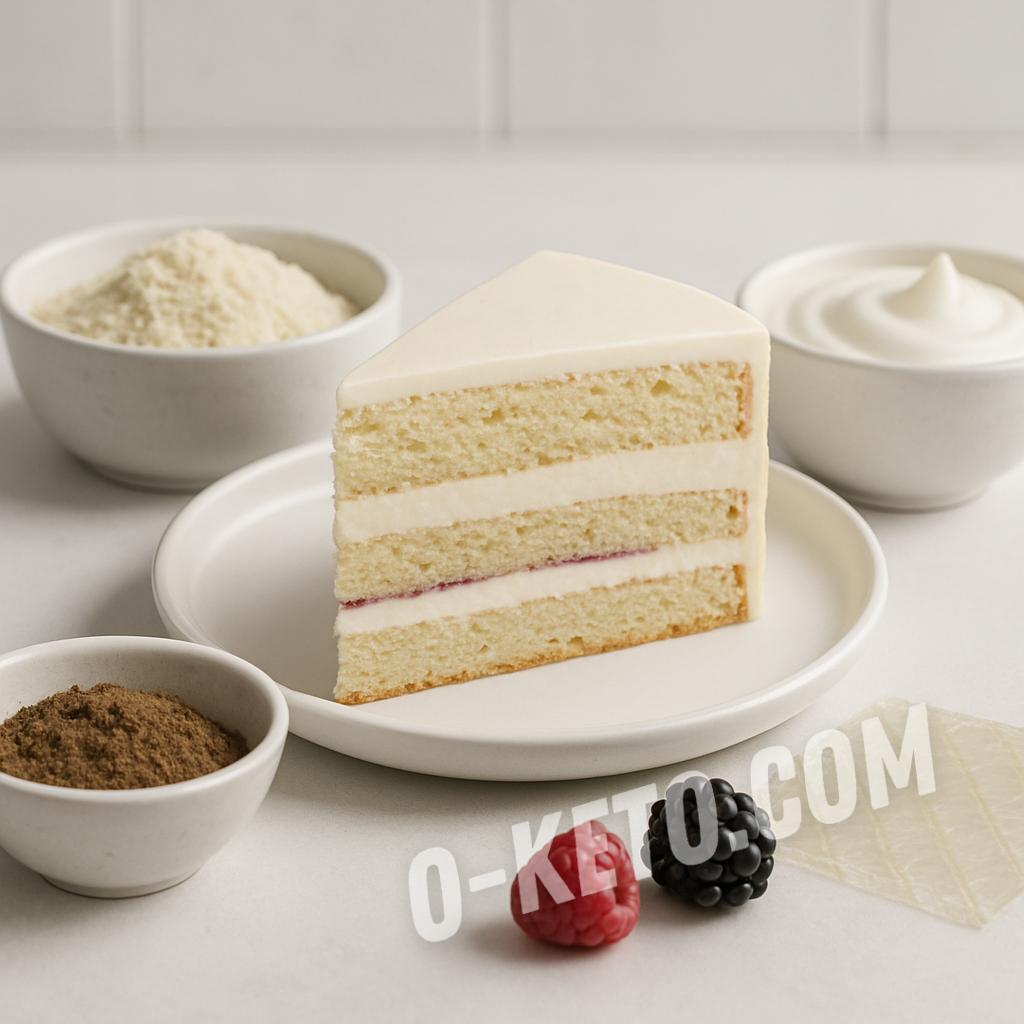

Reducing the calorie content of keto desserts is more challenging than that of regular healthy desserts. In classic baking, sugar, starch, and flour provide part of the structure. In the low-carb version, these ingredients are limited, so any reduction in calories immediately affects the moisture, density, taste, and stability of the product.
The main mistake is trying to simply remove fats and carbohydrates. Desserts do not work that way. They need to be viewed as a system where each component serves a technological function: retaining moisture, creating volume, binding water, stabilizing cream, or forming a slice.
What Makes Up the Caloric Content of a Dessert
The caloric content is shaped by three macronutrients: fats, proteins, and carbohydrates. In desserts, fats and carbohydrates usually provide the main energy load.
In terms of energy value, they differ significantly:
- fats provide about 9 kcal per 1 g;
- carbohydrates provide about 4 kcal per 1 g;
- proteins provide about 4 kcal per 1 g.
In keto desserts, carbohydrates are already reduced due to the exclusion of sugar and regular flour. Therefore, the next main reserve for reducing calories is working with the fat part of the recipe.
Why Simply Removing Fat is Not an Option
Fat in a dessert is not just calories. It is responsible for flavor, softness, moisture, plasticity, and the feeling of a rich texture. If it is removed without compensation, the product will become dry, crumbly, watery, or unstable.
Therefore, reducing fat always requires replacing its technological functions:
- moisture is retained by soluble dietary fibers, pectins, gums, and allulose;
- structure is supported by eggs, protein powders, and alternative types of flour;
- cream stability is provided by gelatin, agar-agar, pectin, and their combinations;
- volume and creaminess are helped to be preserved by low-fat cottage cheese, ricotta, and custard base.
Sponge Cake: How to Reduce the Caloric Content of the Base
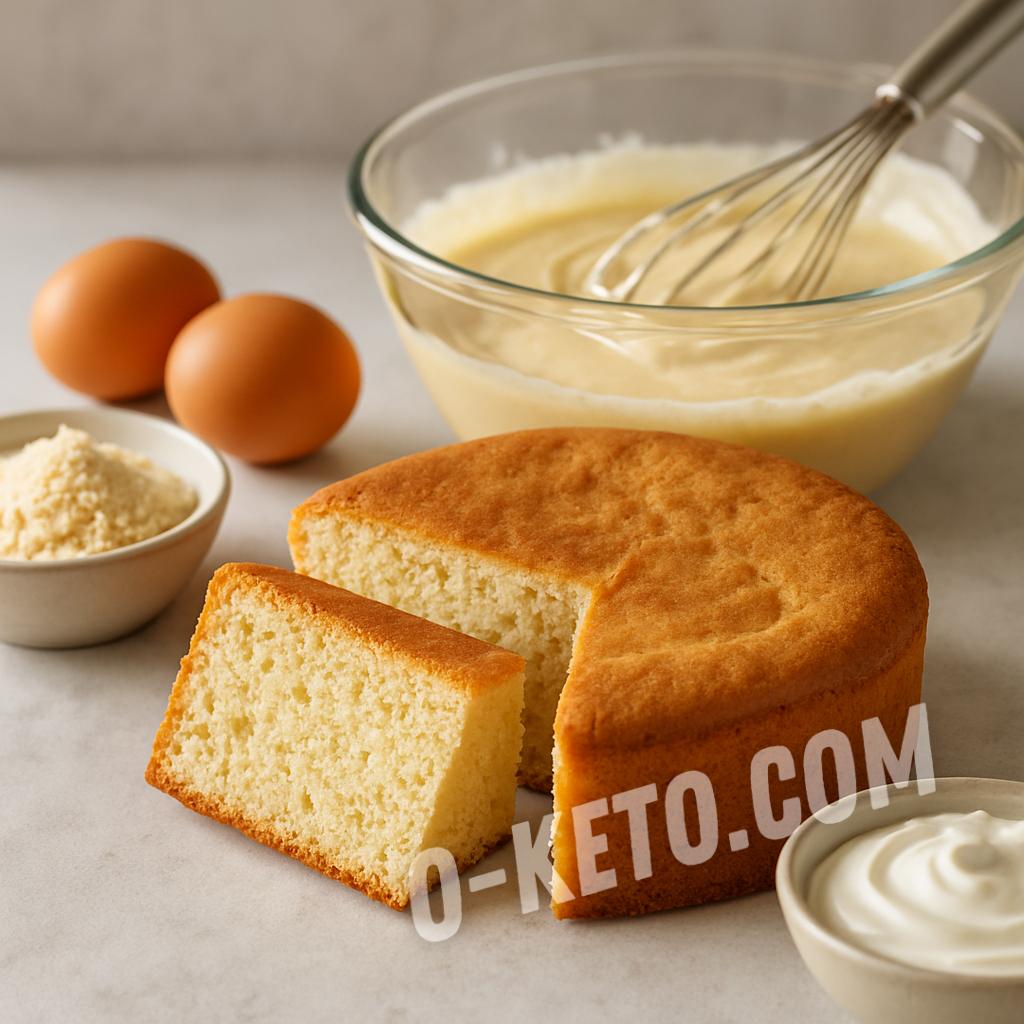
In low-carb sponge cakes, calories often come not from oil, but from nut flour. Almond and other nut flours contain a lot of fat, which significantly increases the energy value of the product.
The caloric content of the sponge cake can be reduced in several ways:
- partially reduce the amount of nut flour;
- add lupin, coconut, soy, or flaxseed flour;
- use protein for structure and moisture retention;
- add soluble fibers, pectin, or gum;
- increase the role of eggs if it fits the recipe.
Sometimes a small amount of carbohydrate flour can technologically improve the result. For example, 10 g of oat, millet, or rice flour can help replace up to 50 grams of more fatty nut flour without making the entire dessert high in carbohydrates.
If the sponge cake contains chocolate, part of it can be replaced with cocoa powder. It is better to use alkalized cocoa: it provides flavor and color but contains less fat than chocolate. At the same time, cocoa absorbs water, so moisture-retaining components should be added along with it.
Cream: The Main Source of Calories
Cream usually provides the most calories in a cake. The main sources of fat are cream, butter, ghee, coconut oil, cream cheese, fatty cottage cheese, nut pastes, and chocolate.
Cream is usually an emulsion of fat and water. If butter or cream is simply removed and replaced with water, the structure will break down. The cream will become liquid, crumbly, or poorly holding its shape.
To reduce the fat content of the cream while preserving texture, the following techniques are used:
- replace part of the butter or cream with a liquid phase;
- add gelatin, agar-agar, or pectin for stability;
- use a custard base made with milk;
- add eggs or yolks for density;
- introduce low-fat cottage cheese or ricotta for volume and creaminess.
If 30-50 g of butter is removed from the cream, this volume needs to be compensated with another phase. But the liquid must be bound. On average, you can rely on 1-2 g of gelatin per 30 g of added liquid, but the exact dosage depends on the gelatin and desired texture.
Gums can also help, but it is better to use them not as the sole thickener but in combination with gelatin, pectin, custard base, or protein components. Otherwise, the cream may become sticky and slimy.
Fillings: Fewer Calories, More Work with Water
Berry fillings are usually less caloric than sponge cake and cream because they contain almost no fat. The main task here is to replace the functions of sugar: viscosity, gel formation, and stability.
For this, hydrocolloids and components that bind water are used:
- pectin;
- gelatin;
- agar-agar;
- gums;
- allulose.
In fillings, it is important to work not only with caloric content but also with rheology — how the mass flows, holds its shape, and behaves after cooling.
How to Assemble a Lighter Dessert
Caloric content can be reduced not only by replacing ingredients but also by adjusting the ratio of layers. A cake consists of semi-finished products: sponge cake, cream, and filling. If one layer is more caloric, it can be balanced with another.
Practically, this looks like:
- combine a more caloric sponge cake with a light cream and berry filling;
- combine a richer cream with a light base;
- increase the share of berry or gel filling if it fits the taste;
- do not reduce fat and flour simultaneously without compensating for moisture and structure.
Conclusion
Reducing the calorie content of a keto dessert is not a mechanical removal of fatty products. It is the redistribution of fats, water, proteins, fibers, and thickeners in such a way as to preserve structure, flavor, and texture.
The most effective approach is to analyze the dessert by parts: separately the sponge cake, separately the cream, and separately the filling. This way, you can reduce calories precisely without destroying the entire recipe.
Sources
- FoodData Central Foundation Foods Documentation — U.S. Department of Agriculture
- Food Hydrocolloids: Structure, Properties, and Applications — Food Science and Biotechnology
- Hydrocolloids as thickening and gelling agents in food: a critical review — Journal of Food Science and Technology
- The functional and nutritional aspects of hydrocolloids in foods — Food Hydrocolloids


