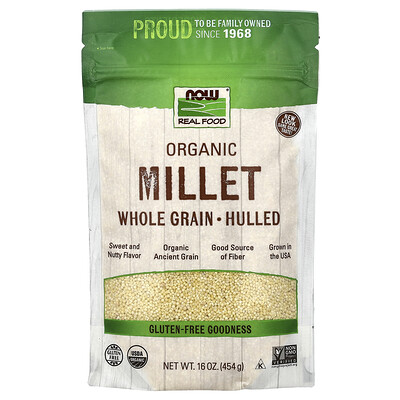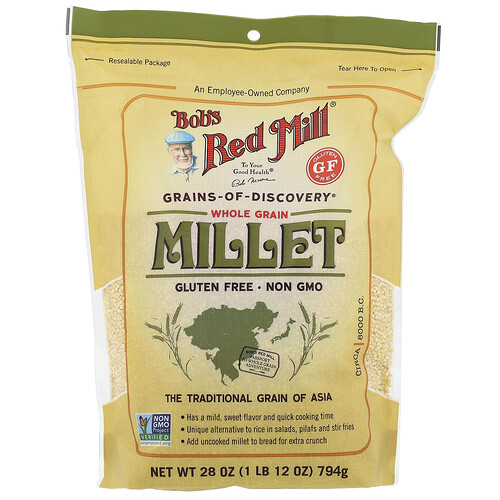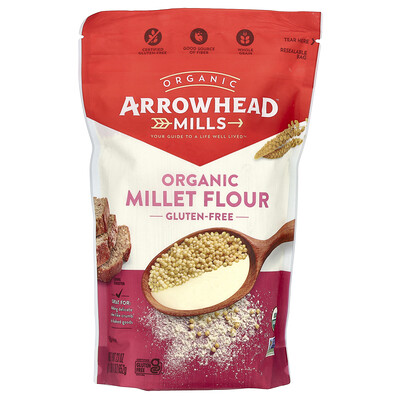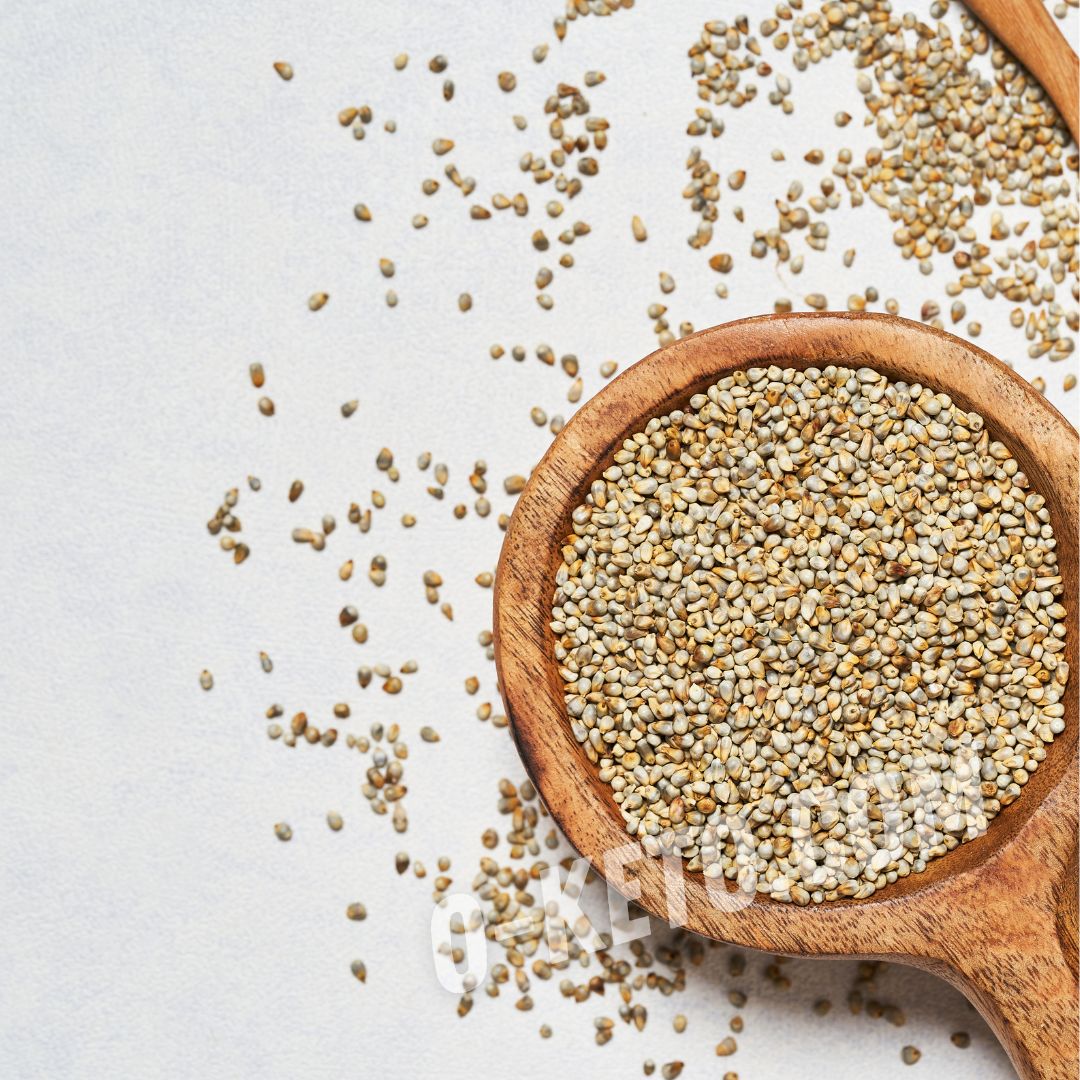

Millet groats are hulled grains of proso millet. This is an ancient gluten-free cereal used for porridge, side dishes, casseroles, fillings, grain bakes, and flour for flatbreads. Good millet has a mild grain taste with slight sweetness, but when stored poorly it quickly becomes bitter because of fats in the germ.
Millet groats and millet as a plant are often confused: millet is the crop and whole grain in its hull, while the groats are the cleaned grain. In different cuisines, millet is used for porridge, fermented drinks, flatbreads, and sides. In Eastern European cooking, it is most often remembered as crumbly or soft porridge, sometimes with pumpkin, milk, or butter.
There are several household forms: polished groats, cracked millet, flakes, and flour. The more the grain is broken down, the faster it cooks and the softer the texture becomes. But in carbohydrate terms, cracked millet and flakes remain the same cereal, simply quicker to prepare.
For low-carb eating, millet is a difficult product. It contains no gluten, but that does not make it keto. Most of the dry grain is starch, so even a small bowl of cooked porridge gives a noticeable amount of carbohydrates.
Nutritional value
In 100 g of dry millet there are usually about 360–380 kcal, 10–12 g of protein, 3–5 g of fat, and 68–74 g of carbohydrates. After cooking, the weight increases about 2.5–3 times because of water, so values per 100 g of cooked porridge are lower, but the serving still remains starchy.
Millet contains magnesium, phosphorus, manganese, iron, zinc, B vitamins, and fiber. But these nutrients come together with a high carbohydrate load. If strict low carbohydrates are needed, minerals and vitamins are easier to get from meat, fish, eggs, greens, nuts, and low-starch vegetables.
Is it suitable for keto?
For strict keto, millet usually does not fit. The dry grain contains too much starch, and cooked porridge can easily take a large part of the daily carbohydrate limit. Glycemic response depends on grinding, cooking, portion, and pairings, but millet should not be treated as a low-carb grain.
In a looser LCHF diet or a diet without strict ketosis, a small portion may appear occasionally if counted in advance. In that case, it is better not to add sugar, honey, dried fruit, or sweet milk. Millet with pumpkin, raisins, or jam becomes a much higher-carbohydrate dish.
How to cook it
Before cooking, millet is rinsed thoroughly until the water is almost clear. If the groats taste bitter, they can be scalded with boiling water and drained. For a crumbly side, use less liquid and avoid overcooking. For soft porridge, use more water or milk and cook longer.
Millet pairs well with butter, egg, cottage cheese, mushrooms, herbs, pumpkin, onion, poultry, and meat gravies. For keto, these pairings do not make the grain low-carb, but they clarify its culinary role: it is a side-dish base, not a seasoning.
How to choose
The groats should be dry, clean, and free of musty smell, insects, and excess dust. Bright yellow millet often looks more appetizing, but color is not the only criterion. Freshness matters more: old millet can taste bitter even after rinsing. The package should be intact, with a clear production date.
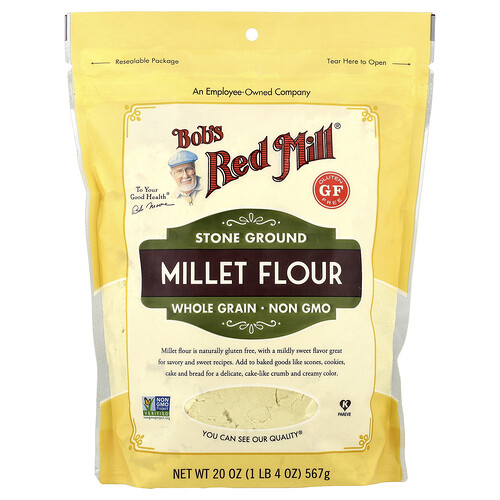
Crushed millet cooks faster and gives softer porridge, while whole polished groats hold shape better. Millet flour works for gluten-free baking, but in carbohydrate terms it remains grain flour, not a replacement for almond or coconut flour.
Limitations
Millet is starchy and energy-dense when dry. With strict carbohydrate control, weight loss on keto, or poor tolerance of porridge, it is better replaced. Gluten-free status does not automatically make it easy to digest: for some people, grains cause bloating or heaviness.
How to store it
Millet stores worse than many grains because residual fats may turn rancid. Keep it in a dry dark place, in a tightly closed jar, away from heat and moisture. It is better not to buy a large stock if it is used rarely. If bitter smell, mold, or insect traces appear, discard it.
What can replace it?
In ordinary cooking, millet can be replaced with buckwheat, rice, quinoa, bulgur, or corn grits, but for keto these are also high-carbohydrate options. In low-carb cooking, the side-dish role is better filled by cauliflower rice, stewed cabbage, zucchini noodles, mushrooms, broccoli, spinach, or cauliflower mash with butter.
Millet and processing forms
Millet names the plant and grain, while hulled millet is the form commonly used as a household cereal. Cracked millet, flakes and flour cook faster because the grain structure is more disrupted, but they remain millet-based carbohydrate foods. Rinsing and soaking can improve flavour and shorten cooking, yet they do not make millet suitable for strict keto.