


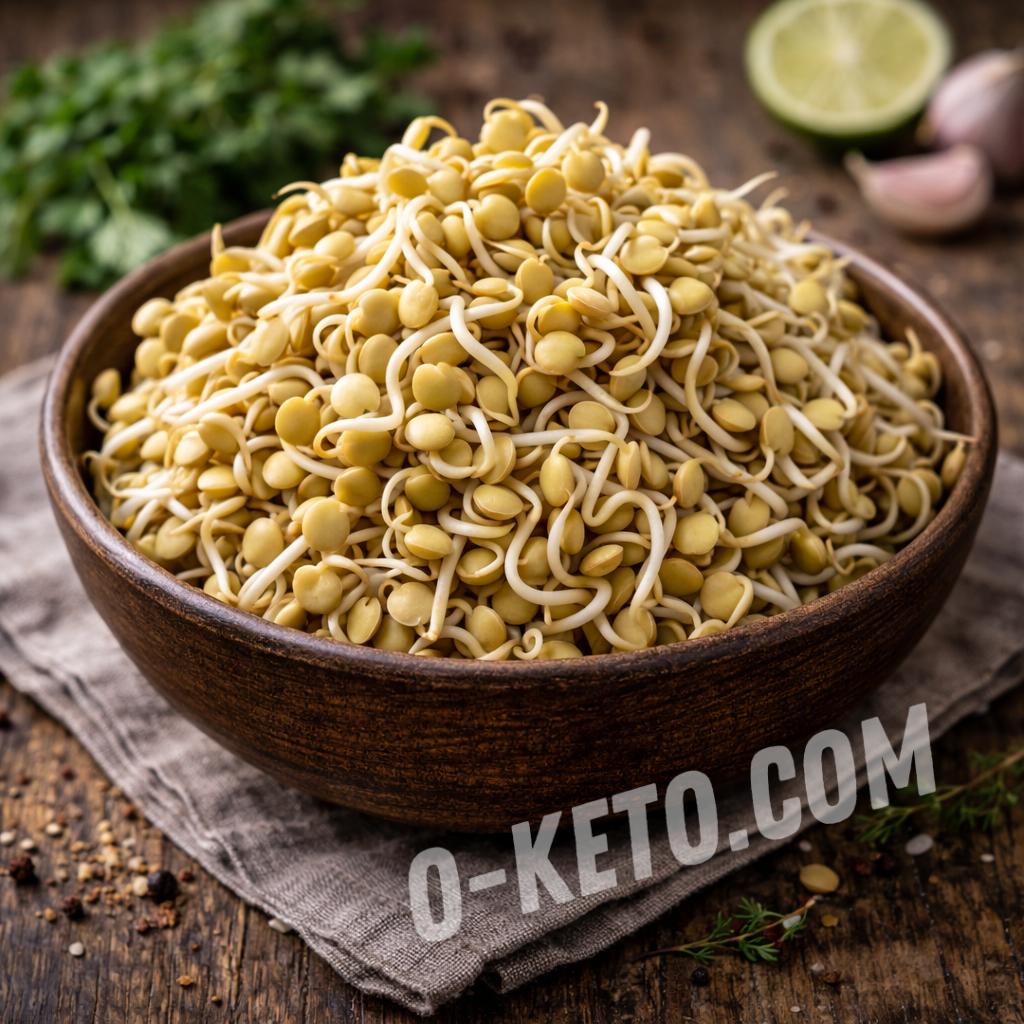

Lentil sprouts are germinated lentil seeds with a mild nutty taste and a crisp texture. Unlike dry lentils, they are usually not used as the main starchy base of a dish, but as a fresh addition: in salads, cold appetizers, vegetable plates, wraps, soups, and Asian-style dishes. A few spoonfuls add liveliness, crunch, and a recognizable legume note without making the plate heavy.
During sprouting, the seed begins to use part of its stored reserves, the flavor changes, and the outer coat becomes softer. Sprouts are easier to chew, need little or no cooking, and feel gentler than cooked dry lentils. At the same time, they remain a legume, so in low-carb eating they should not be treated like leafy greens or ordinary non-starchy vegetables.
Nutritional value
The composition depends on the lentil variety, sprout length, and moisture content. On average, 100 g of fresh lentil sprouts contains about 90 kcal, 8-9 g of protein, less than 1 g of fat, 15-17 g of carbohydrates, and 2-3 g of fiber. They also provide B vitamins, vitamin C, potassium, magnesium, phosphorus, iron, and plant polyphenols.
Sprouting lowers the amount of some antinutrients, including phytic acid, so the mineral profile becomes more accessible than in dry seeds. But this does not turn lentils into a low-carb ingredient: the base remains carbohydrate-and-protein, not fat-based.
Are they suitable for keto?
For strict keto, lentil sprouts are usually inconvenient. Even a small bowl can take up a large part of the daily carbohydrate limit, especially when the same dish also contains onion, carrot, tomatoes, sauces, or other sources of sugars. In LCHF eating, they may sometimes be kept as a small flavor accent, but not as the main side dish.
A practical approach is to count the portion in advance. If the goal is freshness and crunch, 20-30 g on top of a salad with eggs, fish, poultry, avocado, or olive oil is often enough. A 100 g portion already behaves more like a separate legume component and is usually excessive for a strict ketogenic plan.
How to use
Lentil sprouts are best added at the end of cooking or served fresh. Long heating makes them lose their crunch, turn soft, and become less expressive. If the flavor feels too grassy, they can be warmed quickly in a pan with oil, garlic, ginger, or spices, but they should not be stewed for a long time.
Good ways to use them include:
- adding a small handful to a salad with cucumber, leaves, egg, and an oil-based dressing;
- sprinkling them over hot broth or cream soup directly in the bowl;
- mixing them with herbs, lemon juice, and olive oil for a cold appetizer;
- using them as a crisp layer in wraps with lettuce leaves;
- warming them briefly with sesame oil, chili, and sugar-free soy sauce.
What to pair them with
Lentil sprouts work best with a rich dressing and foods that provide fat or a clear protein taste. An oil dressing with lemon, vinegar, sugar-free mustard, tahini, or plain yogurt softens the legume note and makes the texture more pleasant. Good spices include cumin, coriander, black pepper, paprika, turmeric, chili, and fresh ginger.
In a low-carb plate, it is better to pair the sprouts with eggs, fish, chicken, cheese, avocado, cucumber, leafy salads, and herbs rather than with grains or bread. This keeps them as a small accent instead of turning them into the main carbohydrate source in the dish.
How to sprout lentils at home
Use whole lentils without damage. Rinse them, soak for 8-10 hours, drain the water, rinse again, and leave the seeds in a jar or container with airflow. After that, rinse the lentils twice a day. Short sprouts usually appear in 2-3 days.
Do not sprout seeds with a musty smell, mold spots, or uncertain origin. A moist environment changes quickly, so clean dishes, regular rinsing, and cool storage matter more than any complicated technique.
How to choose and store
Ready lentil sprouts should smell fresh, without sourness, slime, or gray patches. A good product is moist but not wet, with short firm shoots and a clean legume aroma. If the package is swollen, there is cloudy liquid inside, or the sprouts have become sticky, it is better not to use them.
In the refrigerator, lentil sprouts keep for 2-3 days in a closed container, preferably with a paper towel to absorb excess moisture. Before serving, rinse and dry them well. People with sensitive digestion should start with a small portion: legume sprouts contain fiber and fermentable carbohydrates that are not comfortable for everyone in large amounts.
What to replace them with
If you need a similar legume taste and crunch, mung bean sprouts are the closest option. If the task is to reduce carbohydrates, use microgreens, broccoli sprouts, radish, cucumber, finely sliced cabbage, romaine lettuce, or fresh herbs. In warm dishes, thin strips of zucchini or cabbage can sometimes provide volume and crunch, but that is a replacement for texture, not for the lentil flavor.


