


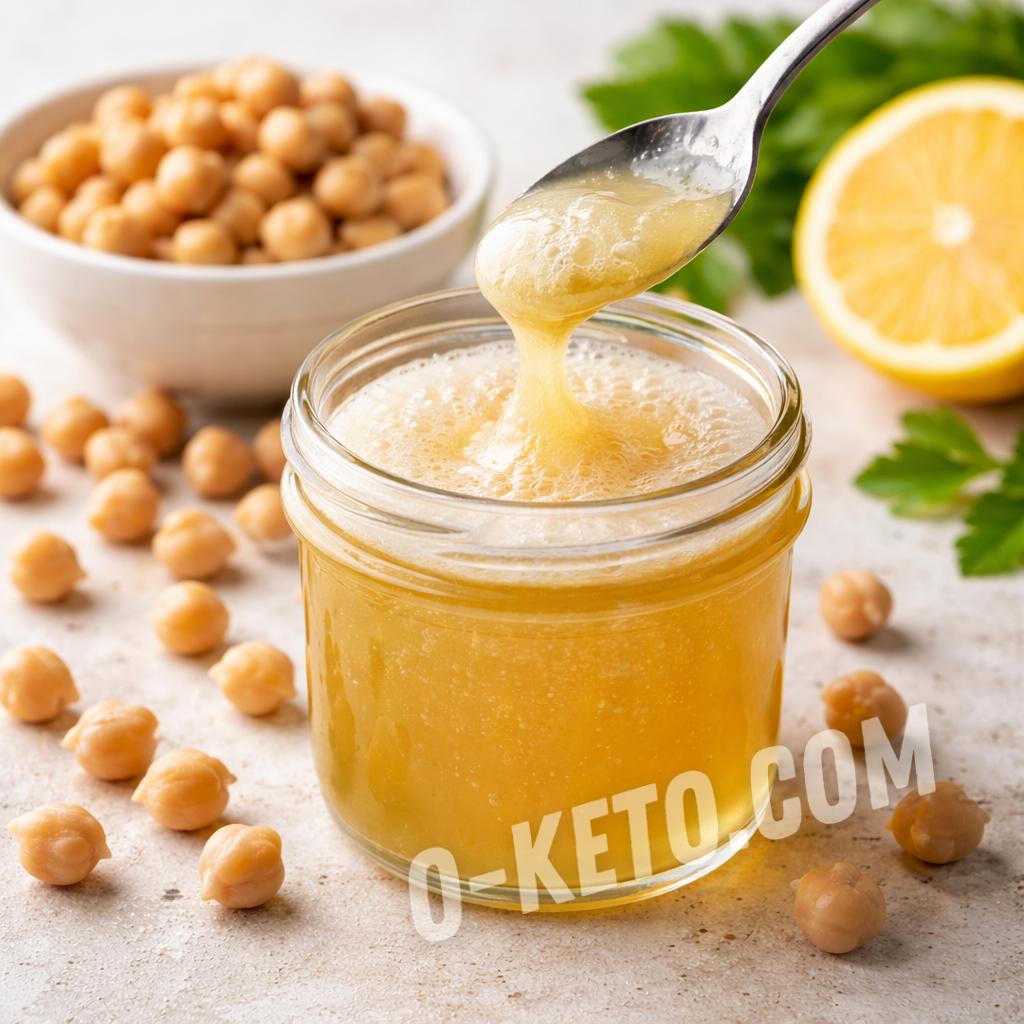

Aquafaba is the liquid left after cooking legumes, most often chickpeas. It contains soluble proteins, starchy fractions, and saponins, which allow the liquid to foam, hold air, and bind fat. That is why aquafaba is used as a plant-based replacement for egg white in meringues, mousses, mayonnaise, sauces, and some doughs.
The most predictable aquafaba usually comes from chickpeas: it has a mild flavor, light color, and stable foam. Bean liquid can also work, but it may bring a more noticeable aroma and color. It is important to see it not as a standalone nourishing food, but as a technical ingredient for texture.
Nutritional value
Aquafaba is low in calories, contains almost no fat, and is not a concentrated protein source. In 100 ml there are usually a few carbohydrates and trace amounts of protein, but values vary greatly depending on the legume, water amount, cooking time, and reduction. Canned liquid also depends on salt and manufacturer additives.
For egg replacement, common proportions are 3 tablespoons of aquafaba for one whole egg, or 2 tablespoons for one egg white. This is not nutritionally equal to an egg. An egg provides complete protein and fat, while aquafaba mainly provides foam, viscosity, and emulsion.
Is it suitable for keto?
Aquafaba can fit keto in small amounts, but it comes from legumes, so carbohydrates should not be ignored completely. In teaspoons and tablespoons the load is usually small, but in a large dessert serving, especially with sweeteners and nut flour, the total contribution should be counted.
The main keto question is not aquafaba itself, but the recipe around it. Sugar-free meringue, sugar-free mayonnaise, or an oil-based sauce may be low-carb. Baking with starch, flour, syrups, dates, or regular sugar does not become keto simply because eggs were replaced with plant liquid.
How to obtain it
There are two convenient methods. The first is to drain the liquid from canned chickpeas without sugar or unnecessary additives. The second is to cook dry chickpeas and reduce the cooking liquid until it resembles loose egg white. Too watery aquafaba whips poorly, while overly thick liquid can give heavy foam.
Before whipping, the liquid is best chilled. For stability, a little lemon juice, vinegar, or cream of tartar is often added. The bowl should be clean and free of grease, as with egg whites. Oil is added only after foam forms if the recipe requires an emulsion.
How to use it
Whipped aquafaba works for sugar-free meringues, mousses, creams, and airy desserts, but it is more delicate than egg white. It needs more whipping time, and the finished foam tolerates humidity and long waiting before baking less well. For meringue, use a fine sweetener and dry at low temperature.
In savory recipes, aquafaba helps make vegan mayonnaise, aioli, dressing, or light sauce. Oil is poured in a thin stream while blending continues. If the emulsion splits, start with a new portion of aquafaba in a clean bowl and gradually blend in the failed sauce.
How to choose
For canned aquafaba, check chickpea ingredients: water, chickpeas, and salt are the easiest option. Sugar, flavorings, thick sauces, and spiced brines interfere with a neutral taste. Very dark or strongly smelling liquid is better for savory dishes than desserts.
If cooking it yourself, do not oversalt the liquid and do not add spices before reserving it. The chickpeas can be used separately in ordinary dishes, while the aquafaba is portioned. For repeatability, write down the dry chickpea-to-water ratio, cooking time, and reduction level.
Limitations
Aquafaba is not suitable for people who react to chickpeas or other legumes. With sensitive digestion, even a small amount may cause bloating, especially if a dessert is eaten in a large portion. For children and people limiting salt, check whether the liquid came from salted cans.
It also does not always replace eggs one to one. In omelets, custards, cottage-cheese pancakes, or dishes where egg provides dense protein and fat, the result will be different. Aquafaba is strong where foam, lightness, and emulsion are needed, not where the nutritional structure of an egg is needed.
How to store it
Fresh aquafaba keeps in the refrigerator for 2–3 days in a closed container. It can be frozen in portions, for example in an ice cube tray, and thawed before whipping. After thawing, stir the liquid and check thickness: sometimes it is worth reducing slightly.
What can replace it?
For foam, the closest replacement is egg white if eggs fit the diet. For emulsion, egg yolk, mustard, xanthan, guar, or a ready sugar-free mayonnaise base can be used. In baking, the choice depends on the task: psyllium, chia, flax, gelatin, or egg give different textures, so the replacement should match the specific recipe.


