
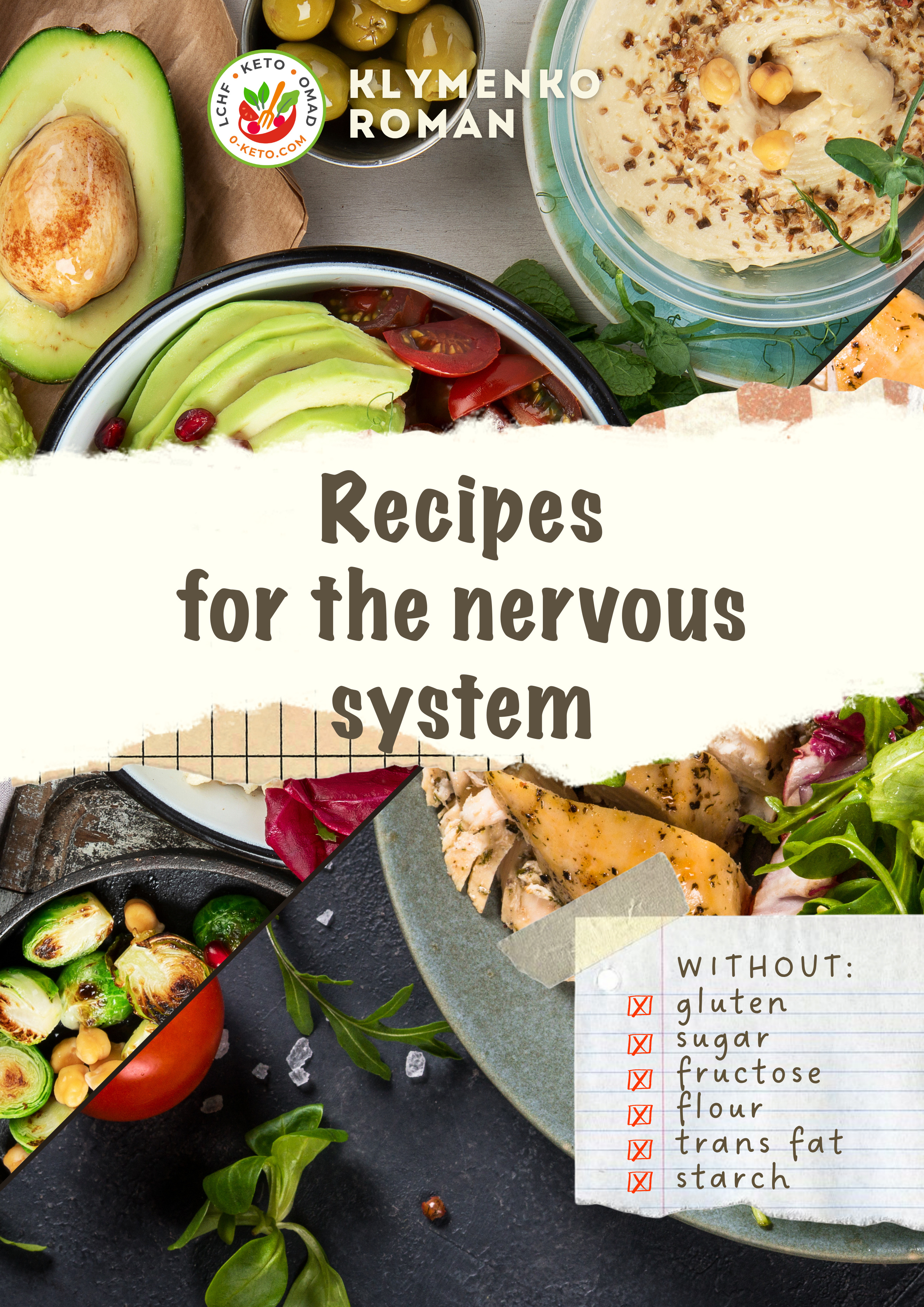
Recipe Collection for the Nervous System and Stress Protection

Recipe Collection for the Nervous System and Stress Protection

Free

Reissue date: 25 May 2026

Free from:

  • gluten
  • sugar
  • fructose
  • flour
  • trans fats
  • starch
About the book
Reviews

Introduction

The nervous system responds to sleep, stress, blood sugar, caffeine, mineral status, and daily food quality. Under heavy load it needs not only rest and quiet, but also nutrients for normal signaling.

Food does not switch stress off, but it can support relaxation mechanisms, energy metabolism, and neurotransmitter production. That is why this book focuses on magnesium, L-theanine, B vitamins, tryptophan, and GABA.

The recipes turn calm and recovery into practical meals that can be rotated through the week.

Key nutrients for this book

The core nutrient markers in this collection are: Magnesium, L-theanine, Vitamin B1, Vitamin B2, Vitamin B6, Tryptophan, GABA. Below is why each one matters and which foods provide it most naturally.

Magnesium

Magnesium is involved in hundreds of enzyme reactions, muscle relaxation, nervous system function, and sleep regulation. It matters especially when the topic involves stress, heart health, vessels, or recovery.

How it supports this topic:

  • supports nervous system and muscle relaxation;
  • participates in energy metabolism;
  • helps maintain heart rhythm and sleep quality.

When intake may be low:

  • stress, caffeine, and sleep loss are frequent;
  • muscle cramps or irritability appear often;
  • nuts, greens, fish, and whole foods are limited.

Best food sources:

  • pumpkin seeds, almonds, nuts;
  • spinach, greens, avocado;
  • fish, cocoa, seafood.

L-theanine

L-theanine is an amino acid from tea associated with calm attention. For stress and sleep, it is useful because it supports relaxation without heaviness or sedation.

How it supports this topic:

  • supports calm focus;
  • may soften stress response;
  • pairs well with magnesium and sleep-supportive routines.

When intake may be low:

  • stress, caffeine, and sleep loss are frequent;
  • muscle cramps or irritability appear often;
  • nuts, greens, fish, and whole foods are limited.

Best food sources:

  • green tea;
  • matcha;
  • quality black tea.

Vitamin B1

Vitamin B1 participates in energy metabolism and nervous-system function. For stress support, it matters because nerve cells are highly sensitive to low energy and missing cofactors.

How it supports this topic:

  • supports energy metabolism in nerve cells;
  • participates in signaling and neurotransmitter production;
  • helps make the diet more complete under high load.

When intake may be low:

  • stress, alcohol, or refined foods are frequent;
  • fatigue, irritability, or poor concentration appear;
  • meat, fish, eggs, and nuts are limited.

Best food sources:

  • meat, fish, eggs;
  • liver and organ meats;
  • nuts, seeds, greens.

Vitamin B2

Vitamin B2 participates in energy metabolism and nervous-system function. For stress support, it matters because nerve cells are highly sensitive to low energy and missing cofactors.

How it supports this topic:

  • supports energy metabolism in nerve cells;
  • participates in signaling and neurotransmitter production;
  • helps make the diet more complete under high load.

When intake may be low:

  • stress, alcohol, or refined foods are frequent;
  • fatigue, irritability, or poor concentration appear;
  • meat, fish, eggs, and nuts are limited.

Best food sources:

  • meat, fish, eggs;
  • liver and organ meats;
  • nuts, seeds, greens.

Vitamin B6

Vitamin B6 participates in energy metabolism and nervous-system function. For stress support, it matters because nerve cells are highly sensitive to low energy and missing cofactors.

How it supports this topic:

  • supports energy metabolism in nerve cells;
  • participates in signaling and neurotransmitter production;
  • helps make the diet more complete under high load.

When intake may be low:

  • stress, alcohol, or refined foods are frequent;
  • fatigue, irritability, or poor concentration appear;
  • meat, fish, eggs, and nuts are limited.

Best food sources:

  • meat, fish, eggs;
  • liver and organ meats;
  • nuts, seeds, greens.

Tryptophan

Tryptophan is an amino acid used to produce serotonin and then melatonin. It matters for mood, relaxation, and natural preparation for sleep.

How it supports this topic:

  • participates in serotonin production;
  • is linked to melatonin and circadian rhythm;
  • supports nervous-system recovery.

When intake may be low:

  • stress, caffeine, and sleep loss are frequent;
  • muscle cramps or irritability appear often;
  • nuts, greens, fish, and whole foods are limited.

Best food sources:

  • turkey, chicken, eggs;
  • cheese, cottage cheese, fish;
  • nuts and seeds.

GABA

GABA is the main inhibitory neurotransmitter of the nervous system. For stress support it represents the balance between activation and relaxation, while food works gently through overall nervous-system metabolism.

How it supports this topic:

  • is linked to relaxation and lower nervous excitation;
  • supports the balance of sleep and wakefulness;
  • complements magnesium, theanine, and tryptophan.

When intake may be low:

  • stress and sleep loss are frequent;
  • evening relaxation is difficult;
  • protein and fermented foods are limited.

Best food sources:

  • fermented foods;
  • tea, cocoa, mushrooms;
  • protein foods with B vitamins.

What this book is about

This is not a supplement manual and not a collection of vague wellness advice. It is a practical recipe collection built around foods that can provide meaningful amounts of the selected nutrients.

Each recipe includes ingredients, cooking time, macros, and vitamin/mineral tables per 100 g. This makes it easier to compare dishes and choose meals that fit your routine, taste, and goals.

Use the book as a food navigator: rotate protein sources, fish, eggs, vegetables, herbs, nuts, and other nutrient-dense foods, while paying attention to tolerance and variety.


Looking for a source of nutrients? Check out iHerb:
Магний: NOW Foods, Magnesium Bisglycinate Powder, 8 oz (227 g)
Buy
≈ $14.69
Магний: KAL, Magnesium Malate 400, 400 mg, 90 Tablets (200 mg per Tablet)
Buy
≈ $17.43
Витамин B1: Lake Avenue Nutrition, Benfotiamine with Thiamine, 250 mg, 120 Veggie Capsules
Buy
≈ $21.06
Витамин B1: Natural Factors, Benfotiamine plus Sulbutiamine, 30 Vegetarian Capsules
Buy
≈ $17.16
Витамин B2: NOW Foods, B-2, 100 mg, 100 Veg Capsules
Buy
≈ $6.74
Витамин B2: Life Extension, BioActive Complete B-Complex, 60 Vegetarian Capsules
Buy
≈ $10.82
Share:
Keto, LCHF: Recipes, Rules, Description $$$
Odessa