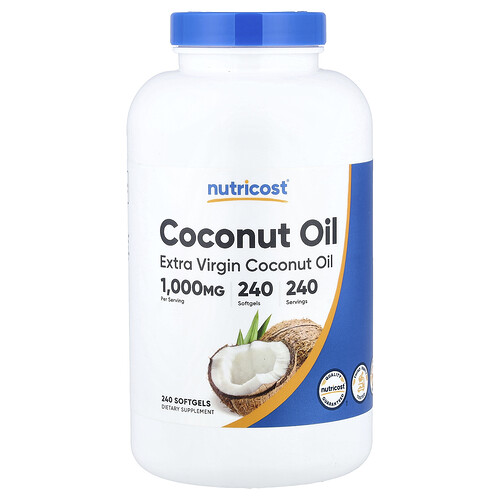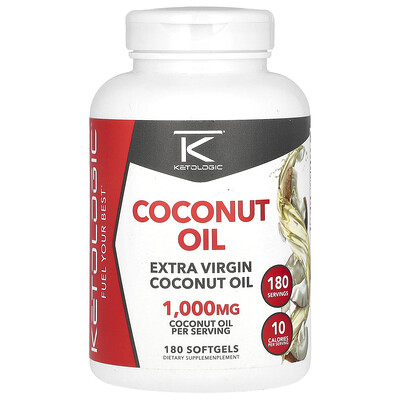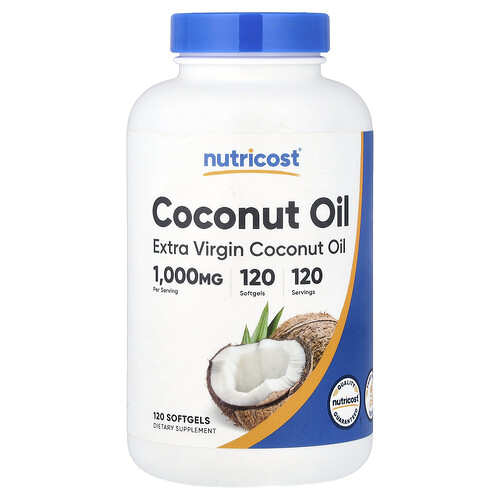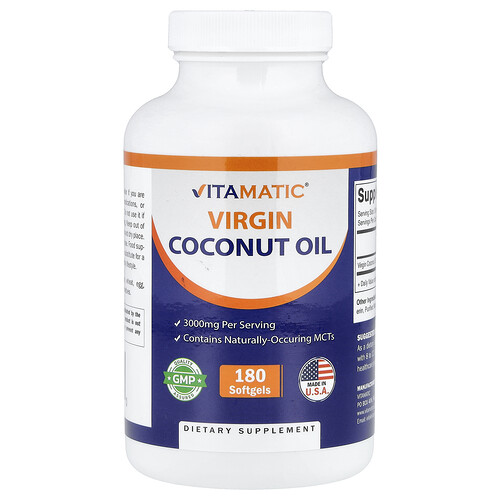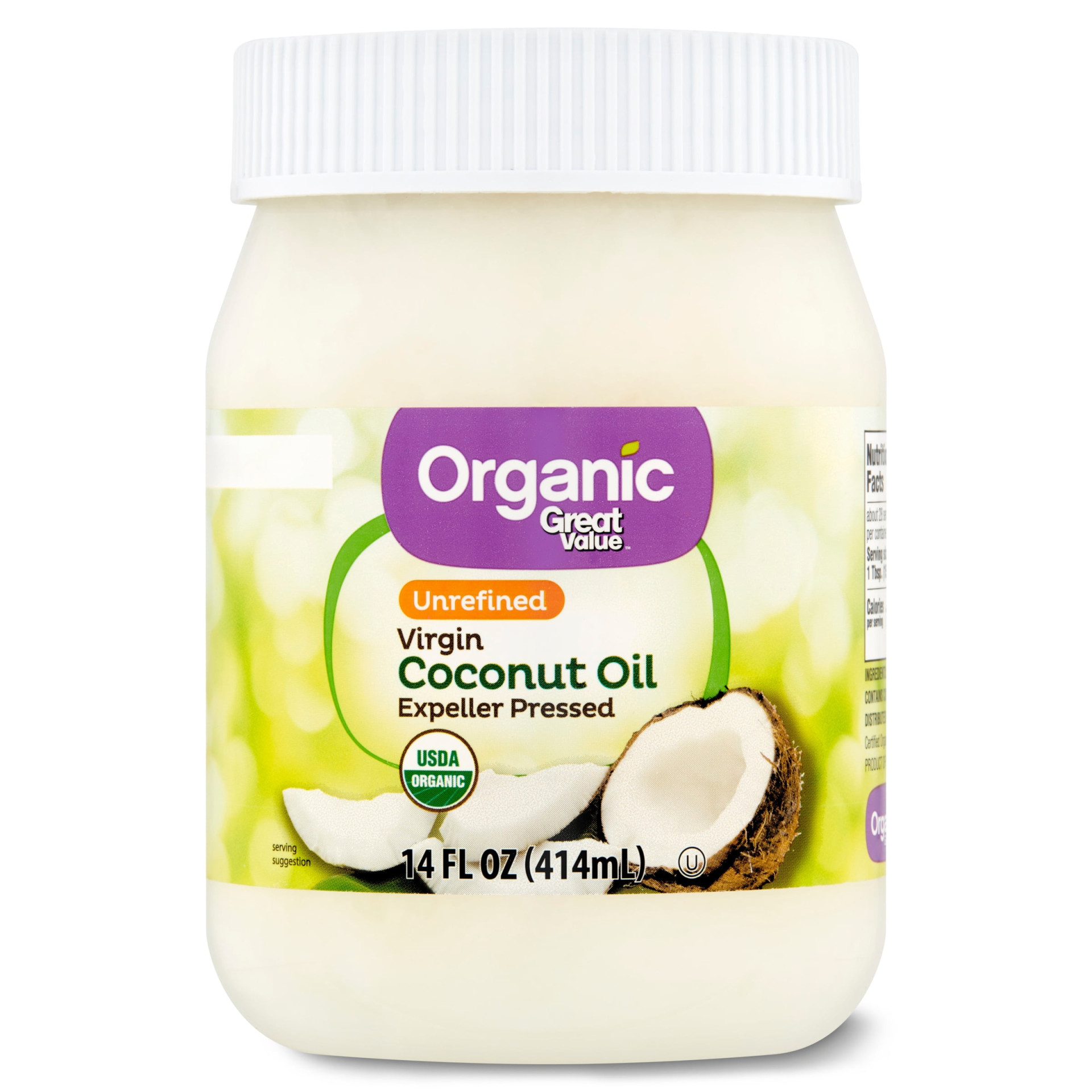

Coconut oil is made from coconut flesh. It is a firm fat with a clear coconut aroma in unrefined versions and a more neutral taste in refined versions. In cooking it is used for frying, baking, creams, fatty drinks, sugar-free sweets, curries, sauces, and dishes where coconut flavor belongs.
It is important to distinguish coconut oil from MCT oil. Regular coconut oil does contain lauric, caprylic, and capric acids, but it is not the same as purified MCT oil with a high share of C8 and C10. For that reason, it should not be described as a universal fast “ketone” product. It is mainly a cooking fat, very energy-dense and almost carbohydrate-free.
At room temperature coconut oil is often solid, then melts when warmed. This is useful for desserts and coatings: a mixture can set without starch or flour. But in cold sauces it may form small grains if mixed with cold ingredients too quickly.
Nutritional value
In 100 g of coconut oil there are about 880–900 kcal and roughly 99–100 g of fat. Protein and carbohydrates are practically absent, and the glycemic load is zero if it is pure oil without additives. One tablespoon gives about 115–125 kcal and around 13–14 g of fat.
The fat profile is mostly saturated. A large share is lauric acid, with myristic, palmitic, caprylic, capric, and small amounts of unsaturated fatty acids also present. Coconut oil contains little omega-3 and omega-6, so it should not be treated as a source of those fats.
Is it suitable for keto?
For keto and LCHF, coconut oil fits by macronutrients: it contains almost no carbohydrates and easily adds fat to a dish. It is convenient in sugar-free desserts, low-carb baking, coconut sweets, fatty coffee, curry, and frying foods where coconut aroma is not a problem.
Still, zero carbohydrates do not make the oil unlimited. Spoonfuls of fat quickly raise the energy content of the diet. If the goal is weight loss, large portions of oil can interfere even when carbohydrates stay low. For everyday cooking, it is better to rotate coconut oil with olive oil, butter, avocado oil, fatty fish, nuts, and other fat sources.
How to use it
Unrefined coconut oil works well in dishes that need coconut aroma: Thai and Indian sauces, curries, desserts, chocolate fat bombs, creams, and sugar-free coconut granola. Refined oil is more neutral and more convenient for frying eggs, poultry, shrimp, low-carb pancakes, and vegetables.
For frying, use moderate heat and do not let the oil smoke. If a dish needs very high heat and neutral taste, avocado oil, ghee, or another suitable fat may be better. In baking, coconut oil can replace part of butter, but the texture changes: after cooling, baked goods become firmer.
How to choose
The ingredient list should contain only coconut oil. Words such as virgin, extra virgin, or unrefined usually mean a stronger taste and aroma. Refined oil smells weaker, but processing methods vary by producer. Hydrogenated versions are better avoided for ordinary cooking.
Good oil smells clean: like coconut or almost neutral, without rancidity, soap, stale nuts, or plastic. The color is usually white or slightly creamy. Yellow spots, sharp smell, bitterness, and a sticky film after storage are signs that the product has spoiled or was stored poorly.
What to pair it with
Coconut oil pairs well with cocoa, almond and coconut flour, vanilla, cinnamon, lime, ginger, chicken, shrimp, white fish, cauliflower, zucchini, spinach, and sugar-free spicy pastes. In savory dishes, portion matters: coconut aroma can easily cover delicate ingredients.
Limitations
Coconut oil is very energy-dense and rich in saturated fats. If there are individual limits for such fats, the diet is better discussed with a specialist. With sensitive digestion, large portions may cause heaviness or nausea. It is better to start with a small amount, especially if the previous diet was low in fat.
How to store it
Keep the oil tightly closed, away from light, heat, and moisture. In the refrigerator it becomes hard; at room temperature it may be soft or liquid, which is normal. Do not put a wet spoon into the jar: water speeds spoilage. If the smell becomes rancid or the taste turns bitter, discard it.
What can replace it?
For neutral frying, ghee, avocado oil, refined olive oil, or animal fat can work. In desserts, cocoa butter, butter, or a mix of butter and coconut oil gives a similar firmness. For coconut flavor, coconut cream or shredded coconut can be added, but they change both moisture and carbohydrates in the recipe.