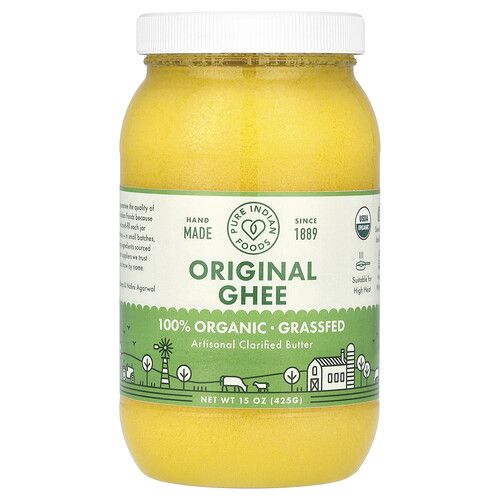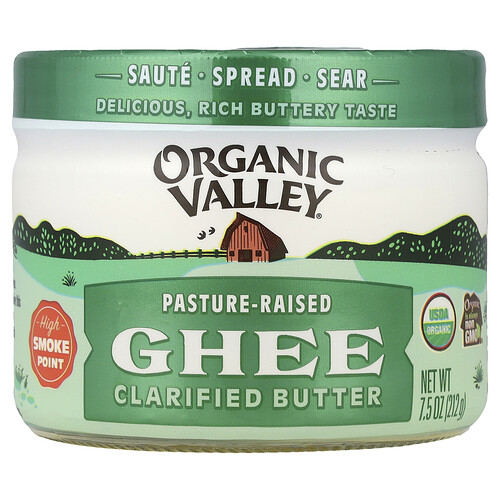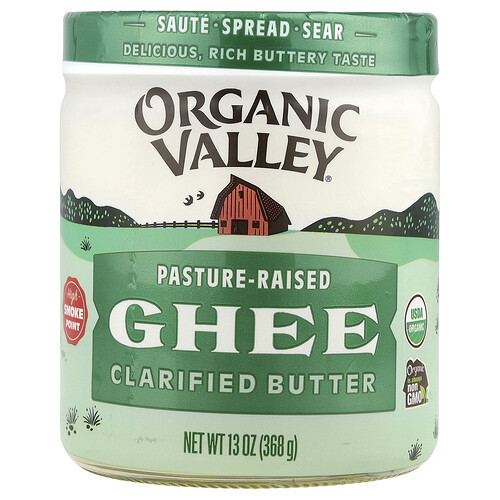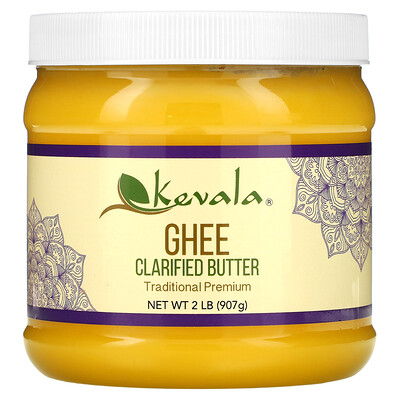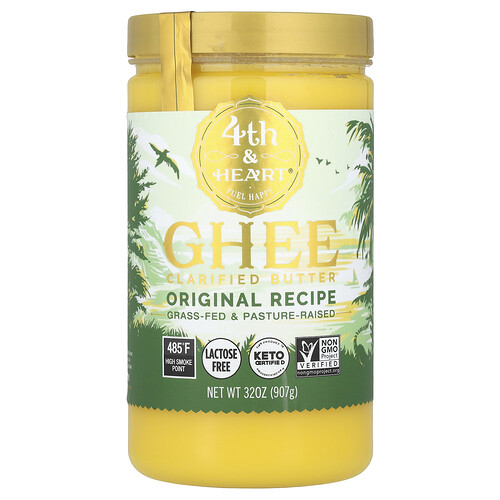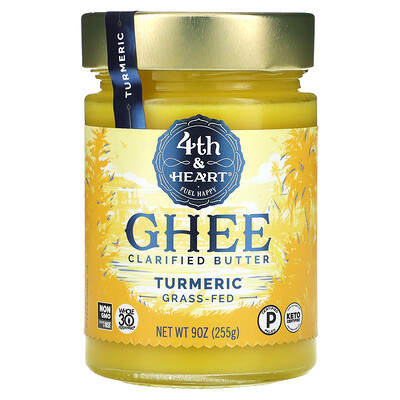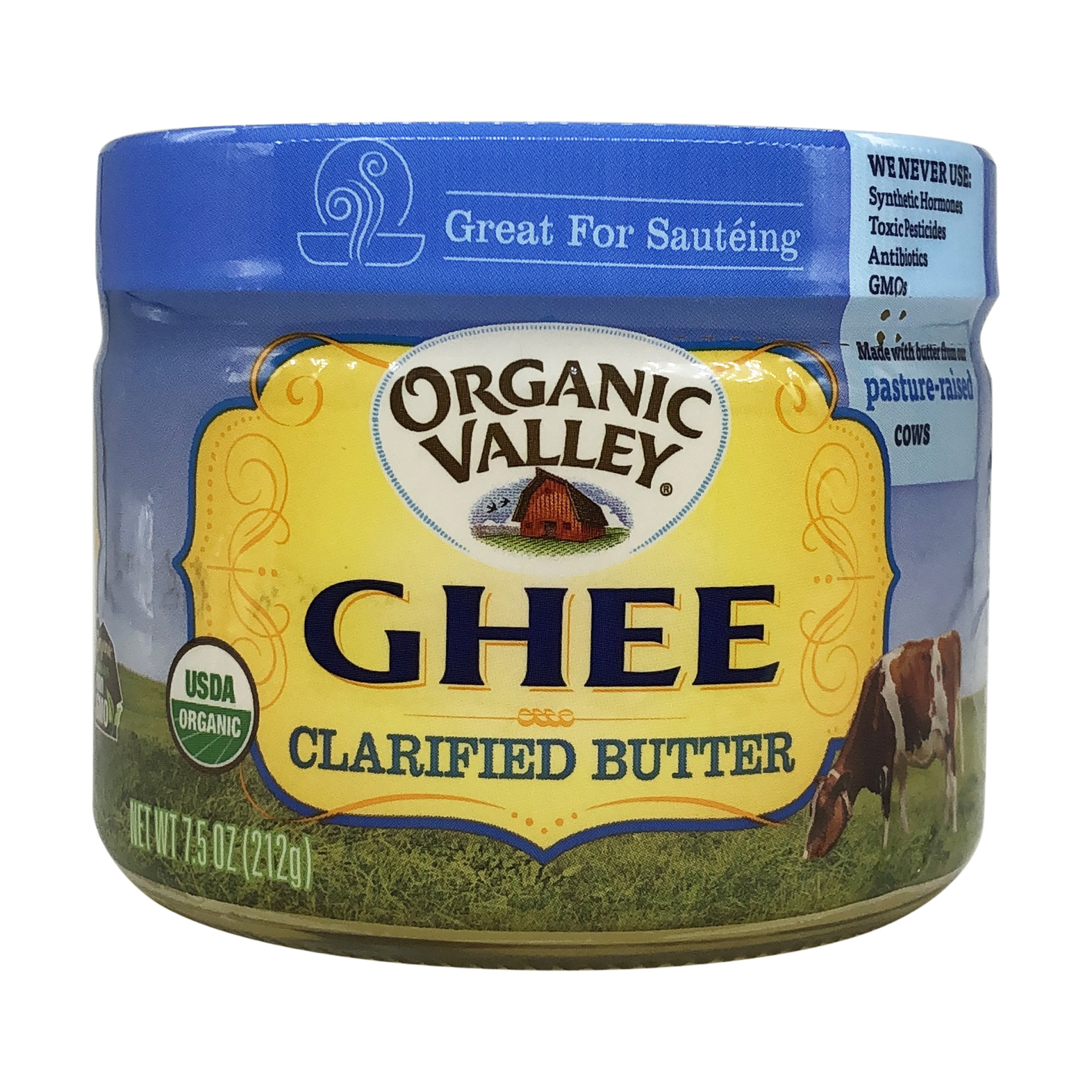

Ghee is clarified butter from which water and most milk proteins are removed by slow heating. What remains is almost pure milk fat with a nutty aroma, golden color, and high heat stability. In Indian cooking, ghee has been used for centuries, but in practical terms it is a straightforward cooking fat: for frying, stewing, sauces, vegetables, eggs, and meat.
Ghee differs from regular butter not only in flavor. It contains almost no moisture, so it splutters less in a pan and keeps longer. Milk solids separate and caramelize during preparation, creating the characteristic nutty note. Well-made ghee should taste clean, warm, and creamy, without bitterness or the smell of stale fat.
Nutritional value
In 100 g of ghee there are roughly 880–900 kcal and about 100 g of fat. Protein and carbohydrates are practically absent. Saturated fatty acids dominate, with monounsaturated fats and a small amount of polyunsaturated fats also present. A typical lipid profile is often described as 62–65% saturated, 29–30% monounsaturated, and 3–5% polyunsaturated fatty acids.
Butyrate and conjugated linoleic acid are sometimes mentioned separately in descriptions of ghee. These are real components of milk fat, but that does not make ghee a supplement. In practice, portion size matters more: a teaspoon quickly adds fat and calories, while a tablespoon noticeably changes the energy density of a dish.
Is it suitable for keto?
Ghee fits keto and LCHF well because it contains almost no carbohydrates and conveniently adds fat. It is used for eggs, fish, cauliflower, cream sauces, vegetables, chicken, and meat. Unlike sweet sauces or breading, ghee itself does not interfere with keeping the dish low in carbohydrates.
The limitation is not carbohydrates but the total amount of fat. If the diet already contains plenty of cream, cheese, fatty meat, and nuts, ghee can easily become an extra addition. On a keto plate it works better as part of a recipe than as something eaten by the spoonful.
How to use it
Ghee is convenient for frying and stewing: it has a high smoke point, usually around 240–250 °C when the product is well clarified. It is used for omelets, fried eggs, steaks, chicken, shrimp, mushrooms, zucchini, cabbage, eggplant, and spice mixtures. A small amount can be added to finished cream soup, sauce, or stewed vegetables instead of regular butter.
In sugar-free desserts, ghee gives almond flour, coconut, cocoa, and spices a caramel-creamy note. But its flavor is stronger than that of neutral oils, so it should be used carefully in delicate dishes. If a more neutral fat is needed, refined olive oil, avocado oil, or deodorized coconut oil may fit better.
How to choose
Good ghee should contain butter or milk fat without sugar, starch, flavorings, or vegetable oils. The color may range from light golden to amber depending on the source butter and heating level. Very dark color and sharp bitterness suggest overheating, while sour or rancid odor points to poor storage.
Homemade ghee is made from good butter: it is heated slowly, foam is removed, and the clear fat is separated from the sediment. The finished product should not have cloudy moisture at the bottom. If water drops are visible in the jar or loose sediment is mixed with the fat, shelf life will be shorter.
Lactose and tolerance
During preparation, most milk proteins and lactose are removed, so many people tolerate ghee more easily than regular butter. But this does not make it completely dairy-free. With severe reactions to milk traces or strict dairy exclusion, choose fats with clear labeling instead of relying only on the word “clarified”.
How to store it
Ghee is stored in a tightly closed clean jar, away from light, steam, and heat. Because it contains little water, it can keep longer than regular butter, sometimes for several months at room temperature if the producer allows it. But next to the stove the fat oxidizes faster, so a cool cupboard or refrigerator is safer.
Do not put a wet spoon into the jar: water shortens shelf life. If the taste becomes bitter or the smell resembles stale nuts, dampness, or rancid oil, the product is better discarded.
What can replace it?
For frying, ghee can be replaced with butter, but butter burns faster because of milk solids. For high heat, avocado oil, refined olive oil, coconut oil, or animal fat can be used. For creamy flavor, regular butter added near the end of cooking is the closest option.
Sources
- USDA FoodData Central: composition of edible fats and oils
- Food safety and quality of fats and oils during heating and storage
- Saturated fatty acid intake and cardiovascular disease: systematic review and meta-analysis