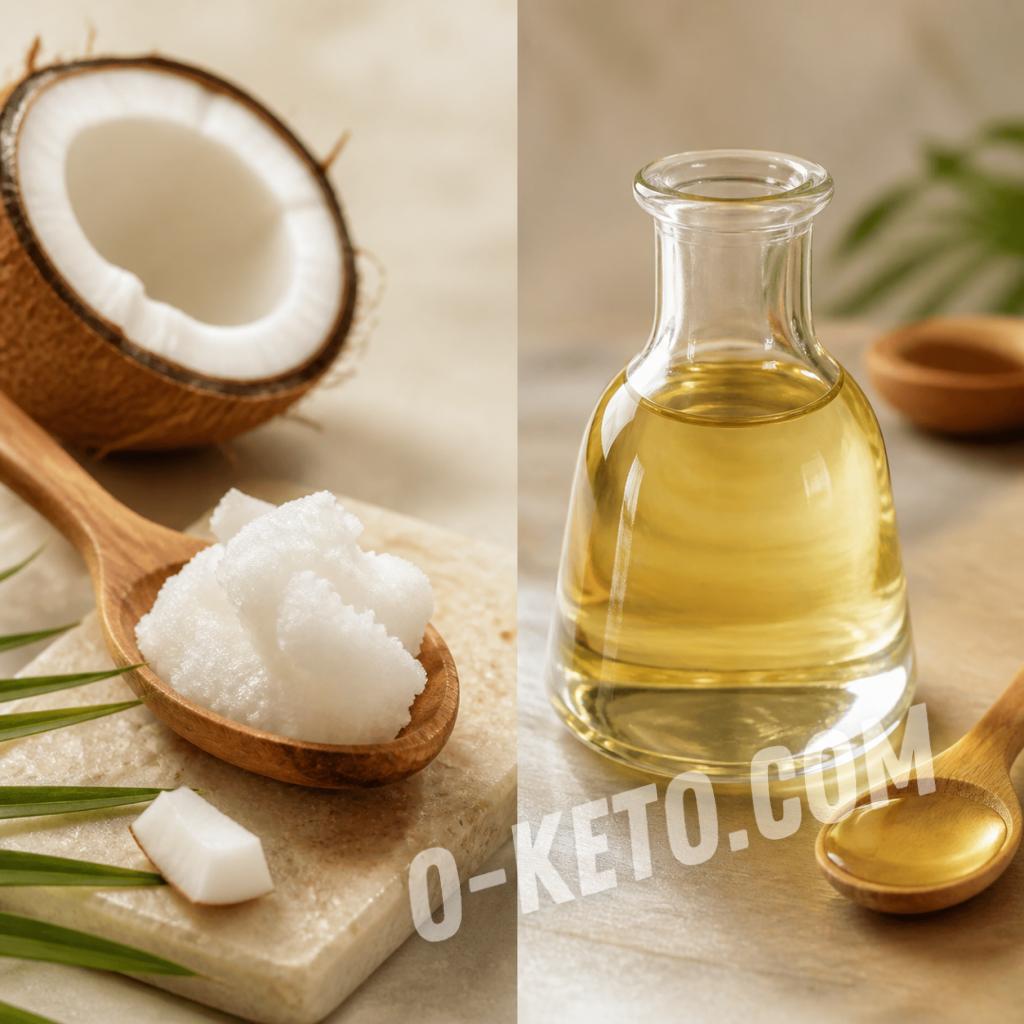

MCT oil and coconut oil are often compared because both come from coconut raw materials and fit into a low-carbohydrate diet. However, they are not interchangeable: coconut oil is primarily a culinary fat, while MCT oil is a purified fraction of medium-chain triglycerides with different behavior during digestion and metabolism.
How their composition differs
Coconut oil contains a large amount of lauric acid C12, as well as caprylic acid C8, capric acid C10, and longer-chain fats. MCT oil is additionally fractionated, so it usually contains mostly C8 and C10. The proportion depends on the product: the label may show a C8/C10 blend or a predominantly C8 formula.
This difference matters because chain length affects how fat is processed. Medium-chain fats reach the liver more readily and can be used to produce ketones. Coconut oil may also contribute to ketogenic metabolism, but it does not have the same composition or speed of use as specialized MCT oil.
How MCT oil differs from coconut oil
If the goal is to raise ketones, MCT oil has a more noticeable and predictable effect, especially when choosing a product with a high share of C8. This does not mean it is automatically better for everyone. Higher ketones do not by themselves mean disease treatment, faster weight loss, or permission to eat more calories.
What MCT oil is used for
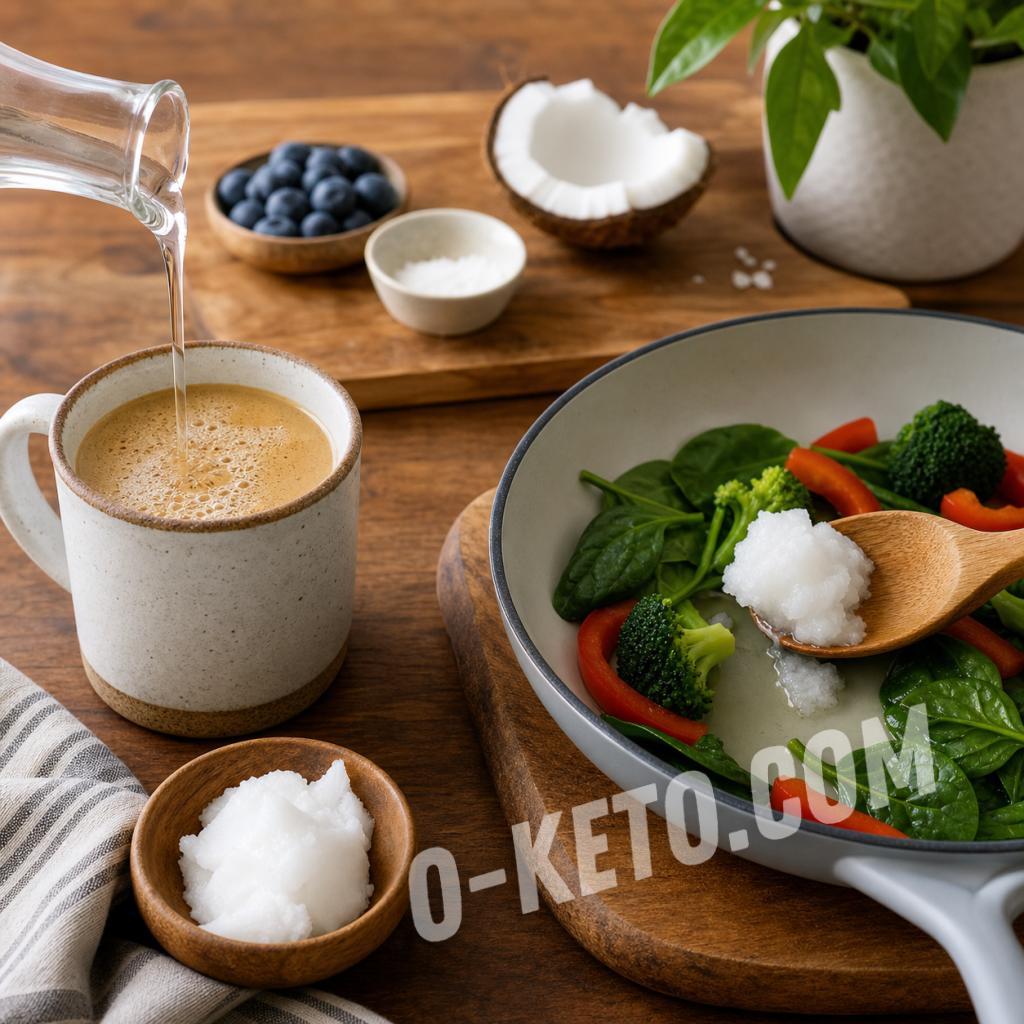
MCT oil can be added to prepared food, salad dressings, sauces, and drinks. Its neutral taste is convenient when you do not want a coconut aroma. It may be useful as a compact source of energy in a diet where it is difficult to obtain enough fat from regular food, or as a way to temporarily raise ketone levels. Small studies have also examined cognitive effects, but the results are heterogeneous and do not turn the oil into a treatment for dementia or Alzheimer disease.
MCT oil is not suitable for frying: its strength is not high-temperature cooking, but its liquid form and metabolic properties. Refined coconut oil, ghee, or another suitable fat is more practical for a frying pan.
When coconut oil is more suitable
Coconut oil is chosen when the density and structure of the product matter. It solidifies when cooled, which makes it useful in low-carbohydrate desserts, glazes, baked goods, and rich creams. Unrefined oil has a pronounced coconut aroma, while refined oil suits dishes where a more neutral flavor is desired.
In a keto diet, coconut oil is not a product that can be consumed without limits. It contains almost no carbohydrates, but it is very energy-dense and rich in saturated fat. Clinical studies do not confirm universal therapeutic or fat-burning promises, so the oil is best alternated with other fat sources while considering the overall diet and individual lipid values.
Tolerance and serving size
MCT oil more often causes digestive symptoms when the dose is increased abruptly: nausea, stomach rumbling, cramps, and loose stools may occur. Start with a small serving together with food and increase it only if it is well tolerated. If you have gastrointestinal disease, impaired fat absorption, liver disease, or gallbladder disease, discuss its use with a clinician.
Practical choice
Coconut oil is a logical choice for moderate-temperature frying, desserts, curry, baked goods, and dishes with a coconut flavor. MCT oil is suitable for prepared food and drinks when a liquid, neutral addition is desired and well tolerated. Neither product is mandatory for keto: the result is determined by the overall diet, not by a single spoonful of oil.
Sources
- Medium-chain triglyceride oil consumption and ketosis in healthy adults: randomized crossover trial
- Medium-chain triglycerides and cognitive function: systematic review and meta-analysis
- Coconut oil and cardiovascular risk factors: a systematic review and meta-analysis of clinical trials
- Effects of coconut oil versus butter and olive oil on cardiovascular risk factors